
I had a client once — guy had a two-year-old Belgian Malinois mix he'd adopted without really knowing what a Malinois mix meant. The dog was destroying the house, barking constantly, and he was at his wit's end. Standard obedience training wasn't cutting it. The dog learned sit and down in two sessions and then looked at us like "great, what else you got?"
We started nose work the following week. Within a month, that dog was a different animal. Same energy, but channeled. He had a job. He had something to think about.
That's what sports and enrichment do for dogs. They don't reduce who the dog is — they give it somewhere to go.
Why Enrichment Matters
Dogs were bred for specific purposes. Retrievers retrieved. Terriers hunted. Herding dogs moved livestock for hours. Most of those instincts still run strong in domestic dogs that spend their days waiting for their owner to come home.
When drive and instinct have nowhere to go, they become behavioral problems — barking, destructive chewing, leash reactivity, anxiety. These aren't character flaws. They're what happens when a dog is under-stimulated.
Mental work is as tiring as physical work. A 20-minute nose work session often leaves a dog more satisfied than an hour-long walk. This isn't wishful thinking — it's the difference between exercise and engagement.
The Main Categories
Nose Work and Scent Sports
Nose work started as a simplified version of detection work used by law enforcement. Dogs are trained to find a specific scent hidden in boxes, rooms, vehicles, or outdoor areas. It requires focus, problem-solving, and drives deep instinct.
Almost any dog can do nose work — young or old, high-energy or mellow, large or small. It's particularly good for anxious dogs because sniffing is inherently self-calming.
Agility
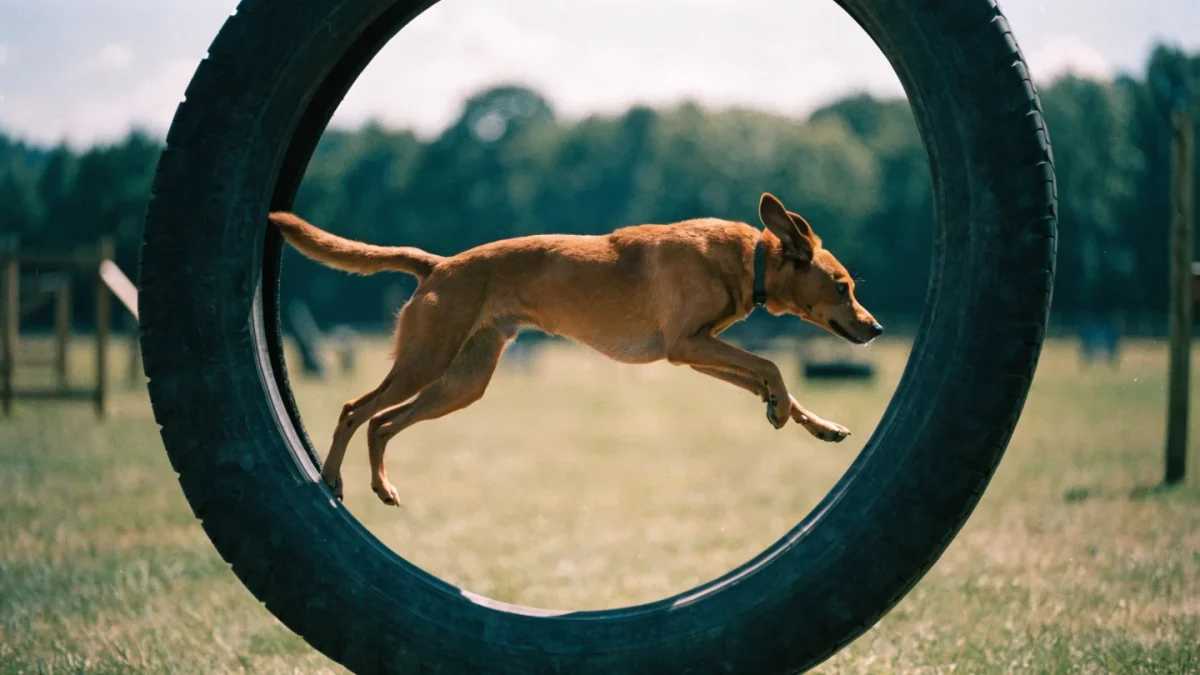
Agility involves guiding your dog through a timed obstacle course — jumps, tunnels, weave poles, A-frames, seesaws. It requires both physical athleticism from the dog and precise handling from you.
Best suited for medium-to-high energy dogs with good drive. Not ideal for giant breeds with joint concerns or very young puppies whose growth plates haven't closed.
Trick Training
Teaching behaviors beyond basic obedience — spins, rolls, handstands, object retrieval by name, counting, leg weaving. It builds confidence, communication, and a stronger training relationship.
Works with virtually any dog. Especially valuable for dogs that don't have the physicality for agility but still need mental engagement.
Rally Obedience
A sport where handler and dog move through a course of signs, each indicating a specific skill to perform. More relaxed than competitive obedience, with talking to your dog allowed throughout.
Good entry point for competitive obedience sports. Requires solid basic obedience and handler coordination.
Herding, Tracking, and Breed Sports
Many breeds have sport versions of their original working instincts — terriers can do barn hunt (finding rats in a hay maze), hunting breeds do field trials and tracking, herding breeds can do herding instinct tests. These are often the highest-drive option for working-line dogs.
Canine Freestyle
Dogs and handlers perform choreographed routines to music. Combines trick training, targeting, and physical conditioning with creativity and presentation.
Dock Diving and Swimming Sports
Dogs jump from a dock into water for distance or height. High value for retrievers and water-loving breeds. Excellent physical conditioning and usually loved by the dogs.
How to Match Your Dog to a Sport
Start by watching your dog, not browsing lists of options.
- Does your dog use their nose constantly on walks? Nose work.
- Is your dog athletic, high-energy, and loves to jump? Agility.
- Is your dog very food motivated and loves to interact? Trick training or rally.
- Does your dog want to work at a distance from you? Tracking or field sports.
- Is your dog older, has joint issues, or is anxiety-prone? Nose work, gentle trick training, or enrichment feeding games.
The positive reinforcement foundation matters here — whatever sport you choose, training it effectively means the dog should find the activity itself rewarding, not just the treats.
Getting Started Without a Club or Facility
You don't need a formal club to start most enrichment activities.
For nose work: hide your dog's breakfast in a muffin tin covered with tennis balls. Watch them sniff out every kibble. That's nose work.
For trick training: pick one trick and spend five minutes a day for two weeks. Then add another. After a month, you have a party trick and a much stronger training relationship.
For mental stimulation at home: swap the food bowl for puzzle feeders, scatter feeds, lick mats, or frozen food toys. Mealtimes become enrichment sessions. Advanced obedience training provides the discipline that structured sport practice builds on.
The Competitive Track vs. Just for Fun
Some people get competitive. Others just want their dog to have something to do. Both are completely valid.
Competing adds structure, community, and clear goals that many handlers find motivating. It also adds cost, time, and travel. If competition sounds good to you, look for beginner classes through breed clubs or training organizations in your area.
If you just want your dog to be happier, start at home. The benefit of sports and enrichment isn't the ribbon — it's what happens to your relationship and your dog's behavior when they finally have a job.
FAQ
How much time do dog sports take each week?
For casual enrichment, 15-30 minutes per day is meaningful. Competitive sports typically require 3-5 training sessions per week plus occasional trials. Start small and scale up as you and your dog get more engaged.
Can older dogs participate in sports?
Yes, with modifications. Nose work is excellent for senior dogs. Trick training, rally, and gentle agility sequences all work with appropriate physical accommodations. Avoid high-impact sports like competitive jumping for dogs with joint issues.
Do I need a purebred dog for dog sports?
No. Mixed breeds can compete in most sports through various organizations. Many champions are mixed breeds. The dog's drive and your training relationship matter far more than pedigree.
My dog doesn't seem interested in any sport I try. What now?
Check a few things: are you working before meals (hunger increases motivation)? Are sessions short enough that the dog isn't getting fatigued or bored? Have you tried nose work — it tends to engage almost every dog because the sniff drive is so fundamental? If nothing seems to work, consult a trainer to assess whether something else is affecting the dog's motivation.