

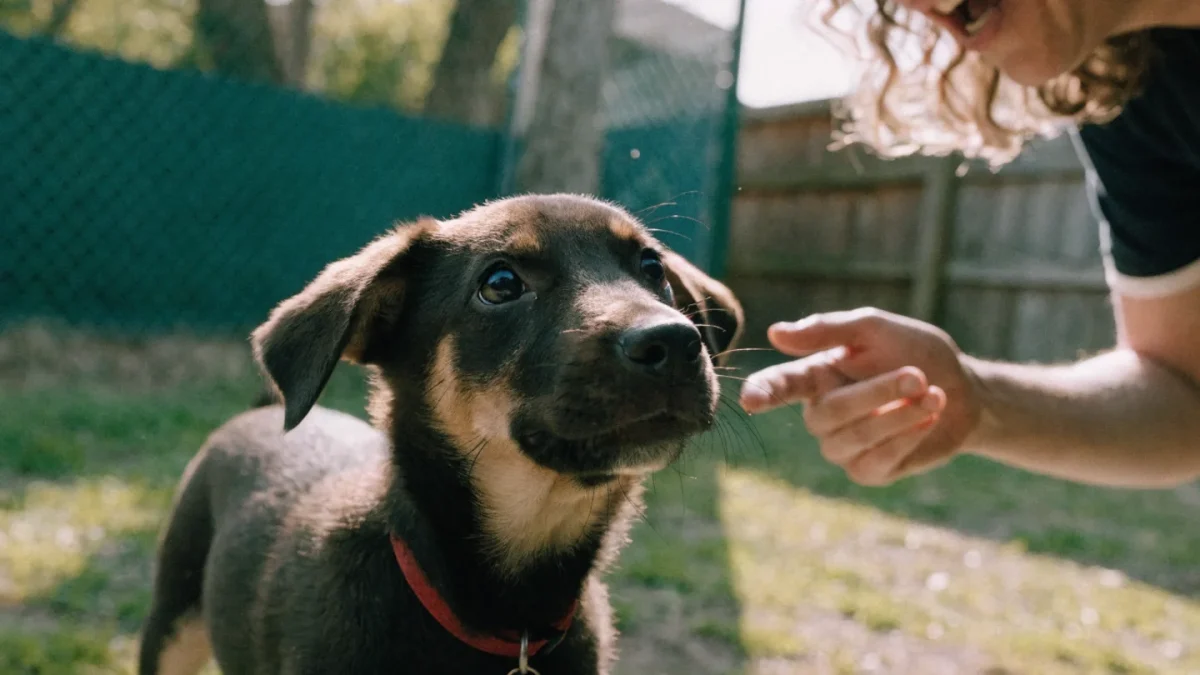
I know, I know — another article about keeping training sessions short. But I keep writing about this because I keep seeing the same mistake every week: people training their puppy for twenty minutes until the wheels come off, and then wondering why their puppy isn't improving.
The length of a training session is not where you put your effort. The quality of a session is.
Why Short Sessions Work
Puppy brains are not small adult brains — they're a genuinely different learning environment. Focus fades fast. Decision fatigue sets in. After five or six minutes, the average young puppy is making errors that wouldn't happen in the first two minutes.
Every error that goes unrewarded is a missed opportunity. Every extended struggle is building negative associations with training. A short session that ends on success is miles better than a long session that spirals.
There's also a consolidation effect. The brain processes and consolidates learning between sessions, not during them. Multiple short sessions across a day will outperform one long session because the consolidation happens more times. You get more opportunities for that processing.
Recommended Lengths by Age
8-12 weeks: 2-3 minutes per session. This sounds absurdly short. It's not. Count your reps — at this age, 8-10 repetitions is a full session.
3-5 months: 3-5 minutes. A bit more focus available, especially for behaviors the puppy already knows.
5-8 months: 5-7 minutes. Adolescence is starting, which can reduce focus in distracting environments even as it increases in familiar ones.
8 months+: Up to 10 minutes for known behaviors. For new complex skills, shorter still.
These are maximums. Ending earlier is always fine.
How Many Sessions Per Day
More is better, up to a point. Three to five short sessions spread throughout the day is the sweet spot for most puppies. Two sessions at minimum to see consistent progress.
Weave training into daily life: five reps of sit before the morning meal, five reps of name recognition in the yard, five reps of leave it during an afternoon walk. That's 15 quality repetitions across the day without a single "formal" training session.
When to Stop in the Middle of a Session
If your puppy starts making errors consistently — missing cues they knew five minutes ago, becoming distracted, pawing at you, lying down mid-session — that's the end of the session.
Don't push through it. Ask for something easy, get a success, stop. Pushing a tired or unfocused puppy builds exactly the associations you don't want.
Similarly: if you're getting frustrated, stop. Dogs read our emotional states extremely well, and a frustrated trainer is an unpleasant training experience for a puppy.
The "End on Success" Rule
Always end on success. Whatever the last rep of the session is, make it something your puppy can do well.
If you've been working on a hard new behavior and it's getting messy, go back to sit — something solid — ask for it, mark it, reward it big, and end the session. Your puppy's last memory of training is a win. That's what they'll carry into the next session. (See also: positive reinforcement dog training.)
This week: cut your training sessions in half. If you've been doing ten minutes, do five. If you've been doing five, do three. Watch what happens to your puppy's engagement at the start of each session when they haven't been run until they're bored.