

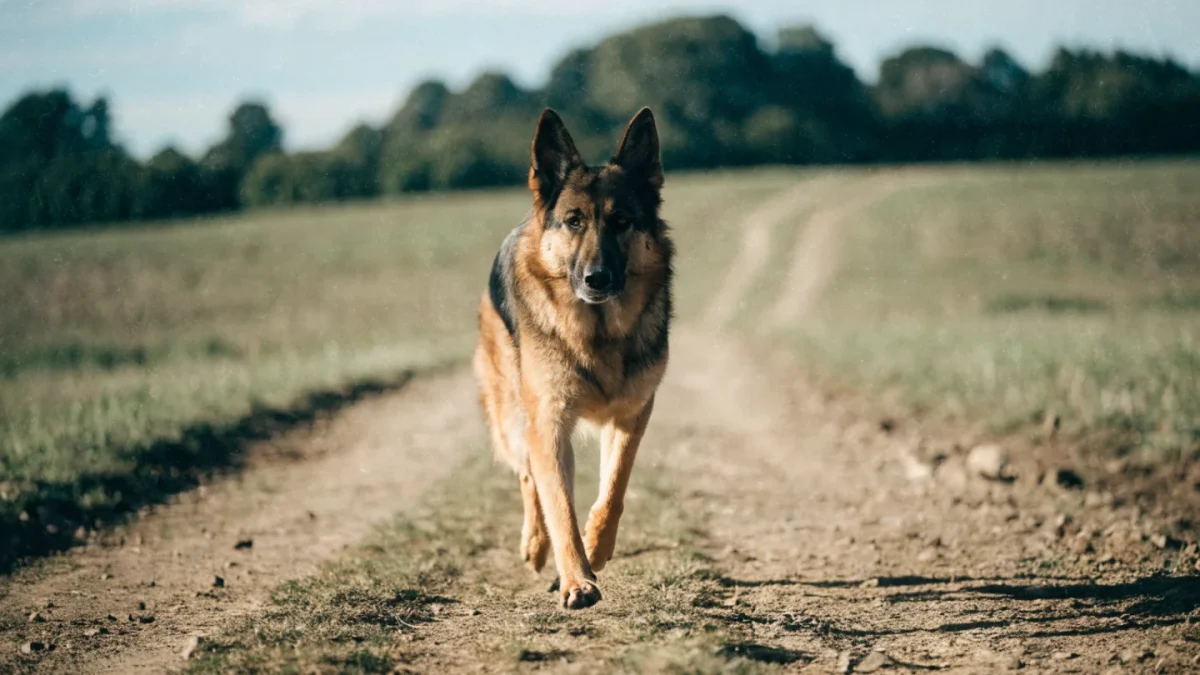
German shepherds were designed to trot across open pastures for hours without tiring. Max von Stephanitz selected specifically for endurance — the breed's hallmark ground-covering gait can sustain a working pace that outlasts most owners on foot. That athletic foundation did not disappear when the breed moved from farmland to family homes.
If you are considering a german shepherd or already own one, exercise is not optional. It is the foundation that every other aspect of ownership rests on. Behavior, health, longevity, and quality of life all correlate directly with whether this dog's physical and mental needs are met daily.
How Much Exercise, Realistically
A healthy adult german shepherd between 2 and 7 years old needs a minimum of 90 minutes of combined physical and mental exercise per day. That is not an aspirational number — it is a baseline. Working-line dogs often need more. Show-line dogs may settle for slightly less. But 90 minutes is where most german shepherds start functioning well.
Split this into at least two sessions. A single 90-minute walk does not satisfy the same needs as a 45-minute morning hike and a 45-minute evening session of fetch and obedience work. Variety matters because this breed engages both physically and mentally, and one without the other leaves a deficit.
Puppies: Less Is More
German shepherd puppies need far less forced exercise than adults. Their growth plates remain open until roughly 18 to 24 months, and repetitive high-impact activity during this period — long runs, extended fetch on hard surfaces, jumping — increases the risk of developmental joint damage in a breed already predisposed to hip and elbow dysplasia.
The commonly cited guideline of 5 minutes per month of age for structured exercise, performed twice daily, is reasonable. A 4-month-old puppy gets two 20-minute sessions. Free play in a safe, soft-surface area can exceed these limits because the puppy regulates its own effort. But leashed jogs, forced marching alongside a bicycle, or repeated stair climbing should wait until skeletal maturity.
Mental exercise has no such restriction. Training sessions, puzzle feeders, and socialization outings can begin immediately and tire a puppy more effectively than physical activity alone.
Senior Dogs: Adapt, Don't Stop
German shepherds over 8 or 9 often develop mobility limitations from arthritis or degenerative myelopathy. Exercise remains important — joint stiffness worsens with inactivity — but the type and intensity need adjustment. Shorter, more frequent walks on softer surfaces replace long hikes. Swimming is outstanding for seniors because it provides full-body exercise with zero joint impact. Gentle scent work keeps the mind engaged without physical strain.
Watch for signs that the dog is overdoing it: reluctance to rise after rest, limping during or after exercise, or visible stiffness the morning after an active day. These signal that the current routine needs scaling back, not that exercise should stop entirely.
What Counts as Exercise
Not all activity is equal. Standing in a backyard is not exercise. A casual stroll around the block is warm-up at best. German shepherds need activity that elevates heart rate and engages their brain.
Walking and hiking are the foundation. Varied terrain — hills, trails, grass, gravel — engages more muscle groups than flat pavement and provides mental stimulation through novel scents and environments.
Running and jogging suit adult german shepherds well. Wait until the dog is at least 18 months old before sustained running, and build distance gradually. Avoid hot pavement, which burns paw pads and contributes to overheating in a double-coated breed.
Swimming is superb exercise for german shepherds and particularly valuable for dogs with joint concerns. Not all german shepherds take to water naturally — introduce it gradually in shallow, calm environments.
Fetch and tug satisfy prey drive and provide bursts of high-intensity exercise. Use them as part of a broader routine rather than the sole activity. Obsessive ball-chasing without variety can create compulsive behaviors.
Scent work tires german shepherds faster than most physical activities. Hide treats in grass, teach structured nosework, or scatter food across a lawn for foraging. Ten minutes of focused scent work can equal 30 minutes of walking in terms of mental fatigue.
Obedience and sport training — advanced obedience, agility (after skeletal maturity), tracking — satisfy the german shepherd's working drives in a structured way. Fifteen-minute sessions, two to three times daily, are more effective than one long block.
What Happens When They Don't Get Enough
An under-exercised german shepherd does not simply get fat and lazy. It gets creative in ways you will not appreciate.
Destructive chewing is the most common symptom. Door frames, furniture legs, shoes, and remote controls are frequent targets. Excessive barking — at nothing, at everything, at the window, at sounds you cannot hear — is second. Digging, pacing, tail chasing, and spinning are all boredom-driven behaviors that veterinary behaviorists see regularly in under-stimulated german shepherds.
The most serious consequence is reactivity. A german shepherd carrying pent-up physical and mental energy has a shorter fuse. It reacts more intensely to stimuli on leash — other dogs, bicycles, strangers. This is frequently misidentified as aggression when it is actually frustrated energy with no outlet. Addressing the exercise deficit first resolves many so-called behavioral problems without any specialized intervention.
The german shepherd breed guide covers the full picture of ownership requirements, but exercise is where everything starts. Get this right and the rest becomes dramatically easier. Get it wrong and nothing else you do will compensate.