

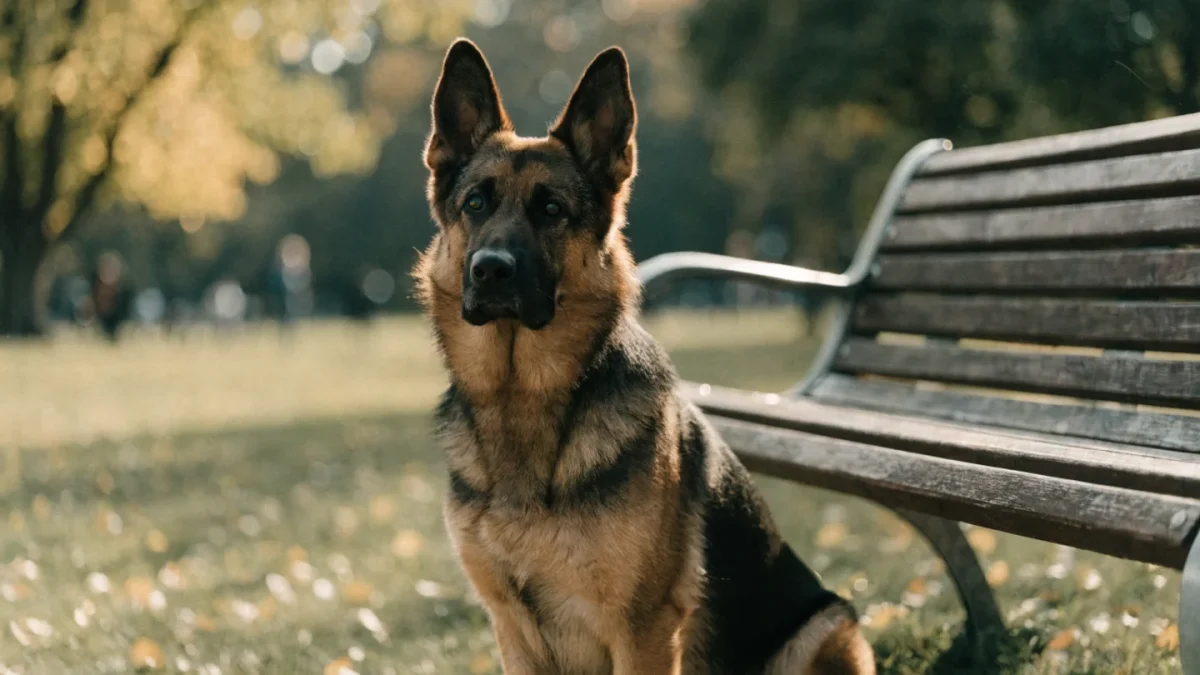
Most people have completely the wrong idea about what a German Shepherd is supposed to be. The cultural image — stoic, fearless, ready to bite on command — describes a dog that most German Shepherd owners have never actually lived with, and one that von Stephanitz himself explicitly didn't want. His ideal was a thinking dog that chose cooperation. A partner, not a weapon.
Here's the gap that matters: the dog most people imagine when they think "German Shepherd" is a working-line dog in elite training. The dog most families actually bring home is something else entirely — a companion animal with more intelligence, more emotional sensitivity, and more social need than most breeds twice its size. German shepherd temperament is not about aggression. It's about intensity — and intensity looks very different depending on whether it's channeled or ignored.
Intelligence: Not What You Think It Means
German shepherds are routinely ranked among the top three most trainable dog breeds, and that reputation is well-earned. They learn new commands faster than most breeds and retain them reliably across contexts. But intelligence in this breed is not passive obedience. It is active problem-solving.
A german shepherd evaluates tasks. It reads your body language. It anticipates routine — and when that routine breaks, it notices. This makes them extraordinary working partners and occasionally infuriating pets. A german shepherd that decides a particular command is pointless will find creative ways to avoid complying without overtly disobeying. Experienced handlers recognize this as intelligence. Inexperienced owners sometimes mistake it for stubbornness.
The practical implication: short, varied training sessions with clear purpose work. Thirty repetitions of the same sit command do not. These dogs need to understand why they are doing something, even if that "why" is simply your approval and a reward.
Loyalty and the One-Handler Problem
German shepherds bond intensely to their primary person. This is one of the breed's most celebrated traits and one of its most misunderstood. Loyalty in a german shepherd is not generalized affection — it is focused, directional attachment to the person who feeds, trains, and spends the most time with them.
In family settings, the dog will be friendly with everyone but will clearly orient toward one person. It follows that person room to room. It watches that person's face for cues. It positions itself between that person and unfamiliar visitors. This is handler focus, a deliberately bred trait that makes german shepherds outstanding working dogs.
The downside is separation anxiety. A dog this bonded to one human can struggle when that human is absent. Destructive behavior, excessive barking, and refusal to eat are common signs. The severity varies — some dogs handle absences with minimal stress, others fall apart completely. Early conditioning to brief separations helps, but it doesn't eliminate the predisposition.
For families, the key is ensuring multiple family members participate in feeding, training, and daily routines. A german shepherd can bond broadly if it has reason to, but it defaults to a single-handler orientation if one person does all the work.
Drive: The Engine Behind Everything
"Drive" in dog behavior describes the internal motivation that compels a dog toward specific actions. German shepherds carry three drives that define their temperament more than any other trait.
Prey drive is the impulse to chase, grab, and hold moving objects. Working-line german shepherds typically have higher prey drive than show lines. This drive fuels their success in protection sports, search work, and detection. In pet homes, it means the dog chases squirrels, reacts to bicycles, and plays fetch with obsessive intensity. Prey drive is not aggression — it is pursuit instinct. But unmanaged, it can look like aggression to an untrained eye.
Pack drive is social motivation — the desire to be near people, to cooperate, to participate. German shepherds have strong pack drive, which is why they follow you everywhere and why isolation is so damaging to them. This drive makes them trainable. A dog that wants to be near you is a dog you can teach.
Defense drive is the instinct to protect self and territory when threatened. This drive matures later than prey and pack drives, typically emerging around 12 to 18 months and not fully developing until age 2 to 3. It is the drive most people associate with german shepherds and the one most frequently misunderstood. Defense drive is reactive, not proactive. A healthy german shepherd does not patrol its territory looking for threats. It responds to perceived threats when they arise. The distinction matters because dogs raised in stressful, under-socialized environments develop hyperactive defense drive — they perceive threats everywhere and react accordingly.
Temperament Differences Between Lines
Working-line german shepherds and show-line german shepherds can feel like different breeds in terms of temperament. Working lines tend to carry higher prey drive, more intensity, greater stamina, and stronger recovery from stress. They were selectively bred for these traits because the work demanded them.
Show lines tend to be calmer, lower in drive, and more tolerant of inactivity. They still need substantial exercise and stimulation — they are german shepherds, after all — but the baseline intensity is lower. For many pet owners, a well-bred show-line dog is a more manageable companion.
Neither type is better. They serve different purposes. But buying a working-line puppy for a household that wants a calm house pet, or expecting a show-line dog to perform in demanding work environments, sets both owner and dog up for failure. Matching temperament to lifestyle is the single most important decision in german shepherd ownership.
If you are researching this breed for the first time, the complete german shepherd breed guide covers structure, health, and exercise requirements alongside temperament. Understanding the breed's working origins also clarifies why these drives exist in the first place.
What Most People Get Wrong About German Shepherd Temperament
The popular image of the german shepherd is a stoic, fearless protector. The reality is more complicated.
German shepherds are sensitive. They read emotional tension in a household and absorb it. Raised voices, inconsistent discipline, and chaotic home environments produce anxious german shepherds. Punishment-based training methods backfire spectacularly with this breed — not because the dogs can't tolerate pressure, but because they internalize it as relationship damage. A german shepherd that doesn't trust its handler doesn't cooperate.
They are also vocal. Barking, whining, grumbling, and a distinctive "talking" vocalization are all standard. A quiet german shepherd is usually either sleeping or unwell. The vocalizations are communication, not defiance, but owners who need silence will find this breed exhausting.
Finally, protection is not automatic. An untrained german shepherd is just a large, alert dog. The barking may deter a casual intruder, but genuine protection work requires hundreds of hours of professional training that most pet owners will never need and shouldn't attempt.
The Right Owner for This Temperament
The german shepherd temperament rewards people who want active, daily engagement with their dog. This is not a breed that does well with owners who want companionship on their terms. The dog has terms too, and those terms include mental work, physical exercise, consistent routines, and proximity to its person.
If you have the time, the patience for a learning curve, and genuine interest in building a working partnership with a dog, german shepherd temperament will match you well. If you want a dog that adjusts to your life without demanding reciprocity, this breed will not.
Frequently Asked Questions
Are german shepherds aggressive by nature?
No. German shepherds have strong defense drive, which means they respond to perceived threats, but this is not the same as inherent aggression. Aggression in german shepherds is almost always the result of poor socialization, inadequate exercise, or fear — not temperament. A well-socialized, well-exercised german shepherd raised in a stable environment is typically confident and calm around people and other animals.
Do german shepherds get along with other dogs?
German shepherds can coexist well with other dogs, especially when socialized from puppyhood. Same-sex aggression can occur, particularly between intact males. The breed's high drive can intimidate lower-energy dogs during play. Supervised introductions and matching energy levels matter more than the breed itself.
How much do working-line and show-line temperaments really differ?
Substantially. Working-line dogs are typically higher in prey drive, more intense during activity, and quicker to recover from stressful situations. Show-line dogs tend to be calmer, lower in overall drive, and more tolerant of downtime. Both types retain the breed's core traits — intelligence, loyalty, and handler focus — but the intensity dial is set very differently.