

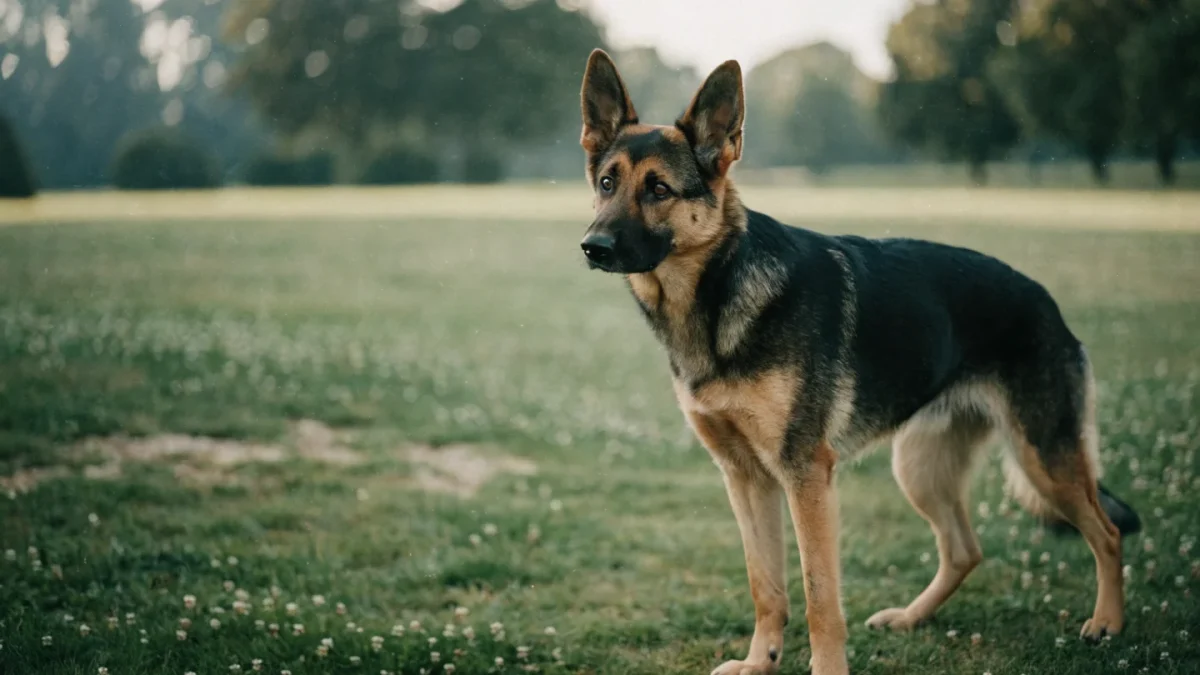
German shepherds carry more mythology than almost any other dog breed. Some of it is flattering — the fearless police dog, the unflinching protector, the genius that practically trains itself. Some of it is damaging — the aggressive menace, the ticking time bomb, the breed that turns on its owner. Most of it is wrong.
After a decade of researching and writing about this breed, I have encountered the same five misconceptions repeatedly. Each one leads to bad decisions — bad buying decisions, bad training decisions, and bad expectations that set both dog and owner up for failure. Here is what people get wrong and what the evidence actually shows.
1. German Shepherds Are Naturally Aggressive
This is the most damaging misconception about the breed, and it persists largely because of the german shepherd's association with police and military work.
The reality: german shepherds have strong defense drive — an instinct to respond to perceived threats. Defense drive is not aggression. It is a reactive trait, meaning the dog responds when stimulated, not that it seeks out conflict. A well-socialized german shepherd raised in a stable environment is typically confident and calm around people and other animals.
Aggression in german shepherds is almost always caused by inadequate socialization, chronic under-stimulation, fear, or poor breeding. Dogs that are isolated during the critical socialization window (before 14 to 16 weeks), confined without adequate exercise, or raised in stressful environments are at risk of developing fear-based reactivity. That reactivity gets labeled "aggression," but the root cause is environmental failure, not genetic predisposition.
Bite statistics are frequently cited to support the aggression narrative, but these numbers are unreliable. Breed identification in bite reports is often based on visual assessment, which is notoriously inaccurate for mixed-breed dogs. Population size also matters — german shepherds are consistently among the most registered breeds worldwide, so their absolute representation in bite data reflects prevalence, not per-capita risk. The American Veterinary Medical Association has noted that breed identification in bite reports is often inaccurate, and that controlled studies accounting for population size and identification methodology do not support breed-specific risk conclusions.
The german shepherd temperament profile is handler-focused, intelligent, and socially attuned. The breed was designed for cooperation, not confrontation.
2. They Are Automatic Guard Dogs
The image of a german shepherd standing watch over a home, ready to defend against intruders without any training, is pure fiction. An untrained german shepherd is just a large dog that barks. Barking may deter a casual trespasser, but it is not protection.
Real protection work — the kind that police and military K9 units perform — requires hundreds of hours of professional training by experienced handlers. The dogs are taught precise bite work, release commands, environmental discrimination (identifying actual threats versus benign stimuli), and handler obedience under extreme stress. This training is expensive, time-consuming, and inappropriate for most pet owners.
More importantly, encouraging a pet german shepherd to act territorial is dangerous. A dog that has been rewarded for guarding behavior without professional bite training cannot distinguish between a burglar and a mail carrier. The result is not a protection dog. It is a liability.
Most german shepherd owners will never need a protection dog. What they will get — without any specialized training — is a naturally alert dog that notices unfamiliar activity and communicates it through barking and body language. That is the realistic version of "guarding," and for most households, it is more than sufficient.
3. Their Health Problems Are Unavoidable
Hip dysplasia, degenerative myelopathy, and the breed's other genetic predispositions are real and documented. But "predisposed" does not mean "guaranteed." This misconception leads some potential owners to avoid the breed entirely and others to skip health screening because they assume problems are inevitable.
Both responses are wrong. Health screening works. Parent dogs that have been radiographically evaluated for hip and elbow quality, DNA tested for degenerative myelopathy, and screened for cardiac conditions produce healthier offspring on average than unscreened parents. This is not speculation — it is the entire basis of breed health improvement programs worldwide.
Environmental factors also matter significantly. Maintaining a lean body weight throughout life reduces joint stress. Avoiding high-impact exercise during growth plate development (before 18 months) protects developing joints. Feeding an appropriate large-breed puppy diet controls growth rate. These interventions do not eliminate genetic risk, but they meaningfully reduce the likelihood and severity of orthopedic conditions.
The comprehensive german shepherd guide covers specific health conditions and screening protocols in detail. The takeaway here is that responsible breeding and responsible ownership are not guarantees, but they are powerful risk-reduction tools.
4. German Shepherds Train Themselves
"They're so smart, they practically train themselves." I have heard this exact sentence from more owners than I can count. It is half-right and entirely misleading.
German shepherds are exceptionally fast learners. They pick up new commands quickly. They read body language with startling accuracy. They generalize learned behaviors to new contexts more reliably than most breeds.
What this actually means for owners is that the dog is learning constantly — whether you are intentionally teaching it or not. A german shepherd that learns that jumping on guests gets attention has learned that behavior just as efficiently as one that learns a formal heel command. Every interaction is training. The dog's intelligence does not default toward good behavior. It defaults toward whatever works.
An untrained german shepherd is not a neutral animal waiting for instruction. It is an intelligent, high-drive dog that has been learning its own curriculum from day one. If that curriculum includes door-dashing, counter-surfing, leash-pulling, and demand barking, good luck unlearning it.
Formal training is not optional with this breed. It is the mechanism through which their intelligence becomes an asset instead of a problem.
5. They Need a Big Yard
The "big yard" myth assumes that outdoor space substitutes for structured exercise and engagement. It does not. A german shepherd in a large backyard with no structured activity will patrol the fence line, bark at passersby, dig holes, and develop anxiety — not exercise itself.
German shepherds can live successfully in apartments, townhouses, and homes without yards, provided their exercise and mental stimulation needs are met through daily structured activity. A german shepherd in a small apartment whose owner runs, trains, and engages with it daily will be healthier and better-behaved than one in a five-acre property whose owner assumes the land does the work.
What german shepherds need is time, not space. They need a handler who walks with them, trains with them, and participates in their daily physical and mental activity. A yard is a convenience for the owner, not a substitute for engagement with the dog.
Frequently Asked Questions
Are german shepherds more dangerous than other breeds?
No breed is inherently dangerous. Behavior is the product of genetics, socialization, training, and environment. German shepherds are large, strong dogs with pronounced defense drive, which means that when behavioral problems do occur, the consequences can be more serious than with smaller breeds. But the same is true of any large breed. Proper socialization, consistent training, and responsible ownership prevent the vast majority of behavioral issues.
Do german shepherds turn on their owners?
This myth persists despite having no basis in breed behavior. German shepherds are among the most handler-bonded breeds in existence. Unprovoked aggression toward a bonded handler is extraordinarily rare and, when it does occur, is typically associated with neurological disease, severe pain, or extreme fear — not breed temperament. A healthy, well-socialized german shepherd does not "turn."
Are male or female german shepherds better?
Neither sex is categorically better. Males tend to be larger, sometimes more assertive, and may be more prone to same-sex aggression with other male dogs. Females tend to be slightly smaller, often mature faster behaviorally, and may be easier for first-time owners to manage. Individual temperament varies more than sex-based generalizations suggest. Choose based on the specific dog's personality, not a blanket sex preference.
Why do german shepherds have a bad reputation in some communities?
Breed reputation is shaped by media coverage, high-profile incidents, and the breed's historical association with police and military work. In some regions, german shepherds are subject to breed-specific legislation or insurance restrictions. These policies are based on perceived risk rather than individual dog assessment. The breed's popularity also means more german shepherds exist, increasing absolute (though not per-capita) representation in incident reports.
Do german shepherds get along with cats?
Many german shepherds coexist peacefully with cats, especially when raised together from a young age. The breed's prey drive varies by individual and line — working-line dogs with high prey drive may require more careful management around cats. Introductions should be gradual, controlled, and supervised. Some individual german shepherds will never be reliably safe around small animals, and owners should assess their specific dog rather than assuming breed-wide compatibility.