

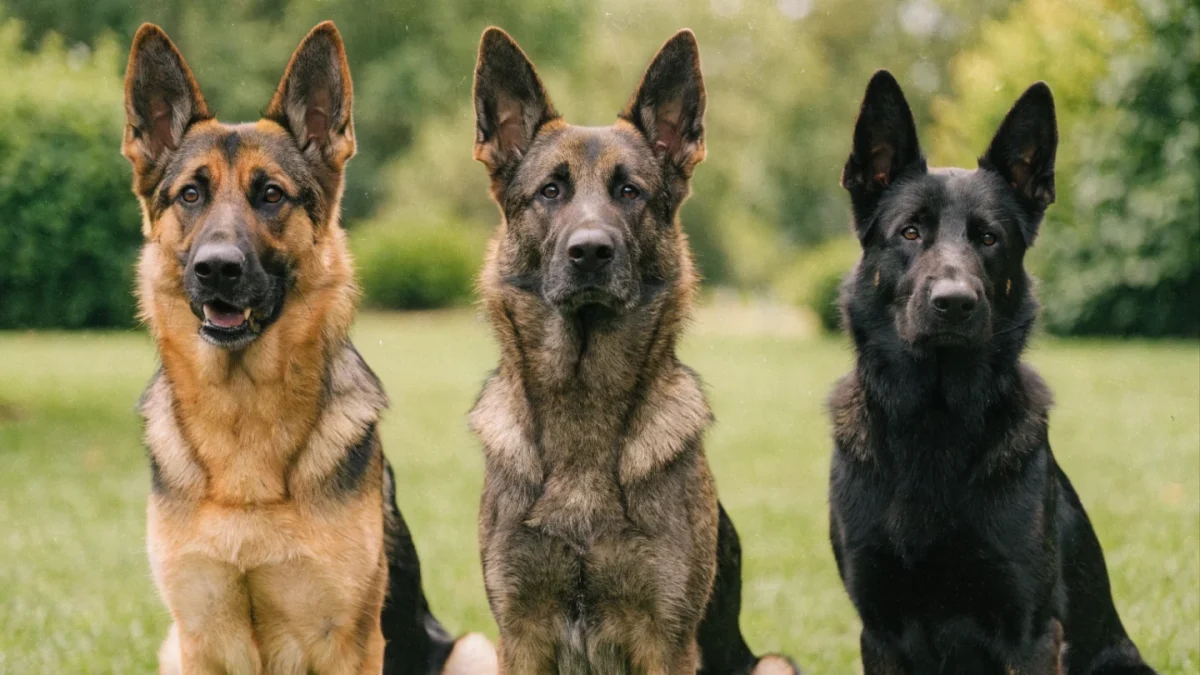
When Max von Stephanitz wrote the first german shepherd breed standard in 1899, coat color was barely mentioned. His priority was working ability, and color was irrelevant to whether a dog could herd, track, or obey. More than a century later, german shepherd color genetics has become one of the breed's most misunderstood topics — fuel for marketing schemes, breeding myths, and a surprisingly persistent set of misconceptions about what color means for a dog's health and temperament.
Here is what actually determines why your german shepherd looks the way it does, stripped of the mythology.
The A Locus: Where Most Color Happens
The overwhelming majority of german shepherd coat patterns are controlled by a single gene: the agouti signaling protein gene, known as ASIP, located on what geneticists call the A locus. This gene has multiple alleles (versions), and a german shepherd inherits one from each parent. The combination determines the coat pattern.
Sable (Aw) is the wild-type allele — the genetically dominant pattern and likely the original coat color of the breed's founding dogs. In sable german shepherds, each individual hair is banded with multiple colors, typically dark at the tip with lighter base colors underneath. The overall appearance ranges from light golden sable to dark gray or red sable depending on modifier genes. Sable is dominant over all other A locus alleles in the german shepherd, meaning a dog needs only one copy to express the pattern.
Black and tan (at) produces the classic saddle pattern that most people picture when they think of a german shepherd — tan or red on the legs, chest, face, and underside, with a black saddle across the back. Puppies are born much darker and lighten as they mature; the saddle pattern often does not fully develop until 2 to 3 years of age. This allele is recessive to sable, meaning a dog must inherit two copies (one from each parent) to display the pattern, unless no dominant sable allele is present.
Bicolor (at with modifiers) is a variation of the black and tan pattern where the black extends much further, covering most of the body with minimal tan restricted to the feet and sometimes small patches on the face. Most canine geneticists consider bicolor to be a modified expression of the at allele influenced by additional polygenic modifiers rather than a separate allele entirely, though the precise mechanism remains under investigation — the UC Davis Veterinary Genetics Laboratory and commercial coat color panels currently test bicolor within the at framework rather than as a distinct allele.
Solid black (a) results from a recessive allele at the A locus. A german shepherd must inherit two copies — one from each parent — to be entirely black. Two black-and-tan parents that each carry one copy of the recessive black allele can produce solid black puppies in approximately 25 percent of offspring, following standard Mendelian inheritance. This surprises many owners who do not realize their black-and-tan dog carries the recessive gene.
The E Locus and Extension Gene
The E locus (extension) controls whether pigment can be deposited in the coat at all. The dominant E allele allows normal pigmentation — whatever the A locus dictates will be expressed. The recessive e allele, when present in two copies (ee), prevents the production of eumelanin (black/brown pigment) in the coat, resulting in a yellow or cream-colored dog.
In german shepherds, the ee genotype is responsible for the solid white coat. White german shepherds are genetically german shepherds in every functional sense. They carry the same A locus alleles as any other german shepherd — you cannot see them because the E locus is blocking pigment expression in the coat. A white german shepherd bred to a normally pigmented german shepherd can produce normally pigmented puppies, proving that the color genes are still present underneath.
Despite this, white is a disqualifying color in the conformation ring under most breed standards. The exclusion dates to the breed's founding and early selection priorities, when von Stephanitz argued that white dogs were harder for shepherds to distinguish from white sheep. In the last edition of his book, he described white as a sign of "degeneration" — then contradicted himself paragraphs later by writing that coat color was "a matter of quite secondary consideration" for a working dog. The SV formally excluded white dogs from the breeding pool in the 1930s, and the disqualification has persisted in most breed standards since.
White german shepherds have no documented increased risk of deafness or other health conditions linked to coat color. They are not albino — they have normal pigmentation in their skin, eyes, and nose. The confusion likely stems from other species and breeds where white coat color is associated with genetic health issues, but the genetic mechanism in german shepherds (ee at the E locus) is different from the merle or piebald genes that cause problems in other breeds.
Dilution Genes: Blue and Liver
The D locus (dilution) modifies the intensity of pigment without changing the underlying pattern. The recessive d allele, when present in two copies (dd), dilutes black pigment to blue (a steel-gray color) and tan pigment to a lighter, washed-out shade. A blue german shepherd is genetically a black-and-tan, sable, or solid black dog whose pigment has been diluted.
Similarly, the B locus controls whether eumelanin presents as black or liver (brown). The recessive b allele in two copies (bb) changes all black pigment to a chocolate-brown color, including the nose and eye rims. Liver german shepherds have brown noses and often lighter eyes.
Both blue and liver are considered faults in the breed standard. They are not dangerous to the dog's health, though some dilution-related coat conditions have been documented in other breeds. Color dilution alopecia has been documented in blue german shepherds specifically, and breed-population data suggest that blue individuals do show increased skin and coat problems compared to standard-colored dogs. Liver german shepherds appear less commonly affected, but breed-specific prevalence data for CDA in german shepherds remains limited compared to breeds like the Doberman, where the condition is extensively studied.
Coat Type: Length and Texture
Coat type is separate from coat color but worth addressing because the two are frequently confused. German shepherds come in two primary coat lengths:
The stock coat (medium length) is the most common. It features a dense, harsh outer coat lying flat against the body with a thick undercoat. This is the traditional working coat — weather-resistant, relatively low-maintenance, and functional.
The long stock coat features longer hair with feathering on the ears, legs, belly, and tail. For decades, long-coated german shepherds were disqualified from conformation showing, though many breed standards have revised this in recent years. Long coat is recessive — both parents must carry the gene for long-coated puppies to appear in a litter.
Coat length has no bearing on working ability, temperament, or health. It does affect grooming requirements — long-coated dogs mat more easily and may require more frequent brushing.
What Color Does Not Tell You
Color does not predict temperament. A black german shepherd is not more aggressive than a sable one. A white german shepherd is not calmer than a black-and-tan one. These myths persist in casual breed discussions and are occasionally exploited by breeders marketing "rare" colors at premium prices.
Color does not reliably predict health outcomes outside of the specific coat-color-linked conditions mentioned above. Hip dysplasia, degenerative myelopathy, and the breed's other major health concerns are unrelated to coat color.
What color can tell you, in some cases, is something about a breeder's priorities. Breeders who market "rare blue german shepherds" or "exotic liver german shepherds" at inflated prices are selecting for color — a cosmetic trait — rather than for health, structure, and temperament. This does not automatically mean their dogs are unhealthy, but it does suggest that color is driving breeding decisions rather than the traits that matter most.
The german shepherd breed guide covers the health screening and structural evaluation that should drive any breeding or buying decision, regardless of what color the dog happens to be.