

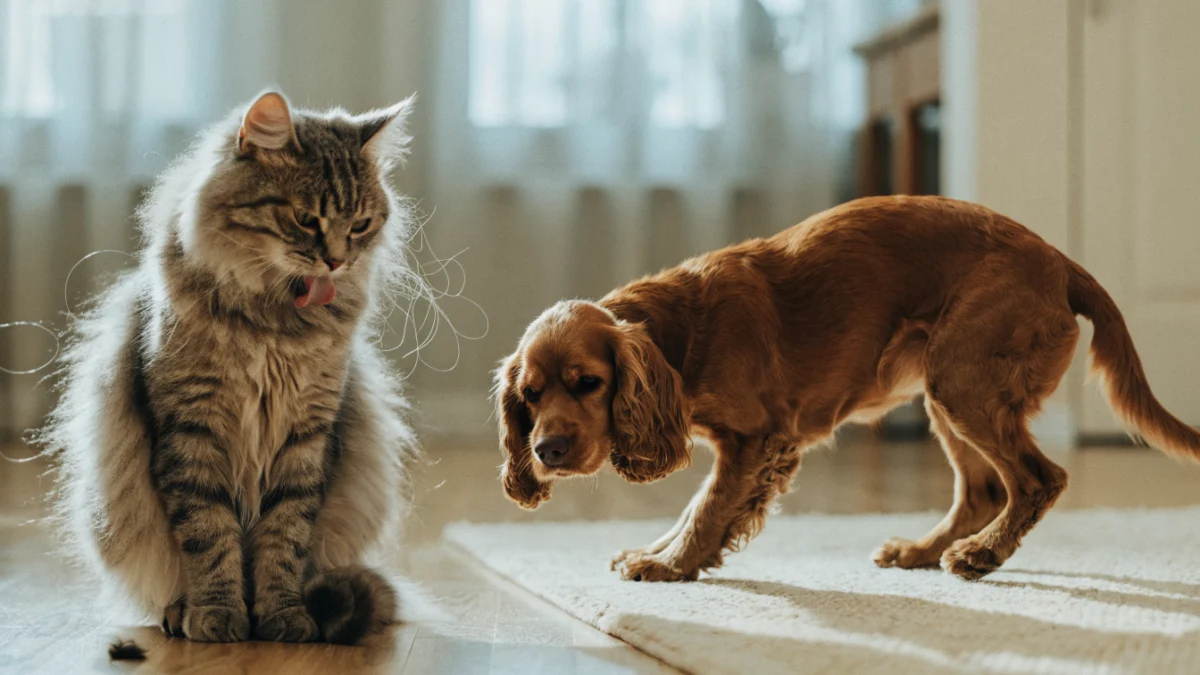
Let’s be completely honest: sharing our homes with animals means making peace with some decidedly unpleasant bodily functions. If you have a cat, you’re probably familiar with the damp, tubular “gifts” of fur occasionally deposited on your favorite rug. If you have a dog, you might have experienced the sudden, unmistakable scent of fish filling the room, or watched in horror as your beloved companion aggressively dragged their rear end across the living room carpet.
While both hairballs in cats and anal gland issues in dogs are considered routine nuisances, I rarely use the word “normal” for either. Over the years in clinical practice, I’ve found that these two issues are some of the most misunderstood aspects of pet care. Today, we’re going to dive into the gross truth behind both, why they happen, and how to actually manage them effectively without falling for internet myths.
The Anatomy of Gross: What’s Actually Happening
On one side of the equation, we have feline hairballs. When a cat grooms, their tongue—which is covered in microscopic, hook-like structures—acts like a comb, catching dead hair. They swallow this hair. While most of it passes harmlessly through the digestive tract and ends up in the litter box, some remains in the stomach and forms a hairball, clinically known as a trichobezoar.
Let me tell you about Luna, a 7-year-old Persian cat seen last spring. Her owner, Karen, brought her in because Luna was making terrible hack-gagging noises every few days. “I thought she just had a sensitive stomach,” Karen said. But an X-ray and ultrasound found a massive trichobezoar causing mild gastric inflammation. We often assume hacking is just what cats do, but when it happens frequently, it’s a sign that the digestive tract is struggling to handle the hair volume.
On the other side of the gross spectrum are canine anal glands. These are two small scent glands located on either side of your dog’s rectum. They secrete a foul-smelling, fishy liquid that dogs use to mark territory and identify each other—which is exactly why dogs sniff each other’s rear ends. In a perfectly functioning system, these glands are naturally expressed when a dog passes a firm stool.
The “Scooting” Myth and Other Misconceptions
If you see your dog scooting, your first thought is probably, “Oh no, the anal glands!” But it’s worth resisting the urge to jump to conclusions. There are actually at least five primary reasons a pet might scoot or chew their hind end: anal gland impaction, allergies (like fleas or food), intestinal parasites (such as tapeworms), fecal matting, or actual pain in the hips and lower back.
Consider a 6-year-old Toy Poodle named Bella, whose owner was convinced she needed her glands expressed every two weeks. The owner had been doing it herself after watching a video online. On examination, Bella’s anal glands were actually empty and severely inflamed from unnecessary squeezing. This brings up a major debate in the veterinary and grooming communities regarding routine, preventative anal gland expression.
The Routine Expression Debate
I’ll admit, I’ve changed my mind on this over the course of my career. Early on, I would express glands during routine visits just to keep owners happy. But the evidence has become clear: manually expressing healthy glands when there is no problem can cause chronic inflammation, scar tissue, and ultimately make the glands incapable of functioning on their own. The general consensus among boarded veterinary specialists is now:
If it ain’t broke, don’t touch it.
Healthy dogs should naturally express their anal glands. If a dog needs manual expression regularly, something in their digestive or structural system is off.
The same “natural vs. unnatural” argument applies to hairballs. While they are a natural byproduct of feline grooming, they shouldn’t happen constantly. More than one or two hairballs a month warrants a closer look at the cat’s diet or grooming routine. Some progressive veterinarians even argue that the pet food industry has normalized frequent hairballs simply to sell “hairball control” formulas. Frequent hacking shouldn’t be brushed off as “just a hairball”—it can actually be an early symptom of Inflammatory Bowel Disease (IBD) or GI lymphoma in cats.
Spotting the Warning Signs
How do you know when it’s time to intervene? For dogs with anal gland issues, the signs are usually hard to miss:
- Scooting the rear on the floor
- Excessive licking or biting at the anus
- A pungent, sudden “fishy” odor in the room
- Visible swelling near the rectum or blood in the stool if an infection or abscess has formed
According to [1] published in 2021, this is overwhelmingly a canine issue. While cats certainly have anal glands and can experience issues (you can read more about [2] here), impaction is rarely a primary complaint in felines compared to dogs. Small breed dogs—like Toy Poodles, Chihuahuas, and Dachshunds—as well as obese pets are at a significantly higher risk.
For cats, the signs of a problematic hairball are distinct but can mimic other issues:
- Loud hack-gagging or retching noises
- A temporary lack of appetite
- Lethargy or hiding
- Vomiting up a tubular mass of fur (which often looks less like a ball and more like a cylinder)
If your cat is retching repeatedly but nothing comes up, or if they stop eating entirely, don’t assume it’s a hairball. They could have a gastrointestinal blockage, which is a medical emergency. If you want to understand more about the basics of these scent sacs, this guide on [3] is a great resource to share with your pet sitter.
Managing the Mess: Diet, Grooming, and Gut Health
The good news is that for both conditions, dietary management is highly effective. For dogs prone to anal gland issues, the goal is to create bulkier, firmer stools that naturally squeeze the glands during defecation. You can achieve this by adding fiber to their diet. Look for high-fiber commercial diets, or add plain, pureed pumpkin (not the sugary pie filling) to their regular meals. Always talk to your vet before adding new supplements or determining the right dosage for your specific pet. Additionally, maintaining a healthy weight is crucial; obese pets are at a much higher risk for impaction because their body mechanics and digestion are compromised.
For cats, hairball management relies on moving the hair through the digestive tract rather than letting it sit in the stomach. Look for hairball-control diets that are high in both fiber and omega-3 fatty acids. The fiber helps push the hair along, while the fatty acids reduce inflammation in the gut and improve skin health, meaning less shedding in the first place. At home, the most effective intervention is simply regular brushing. If the dead hair doesn’t get into the cat’s stomach, it can’t form a hairball.
The Microbiome Connection
One of the most exciting recent developments in veterinary medicine is the shifting focus toward the gut microbiome. New studies suggest that pets with chronic anal gland issues or stubborn hairballs often suffer from dysbiosis—an imbalance in gut bacteria. Vets have increasingly started pairing targeted probiotic supplements with dietary changes to treat both conditions from the inside out. When the gut flora is balanced, digestion is more efficient, stools are more consistent, and overall GI inflammation drops.
When Surgery Becomes the Answer
In severe, chronic cases where diet and medical management fail, there are advanced options. For dogs with endless, non-responsive anal gland issues—like recurring abscesses or even tumors—we can perform an anal sacculectomy, which is surgery to remove the glands entirely. I used to dread recommending this, but the procedure has become much safer and more refined. Modern veterinary surgeons use meticulous techniques to minimize risks to the surrounding nerves that control continence. The vast majority of dogs recover beautifully and never have to deal with another abscess.
At the end of the day, whether you’re dealing with a hacking cat or a scooting dog, the goal is to look past the gross factor and listen to what your pet’s body is telling you. “Normal” doesn’t have to mean frequent. While domestic cats and dogs are perfectly adapted to living in our homes, their digestive and anatomical quirks still require our attention. By focusing on appropriate fiber intake, regular grooming, and maintaining a healthy gut, you won’t just be conserving your carpets and your sense of smell—you’ll be actively contributing to the long-term health and comfort of your best friend.
Sources
- a cross-sectional study on canine and feline anal sac disease — pmc.ncbi.nlm.nih.gov
- cat anal gland problems — cats.com
- what anal glands are and why pets have issues with them — fphmapleton.com