

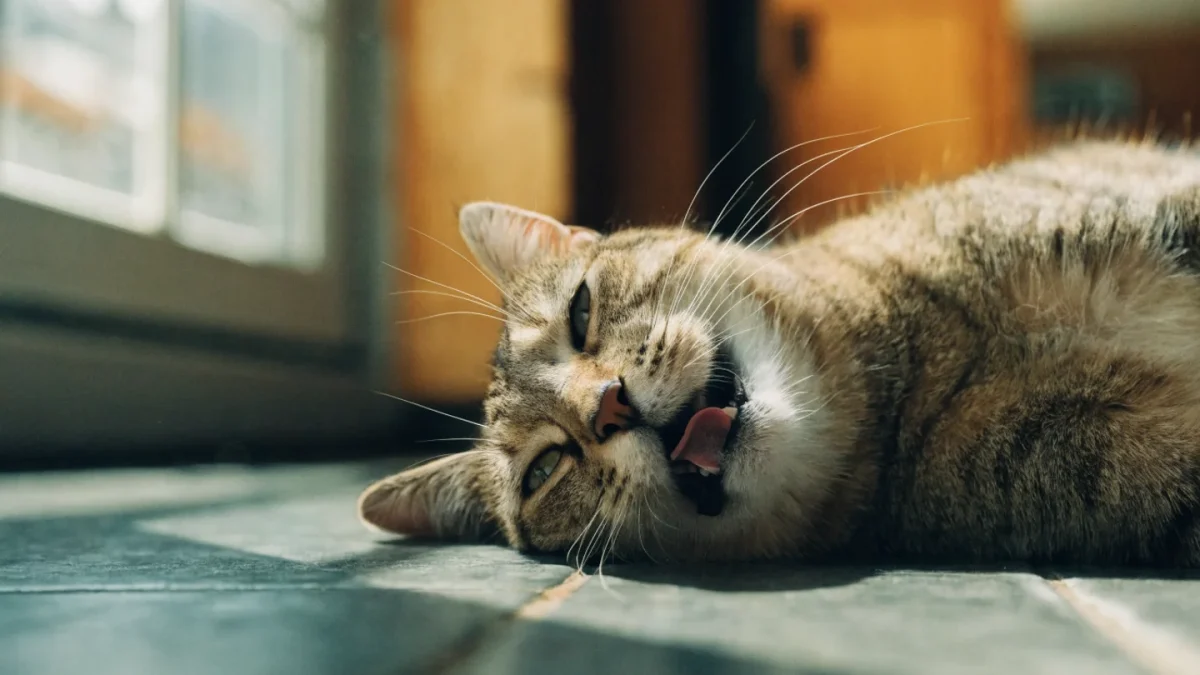
Cats are remarkably good at hiding illness. It's an evolutionary trait — showing weakness in the wild is dangerous — and it means that by the time a cat owner notices something is wrong, the situation is often further along than it looks.
Heatstroke in cats is particularly easy to miss. They don't pant under normal circumstances, so when they do, owners sometimes think it's just "a little overheated" and watch and wait. But panting in a cat isn't "a little overheated." Panting in a cat is your cue to act immediately.
Why Cats Overheat Differently
Cats regulate body temperature primarily through behavioral means — seeking shade, resting in cool spots, grooming (saliva evaporation provides some cooling), and dramatically reducing activity. They're better at this self-regulation than dogs, which is one reason you hear about fewer cases of feline heatstroke relative to canine.
But when behavioral options are removed — as in a locked car, a closed shed, or a room without ventilation during a heat wave — cats can progress from fine to dangerously overheated without obvious warning. And flat-faced breeds (Persians, Himalayans) have the same airway compromise as brachycephalic dogs: panting doesn't work as well.
Signs of Heatstroke in Cats
Early:
- Restlessness, pacing
- Excessive grooming (trying to use saliva cooling)
- Seeking cool surfaces actively — tile, basement floor
- Elevated breathing rate
Moderate:
- Open-mouth breathing or panting — always concerning in a cat
- Drooling or hypersalivation
- Bright red gums and tongue
- Vomiting
- Weakness and reluctance to move
Severe:
- Collapse
- Pale or grayish gums
- Seizures
- Loss of consciousness
- Labored breathing
Any open-mouth breathing in a cat is a medical concern. Full stop. Unlike dogs, cats don't pant when warm or after exercise as a normal response. If your cat is panting, treat it as an emergency.
Emergency Response
1. Get them to a cool area. Air conditioning is ideal. At minimum, a cool shaded space with moving air.
2. Apply cool water. Wet the coat, focusing on the groin, armpits, and neck. Cool (not cold) running water or a damp cloth. Cats often don't tolerate being soaked — work with what cooperation you get.
3. Create airflow. A fan is extremely helpful. Direct gentle airflow over the wet coat.
4. Offer small amounts of cool water if the cat is conscious and able to swallow. Don't force water if they're too weak or disoriented to swallow safely.
5. Get to the vet. Every heatstroke case in a cat needs professional assessment. Cats decompensate from heatstroke quickly once they've begun showing systemic signs.
Don't Wait for Improvement
The temptation is to cool the cat, watch them seem a little better, and decide the vet visit is optional. I've had owners do this and then call me the next morning with a cat who had deteriorated overnight.
Heatstroke causes damage to multiple organ systems — kidneys, liver, clotting factors, and the brain — that isn't visible from the outside. Bloodwork will often show significant metabolic derangement even in a cat who "seemed to recover." The recovery window for preventing permanent organ damage is the first few hours after the event.
Scenarios Where Cats Get Heatstroke
Enclosed spaces: Sheds, garages, and greenhouses are common summer scenarios. Cats investigate small spaces. If they get locked in one that gets direct sun exposure, temperatures can become lethal within a couple of hours.
Cars: Same as dogs. A cat in a carrier in a parked car on a warm day faces the same physics.
Upper floors and attic rooms: Heat rises. A cat napping on an upper floor in a house with no air conditioning on a 95°F day may be in an environment significantly hotter than what you feel downstairs.
Outdoor cats during heat waves: Especially if access to shade is limited or water has run dry.
Enclosed catteries: If you're boarding your cat, ask specifically about temperature management. A boarding facility that's fine in spring can become dangerous in August.
Prevention
For indoor cats: air conditioning or cross-ventilation during hot spells. Check that cats haven't shut themselves into hot rooms. Frozen water bowl to provide both water and passive cooling. Close window blinds to reduce solar heat gain.
For outdoor cats: shade at all times, fresh water in multiple locations, the option to come indoors during peak afternoon heat. Bring them in on extreme heat days.
For flat-faced breeds: treat them like brachycephalic dogs in summer — extra caution, more restriction of activity, and awareness that their baseline heat tolerance is lower than other cats.