

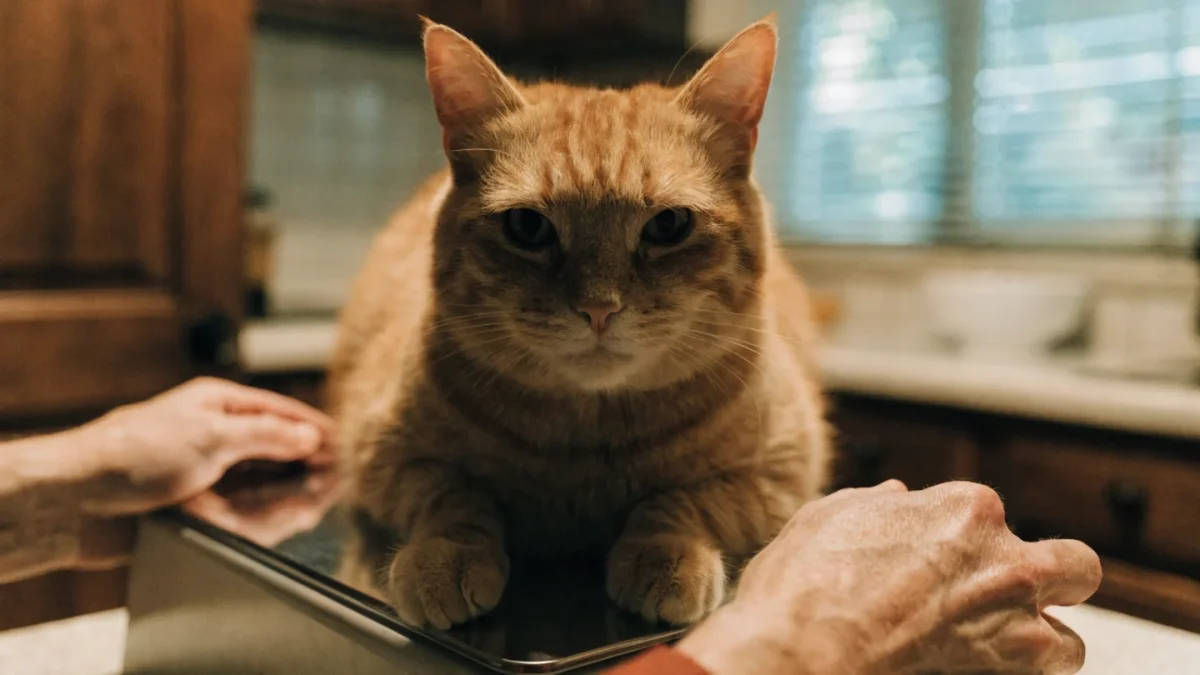
Mango was a seven-year-old orange tabby who came in on a Wednesday with a three-day history of not eating. His owner had read that he was overweight — he was, carrying about two extra pounds on a frame that should have been eight — and two weeks earlier had cut his portions roughly in half. At first he seemed fine. Then he stopped eating entirely. By the time he came in, his bilirubin was elevated and his liver enzymes were significantly abnormal. He had hepatic lipidosis.
He recovered, but it took weeks of tube feeding and close monitoring. His owner had done what she thought was right. What she hadn't known was that for overweight cats, abrupt calorie restriction isn't just ineffective — it can trigger a liver crisis.
Hepatic lipidosis — fatty liver disease — is the reason cat weight loss is fundamentally different from dog weight loss. It is not a theoretical risk or a rare complication. It develops when an overweight cat's calorie intake drops sharply and is not replaced.
The good news is that it's entirely preventable with the right approach. The bad news is that "just cut the food down" is the wrong approach for cats.
Why Cats Are Not Small Dogs
Dogs are metabolically more flexible. A dog on moderate calorie restriction will be hungry and may beg persistently, but the liver handles the fat mobilization without incident in the vast majority of cases.
Cats are obligate carnivores with different metabolic wiring. They have unique hepatic biochemistry — their liver is set up to process continuous protein rather than managing large fat burdens during caloric restriction, with limited ability to efficiently export triglycerides as very low-density lipoprotein (VLDL) when fat overwhelms the hepatocytes. When an overweight cat is suddenly underfed — even for a few days — fat mobilizes faster than the liver can process it. The fat accumulates in hepatocytes. This is hepatic lipidosis.
Overweight cats are at higher risk than lean cats, which creates a cruel irony: the cats that most need to lose weight are the ones most vulnerable to harm from doing it improperly.
What Triggers Hepatic Lipidosis
The trigger is not a particular food or ingredient — it's the absence of adequate food intake. This means:
- Abrupt diet restriction (halving portions suddenly)
- Sudden food refusal due to illness, stress, dental pain, or food change
- A new cat not eating in an unfamiliar home
- Concurrent illness causing anorexia
- A "hunger strike" when owners change food
Any scenario where an overweight cat isn't eating adequately for more than 24–48 hours warrants attention. Not necessarily an emergency at 24 hours — but worth monitoring closely and seeking veterinary guidance at 48 hours if intake remains poor.
The Safe Weight Loss Rate
For cats, the maximum safe rate of weight loss is generally 0.5–2% of body weight per week, with a 2013 review in Veterinary Medicine Research and Reports recommending the conservative end of this range to minimize hepatic lipidosis risk — no more than 0.5–1% per week for significantly obese cats. Some sources are even more conservative, citing 0.5–0.75% for cats with BCS 8–9.
For a 6 kg cat that should weigh 4.5 kg, that means losing roughly 30–60 grams per week. It takes months. This is not the timeline most owners have in mind when they decide their cat needs to lose weight. But it's the timeline that's safe.
Faster rates — achievable, but risky. Slower rates — fine, just slower progress. The goal is not speed; it's moving in the right direction without causing a secondary problem.
Calorie Targets: How to Calculate Them
The resting energy requirement (RER) for a cat is approximately 70 × (body weight in kg)^0.75 per day. For weight loss, the feeding target is usually set at 80% of RER calculated at the target weight — not the current weight.
In practice, for a 6 kg cat targeting 4.5 kg:
- RER at 4.5 kg ≈ 70 × (4.5)^0.75 ≈ approximately 175 kcal/day (using the standard RER formula confirmed by the Pet Nutrition Alliance for both cats and dogs)
- Weight loss target at 80% = approximately 140 kcal/day
This is a starting point. Adjust based on two-week weigh-ins. If the cat is losing more than 1% per week, increase calories slightly. If losing less than 0.5% per week, very modest reduction (10–15 calories per day) is appropriate.
Never reduce calories below the RER at target weight — this risks the very outcome we're trying to prevent.
What Food to Feed
High-protein, moderate-fat, low-carbohydrate diets work well for cat weight loss. Cats on high-protein weight management diets tend to maintain lean muscle mass better than cats on high-carbohydrate, calorie-restricted formulations — a controlled study at the University of Tennessee found that cats fed a high-protein diet (54% of metabolizable energy from protein) maintained lean mass during weight loss while cats on moderate-protein diets lost lean tissue alongside fat.
Wet food has practical advantages for weight management in cats. The higher moisture content means larger meal volume at similar calorie counts, which helps cats feel more satisfied. Dry food can work, but the portion sizes get very small when restricting calories, and some cats find this unsatisfying and begin seeking food elsewhere.
Prescription weight management diets for cats are formulated with higher protein-to-calorie ratios specifically to preserve lean mass during loss — worth asking your vet about if over-the-counter approaches aren't working.
Handling the Cat Who Refuses to Eat the New Diet
This is where everything can go wrong. An overweight cat on a food change who refuses the new food and goes four days eating nothing has just been set up for hepatic lipidosis.
Transition food changes extremely slowly for overweight cats — over two to three weeks minimum, with much longer if the cat is resistant. Mix 10% new food with 90% old for several days before incrementally increasing the proportion. If the cat refuses the new food even at 10%, slow down further or consider whether the new food is appropriate.
If a cat has been eating primarily dry food, introducing wet food should also be gradual — different textures and aromas can cause temporary refusal in cats habituated to one format.
Never starve a cat to "make them hungry enough to eat the new food." This is genuinely dangerous advice that still circulates.
When to Involve Your Vet
Any cat more than 20–25% over ideal weight (BCS 8–9) should be under veterinary supervision for weight loss, not managed at home independently. These cats have higher hepatic lipidosis risk, may have concurrent conditions affecting their metabolic response to restriction, and benefit from calorie targets calculated specifically for them.
Additionally: if your cat is eating less than usual without explanation, see your vet within 48 hours, particularly if the cat is overweight. Diagnosing the cause and getting calorie intake back to adequate is far easier than treating established hepatic lipidosis.
Frequently Asked Questions
How quickly does hepatic lipidosis develop?
Signs of hepatic lipidosis can develop within two to four days of significant calorie restriction in a susceptible cat. Clinical signs include loss of appetite (perpetuating the problem), lethargy, jaundice (yellowing of the skin and eyes), and vomiting. It's treatable, but treatment typically involves hospitalization, nutritional support via feeding tube, and supportive care — intensive and expensive. Prevention is much easier.
My cat is at BCS 6 and just a little overweight. Can I manage this at home?
For a mildly overweight cat (BCS 6, not significantly obese) in otherwise good health, modest management at home is reasonable — gradual food transition to a calorie-appropriate diet, with careful attention to maintaining adequate intake and biweekly weigh-ins. Still, at least one conversation with your vet to establish a calorie target and confirm there's no underlying cause is worthwhile. Don't attempt significant calorie cuts (more than 20% of current intake at once) without guidance.
Can exercise help a cat lose weight?
Exercise contributes modestly to cat weight loss and importantly helps preserve lean muscle mass. Environmental enrichment, interactive play sessions, and puzzle feeders that require physical engagement help. But cats aren't going to be walked for thirty minutes twice a day — their activity-based calorie expenditure is more modest than dogs'. Diet management is the primary driver; exercise is supportive.
My cat lost weight suddenly without dieting. Should I be concerned?
Yes, unexplained weight loss in cats is always worth a vet visit. Hyperthyroidism (overactive thyroid), diabetes, inflammatory bowel disease, and other conditions can all cause weight loss in cats that appear to be eating normally. Unlike weight gain, which is often explained by overfeeding, unintentional weight loss usually has a medical cause that benefits from investigation.