

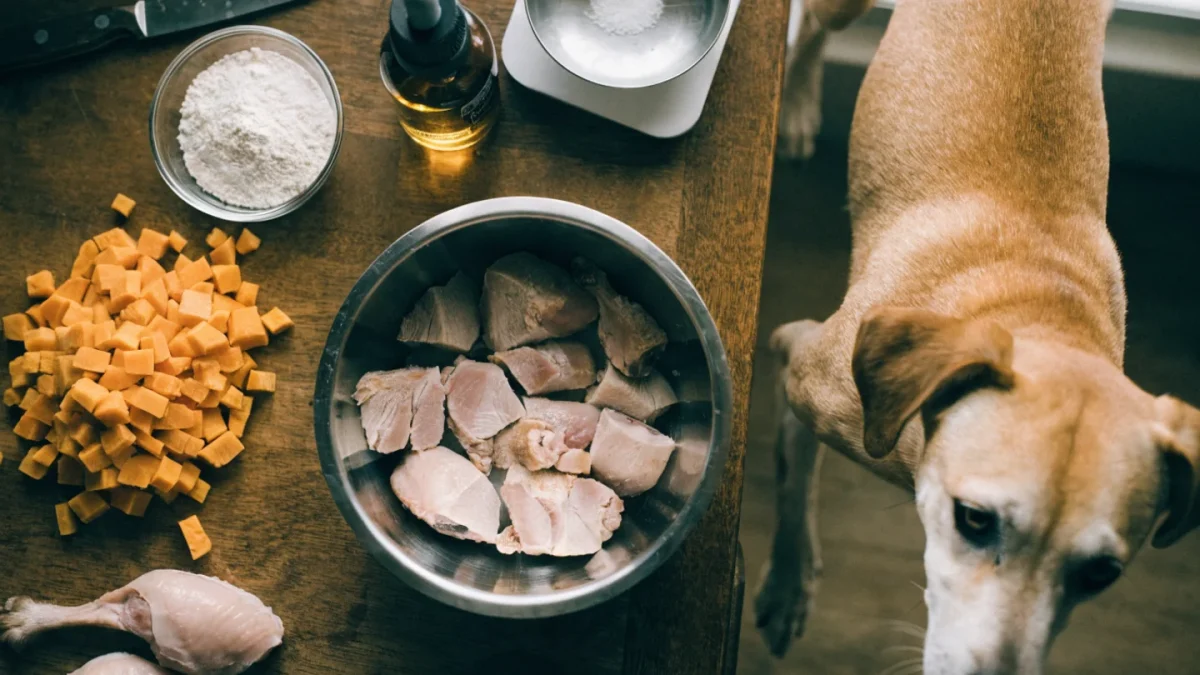
A client brought me a spiral notebook last year. In it, she had recorded every ingredient and quantity she'd fed her eleven-year-old shih tzu, Biscuit, over the previous four years — she'd been making his food since a bout of pancreatitis had prompted her to switch off commercial food. The notebook was meticulous. Four years of records, careful proportions, seasonal ingredient adjustments. What it couldn't tell her, and what brought her in, was whether Biscuit's recently declining energy and coat quality were diet-related or just age.
Bloodwork told the story. Biscuit was low-normal on B12, deficient in vitamin D, and had a zinc level that explained his skin crusting. His diet — chicken breast, rice, vegetables, and olive oil — was nutritionally coherent in some ways and significantly deficient in others. She'd been trying genuinely hard for four years and still had meaningful gaps.
This happens constantly. Not because people aren't dedicated enough. Because making a nutritionally complete homemade pet diet is harder than it looks from the outside.
Why Homemade Pet Food So Often Falls Short
The core problem is that whole foods — even excellent, human-grade, thoughtfully selected whole foods — don't map neatly onto a complete nutritional profile for dogs or cats. Animal physiology requires specific amounts of dozens of nutrients. Some are abundant in common ingredients; many are not.
The nutrients that most reliably run short in homemade diets include calcium (when no bone material is fed), iodine (essentially absent from land-animal proteins), vitamin D (very low in most meat and vegetables), zinc, manganese, and — for cats specifically — taurine and arachidonic acid. These deficiencies don't announce themselves immediately. They accumulate over months, sometimes years, before clinical signs appear. By then, the dog or cat has been running on empty for a long time.
Research on homemade pet diets consistently finds the majority are deficient in at least one nutrient when analyzed against established requirements. A frequently cited UC Davis analysis published in the Journal of the American Veterinary Medical Association found that 95% of the 200 recipes it evaluated came up short on at least one essential nutrient, and more than 83% had multiple deficiencies. This is not a fringe problem or an edge case. It's the baseline expectation unless someone has done the nutritional work to close the gaps.
None of this means homemade feeding is a bad idea. I'm not saying that. I feed my own cat a partially homemade diet. What I am saying is that the bar for doing it properly is higher than most people realize when they decide to start.
Who Should Be Feeding Homemade Food
Homemade pet food makes sense in several situations:
- Dogs or cats with specific food allergies or intolerances where commercial options are inadequate or very expensive
- Pets with GI conditions that respond better to specific home-cooked ingredients
- Owners who want to know exactly what's in their pet's food and are willing to invest in doing it right
- Pets with kidney disease, liver disease, or other conditions where precise protein, phosphorus, or sodium control matters
- Anyone who simply prefers fresh whole-food feeding and is committed to learning the nutritional framework
It does not make sense as a casual alternative to commercial food based on a recipe found online without any nutritional analysis. That's where the deficiency stories come from.
The Nutritional Requirements You're Trying to Meet
Dogs and cats have established nutritional requirements published by the National Research Council and reflected in AAFCO nutrient profiles. These are the standards I work against when evaluating any diet.
For dogs, the main categories are:
Protein and amino acids: Dogs need adequate total protein and specific essential amino acids — particularly methionine, lysine, tryptophan, and arginine. Muscle meat generally provides these well. The concern is more about balance than absolute quantity in most homemade diets.
Fats and essential fatty acids: Linoleic acid (omega-6) is the main essential fatty acid for dogs. Adequate fat is needed for energy and fat-soluble vitamin absorption. Too little fat is a real problem in lean-meat diets — something many owners don't anticipate.
Calcium and phosphorus: The ratio matters as much as the absolute amounts. Roughly 1.2:1 (calcium:phosphorus) is the target. Meat and vegetables are phosphorus-heavy; without a calcium source, the ratio inverts badly.
Vitamins: Fat-soluble (A, D, E, K) and water-soluble (B complex, C). Most water-soluble vitamins are reasonably supplied by varied whole foods; fat-soluble vitamins are where homemade diets most often fall short.
Minerals: Iron, zinc, copper, manganese, iodine, selenium. Each has a specific source in a balanced diet. Each can be deficient or excessive in a poorly designed homemade diet.
For cats, add to this list: taurine (essential amino acid they cannot synthesize adequately), arachidonic acid (an omega-6 they cannot produce from precursors like dogs can), niacin (limited synthesis from tryptophan in cats), and the inability to convert beta-carotene to vitamin A. Cats fed a "dog food" formulation will develop deficiencies in these areas over time.
Building a Complete Homemade Diet: The Core Components
1. Protein Source
Muscle meat — chicken thigh, beef, turkey, lamb, pork, fish — forms the bulk of the diet. The specific protein matters less than most people assume; what matters more is that it's appropriate for the individual animal's tolerances and health status.
Variety over time is useful because different proteins have different micronutrient profiles. Rotating proteins also reduces the risk of developing a single-protein intolerance. But rotation needs to be managed — random swaps can shift the nutritional profile of the diet significantly if you haven't accounted for the differences.
For cats and dogs both: organ meats are not optional. Liver and at least one other secreting organ (kidney, spleen) provide concentrated fat-soluble vitamins and minerals that muscle meat doesn't supply adequately. This is the most commonly skipped component in homemade diets, and also the most consequential.
2. Carbohydrate Source (Dogs)
Dogs don't require carbohydrates in the way they require protein and fat, but including cooked complex carbohydrates is generally fine and practically useful — it adds caloric density, provides fiber, and dilutes the cost. Sweet potato, brown rice, quinoa, lentils, pumpkin, and oats are commonly used.
Cats genuinely have minimal need for dietary carbohydrates and don't metabolize them as efficiently as dogs. Carbohydrate content in homemade cat food should be low.
3. Calcium Source — Non-Negotiable
For cooked diets not including raw edible bones, a calcium supplement is essential. Without it, the diet is almost certainly calcium-deficient relative to phosphorus.
Ground eggshell is a widely used option — it's approximately 40% calcium by weight and is essentially free if you collect and dry eggshells from cooking. Calcium carbonate supplements are also appropriate. Bone meal is an option but has variable calcium content.
The amount of calcium needed depends on the specific recipe and its phosphorus content — this is where calculation matters. You can't just add "some eggshell" and assume it's enough.
4. Vegetables and Fiber
Vegetables add micronutrients, fiber, and variety. Dark leafy greens (spinach, kale, parsley) are rich in vitamins and minerals. Pumpkin and sweet potato add beta-carotene and fiber. Zucchini, green beans, carrots are commonly used.
Avoid onions, garlic, leeks, chives, and ramps — toxic to both dogs and cats. Grapes and raisins are toxic to dogs. For cats, many plant foods are simply irrelevant nutritionally given their limited carbohydrate metabolism, but small amounts are generally safe.
5. Targeted Supplementation
Almost every homemade diet needs supplementation for at least some nutrients. The most universally needed are:
- Iodine: From a measured kelp supplement or iodine supplement, unless seafood is fed regularly
- Vitamin D: Often needs supplementation regardless of other diet quality; verify blood levels before dosing
- Vitamin E: Particularly important in diets with significant fat content
- Manganese: Often low in meat-based diets; green tripe or a supplement addresses this
- Zinc: Check in context of calcium levels, as calcium can inhibit zinc absorption
For cats additionally: taurine supplementation is standard unless feeding very high quantities of heart meat (one of the better whole-food taurine sources).
The Calcium Calculation — Done Right
This is where most home-cooked diet failures happen, so I want to explain it carefully.
Meat and organs are high in phosphorus. Vegetables are roughly balanced but contribute modestly. Grains and starchy vegetables are somewhat higher in phosphorus. If you're feeding all of these without a meaningful calcium source, your diet has a calcium-phosphorus ratio somewhere around 0.5:1 or lower — the inverse of what dogs need.
To correct this: calculate total phosphorus in the recipe, determine how much calcium is needed to reach a 1.2:1 ratio, and add the calcium source in the appropriate quantity. For a typical homemade dog food recipe using 400g of mixed meat and vegetables, you might need 600–800mg of elemental calcium per meal — which is roughly 1.5–2g of calcium carbonate or about 3–4g of dry ground eggshell.
These numbers vary with every recipe. Do the math for your specific recipe, not someone else's.
Dogs vs. Cats: This Point Cannot Be Overstated
I've had clients ask whether they can use the same homemade food for their dog and their cat. The answer is almost always no.
Dogs are omnivores with significant metabolic flexibility. Cats are obligate carnivores with specific metabolic constraints that don't exist in dogs. A cat fed a dog-appropriate diet will, over time, develop taurine deficiency (cardiac and neurological consequences), vitamin A deficiency (they can't convert beta-carotene), and potentially niacin deficiency. None of these are theoretical risks — I've seen clinical cases of all three.
Cats need their own formulated diet. This is not negotiable.
How to Actually Get a Recipe Formulated
There are three approaches, in order of reliability:
1. Work with a board-certified veterinary nutritionist. This is the gold standard. A consultation typically involves reviewing your dietary goals, the specific animal's health status, and producing a complete formulated recipe with specific supplement amounts. Worth every dollar for a primary, long-term homemade diet, especially for puppies, kittens, seniors, or health-compromised animals.
2. Use validated pet diet formulation software. Several software platforms allow you to input ingredients and quantities and compare the resulting nutritional profile against NRC or AAFCO requirements. This is DIY nutritional analysis — more work, but much better than guessing. The quality of available tools varies; look for one that includes a current nutrient database and compares against established canine or feline requirements specifically.
3. Use a recipe that has been professionally analyzed and published by a board-certified nutritionist. Some veterinary nutritionists publish formulated recipes. If you use one, follow it exactly — every ingredient, every quantity, every supplement. Recipe modifications change the nutritional profile.
What I'd avoid: general internet recipes without clear nutritional analysis, "ancestral diet" frameworks that don't include calcium calculations, and any recipe that dismisses supplementation as unnecessary.
Monitoring a Homemade Diet Long-Term
A well-formulated homemade diet isn't set-and-forget. Annual or biannual bloodwork is the responsible approach — it catches developing deficiencies before they become clinical problems. For seniors, more frequent monitoring makes sense.
Watch for: changes in coat quality (vitamin E, zinc, essential fatty acids), changes in energy or body condition (caloric adequacy, protein quality), changes in stool consistency, and changes in eating behavior (which sometimes signal dental pain or underlying illness rather than diet issues).
For balancing the specific nutrients in homemade dog food, the follow-up article goes deeper into the nutrient-by-nutrient breakdown for dogs specifically.
FAQ
Do I need a veterinary nutritionist for homemade pet food?
For a puppy, kitten, pregnant animal, senior, or any pet with a health condition where diet matters — yes, working with one is the appropriate standard of care. For a healthy adult pet where homemade is a partial diet supplementing commercial food, the stakes are lower. For a healthy adult pet being fed homemade as the exclusive primary diet, I'd strongly recommend at minimum using formulation software and having the recipe reviewed, even if a full consultation isn't done right away.
Can I use a recipe I found online?
Some online recipes have been professionally analyzed and are legitimate starting points. Many haven't been. Before committing to one as a primary diet, I'd want to know: has it been analyzed against NRC or AAFCO requirements? Does it include a calcium source with specific amounts? Does it address iodine, vitamin D, and vitamin E supplementation specifically? If the answers are unclear, treat the recipe with caution.
My dog has been on homemade food for years and seems healthy. Does that mean the diet is fine?
Not necessarily. Many nutritional deficiencies are silent for months to years before clinical signs appear — Biscuit, from the opening of this article, had been deficient for years without his owner noticing. Periodic bloodwork and nutritional assessment are the way to actually verify rather than assume.
How do I know if my homemade diet is working?
Day-to-day indicators: body condition, coat quality, energy, stool consistency. These are useful but incomplete. Annual bloodwork — minimum for healthy adults — gives you the internal picture that physical observation can't. A nutritional review every couple of years, or whenever you change the recipe significantly, is the appropriate professional check.
Is homemade food better than commercial pet food?
Honestly, it depends entirely on execution. A well-formulated homemade diet made from quality ingredients can equal or surpass a good commercial diet in many respects. A poorly formulated homemade diet is worse than a nutritionally complete commercial diet, full stop. "Homemade" is not inherently better. Properly formulated is what matters.