

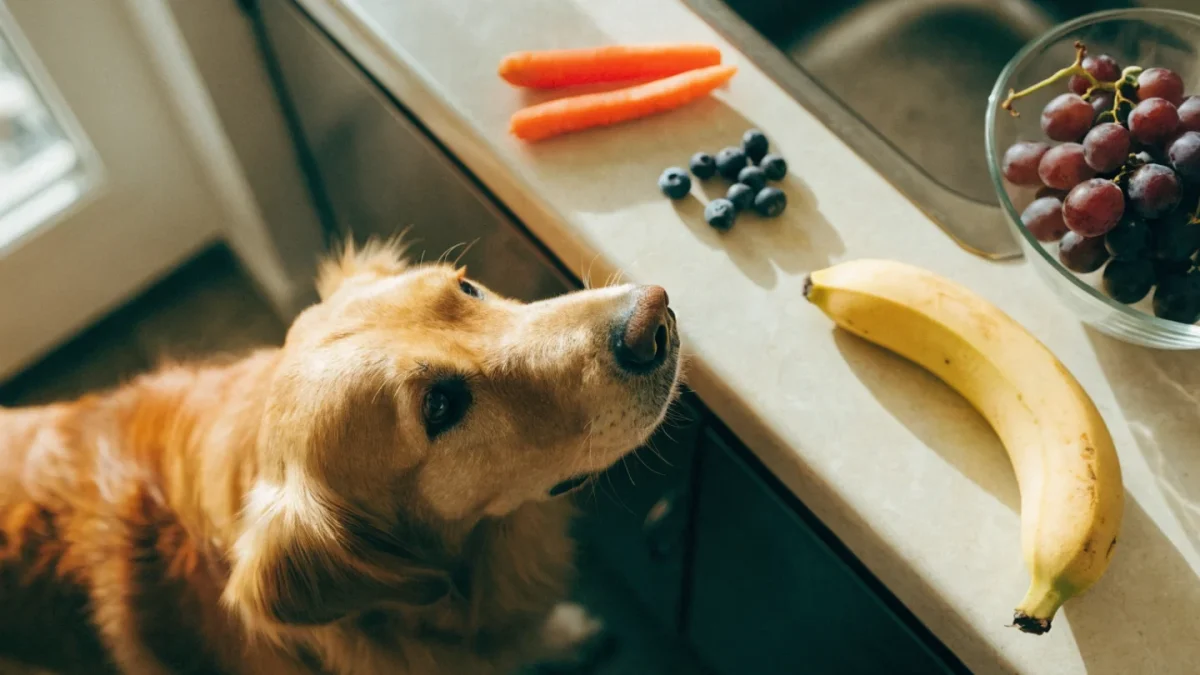
A Saturday afternoon, two years ago. My phone rang while I was in the middle of weeding the garden. A client, slightly panicked: her golden mix, Beau, had just eaten a handful of grapes off the kitchen counter. She wasn't sure exactly how many. Maybe eight, maybe fifteen.
I told her to take him to the nearest emergency clinic immediately.
She asked if I was sure — he seemed fine. I told her I was absolutely sure, that we don't fully understand grape toxicity in dogs but that even small amounts have caused acute kidney failure, and that waiting to see what happened was not a strategy I was comfortable with.
Beau was fine. They induced vomiting at the clinic, supportive care, monitoring overnight, discharged the next day. His kidneys checked out.
That's the extreme end. Most human food questions don't involve a potential organ failure — they're questions like "can my dog have a bite of banana?" or "is it okay if the cat licks the tuna can?" But the spread of outcomes — from completely fine to life-threatening — is wide enough that having a working mental map of which foods matter and why is genuinely useful.
The Categories
I think about human food for pets in roughly four categories:
1. Safe in reasonable amounts — these can be part of the diet as treats or toppers without concern
2. Safe but with specific caveats — fine in small amounts, but with particular preparation requirements or portion limits
3. Uncertain or mildly risky — enough concern to avoid routinely, not necessarily toxic in all amounts
4. Genuinely toxic — should never be given, regardless of amount or circumstances
Category 1: Safe in Reasonable Amounts (for Dogs)
Plain cooked chicken, turkey, beef, or fish. One of the most consistently safe and nutritionally sound things you can give a dog. Cooked, unseasoned, boneless — not rotisserie chicken, which is heavily salted. The most common "bland diet" for GI upset is boiled chicken and rice, and there's good reason for it.
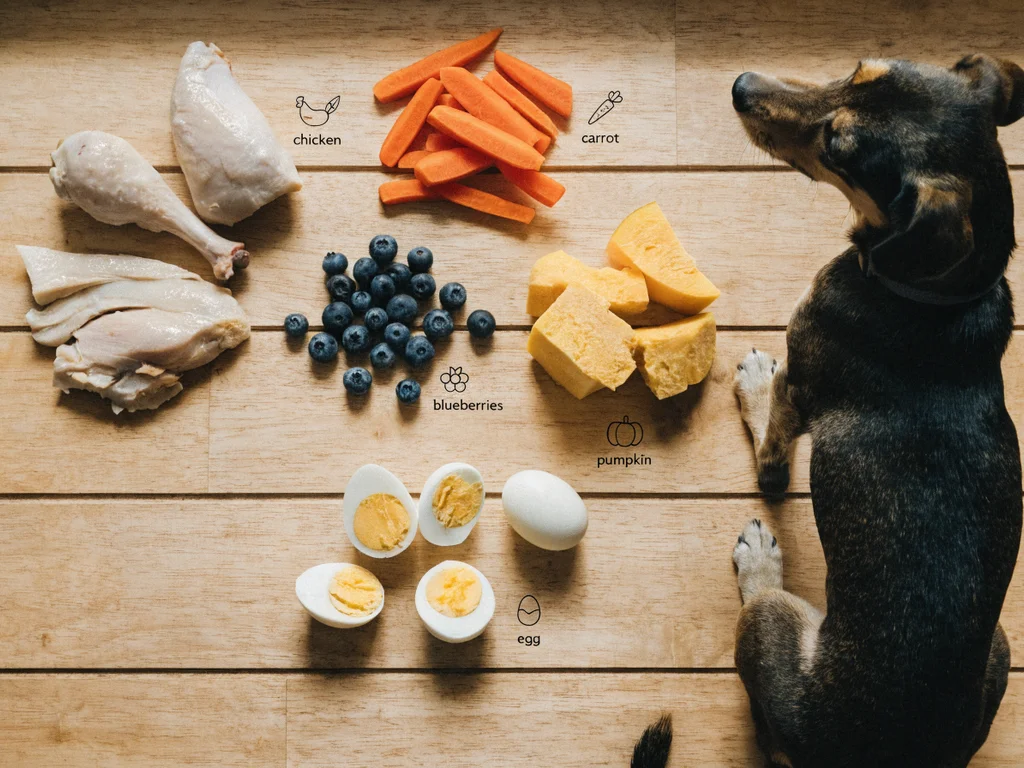
Eggs. Cooked or raw — both are nutritionally valuable. Cooked eggs eliminate any concern about Salmonella and also avoid the biotin-interference issue from raw egg whites (raw egg white contains avidin, which blocks biotin absorption; this matters if you're feeding large amounts of raw eggs regularly, but not for the occasional raw egg). Scrambled or hard-boiled, plain, are easy and most dogs love them.
Most vegetables. Carrots, green beans, peas, zucchini, cucumber, broccoli (in small amounts — can cause gas), sweet potato (cooked), pumpkin. Low calorie, some fiber, generally well-tolerated.
Watermelon, blueberries, strawberries, banana, apple (without seeds or core), cantaloupe. These are all fine in appropriate amounts. Fruit has natural sugar, so portion control matters for overweight dogs or diabetic animals.
Plain cooked rice and pasta. Digestible, low-risk, frequently used in recovery diets. Not much nutritional contribution but not harmful.
Peanut butter — with a critical caveat. More on this in the "safe with caveats" section.
Category 1: Safe in Reasonable Amounts (for Cats)
Cats are trickier because they're obligate carnivores. Their digestive systems are not designed to process many plant foods efficiently, and they're more sensitive to some compounds that dogs tolerate fine.
Cooked chicken, turkey, fish (in water, no added salt). The closest to their natural diet. Plain, unseasoned, boneless.
Eggs. Same logic as dogs — cooked is cleanest.
Small amounts of vegetables — most cats aren't interested, but the odd bite of cucumber or green bean won't hurt them.
Fruit is less appropriate for cats — their digestive systems don't handle the sugars well and most cats don't seek it out anyway.
Category 2: Safe With Specific Caveats
Peanut butter. Probably fine for most dogs in small amounts — a teaspoon as a treat or to hide a pill. The major concern is xylitol, an artificial sweetener used in some peanut butters and other "natural" nut butters that is acutely toxic to dogs. Always check the ingredient label for xylitol before giving. Unsalted, xylitol-free is the rule.
Dairy. Small amounts of plain yogurt, cottage cheese, or cheese are fine for many dogs. Cats and dogs don't produce much lactase (the enzyme that digests lactose) as adults, so larger amounts can cause GI upset. Individual tolerance varies considerably.
Canned fish. Safe and nutritious, but specifically in water without added salt or sauces. "In oil" versions have excessive fat. "In brine" is too salty. The label matters here.
Raw fish in large amounts. Occasional small amounts are fine. Regular raw fish feeding can cause thiamine (vitamin B1) deficiency because raw fish contains thiaminase, an enzyme that destroys thiamine. Cooked fish does not have this problem.
Category 3: Uncertain or Best Avoided
Corn on the cob. The corn itself is harmless. The cob is a gastrointestinal obstruction risk — not toxic, but corn cobs are one of the most common foreign body obstructions I see in practice. Not worth the risk.
High-fat scraps and trimmings. Not toxic in the classical sense, but high-fat meals — especially fat trimmings, bacon, sausage — are a significant trigger for pancreatitis in susceptible dogs. Some dogs can handle it; some can't. If your dog has ever had a pancreatitis episode, these are effectively off the table.
Spicy foods. Not toxic, but can cause GI upset. No clinical value for pets.
Raw potatoes and tomato plants. Both contain solanine, which in very large amounts could be problematic. Small amounts of ripe tomato are probably fine. Green tomatoes, tomato leaves, and raw potatoes have higher solanine content. Not a category-4 emergency, but not something to offer routinely.
Category 4: Genuinely Toxic — These Matter
This is where I need people to pay attention.
Grapes and raisins. Toxic to dogs — potentially causing acute kidney failure. For years I told clients we simply didn't know the toxic compound. That's changed somewhat: a 2022 case series in the Journal of Veterinary Emergency and Critical Care built a strong case for tartaric acid as the culprit, after several dogs developed the same kind of kidney injury from cream of tartar and tamarind, both of which are concentrated tartaric acid sources. It's still described as the "proposed" mechanism rather than fully settled science, and there's still no dose known to be safe. Any amount should be taken seriously. Cats appear less commonly affected, but I wouldn't test the theory.
Onions, garlic, leeks, chives. Toxic to both dogs and cats — damage red blood cells, can cause hemolytic anemia with repeated or large exposures. Garlic is more concentrated than onion; powder forms are more concentrated than fresh. This includes as seasonings — the dog who eats a bowl of pasta with garlic sauce isn't eating fresh garlic, but if it's happening regularly, it adds up. Cats are more sensitive than dogs.
Chocolate. Contains theobromine and caffeine — both toxic to dogs. Dark chocolate and baker's chocolate are more dangerous than milk chocolate by volume — cocoa powder and baker's chocolate carry roughly ten times the theobromine, gram for gram, of milk chocolate. The toxic dose depends on the type of chocolate and the dog's weight, and the math genuinely isn't something I'd want an owner doing themselves under stress at 9pm. A large dog eating a small amount of milk chocolate may be fine; a small dog eating dark chocolate may be in serious trouble. Call your vet or an animal poison control line with the type and amount — they run this calculation constantly and will tell you fast whether it's a wait-and-watch or an emergency visit.
Xylitol. Artificial sweetener found in sugar-free gum, some peanut butters, some baked goods, toothpaste, and many "natural" products. Causes a rapid insulin release in dogs leading to hypoglycemia, and can cause liver failure. Cats may be affected too. This is a genuine emergency toxin — if you know or suspect your dog ingested xylitol, call your vet or an animal poison control line immediately.
Macadamia nuts. Cause weakness, vomiting, tremors, hyperthermia in dogs. The mechanism is still genuinely unknown — the veterinary toxicology literature has documented the syndrome for decades without pinning down which compound in the nut is responsible. Not usually fatal, but genuinely unpleasant and worth avoiding.
Alcohol. Dogs and cats metabolize alcohol far less efficiently than humans. Even small amounts — beer, wine, any spirits, and also raw yeast dough that ferments in the stomach — can cause disorientation, respiratory depression, and in serious cases, death.
Coffee and caffeine. Similar to chocolate but without the theobromine. Caffeine in quantity is toxic to pets. Most dogs won't seek it out, but energy drinks and coffee left within reach are worth securing.
Avocado. The toxicity concern relates to a compound called persin, which is concentrated in the leaves, skin, and pit. The flesh of ripe avocado has a lower persin concentration, and small amounts of ripe flesh may be acceptable for dogs. The pit is a serious obstruction risk regardless. For cats, more caution is warranted. This one falls in a gray zone — I'd rather clients just avoided it than tried to parse the exact risk by avocado variety.
Raw bread dough. The yeast in raw dough ferments in the warm stomach environment, producing ethanol and carbon dioxide. The expansion can cause serious gastric distension and the alcohol is absorbed into the bloodstream. This is an emergency if it happens.
What to Do If Your Pet Eats Something Toxic
Call your vet or an animal poison control service immediately — don't wait to see if symptoms develop. Give the most specific information you can: the exact food, approximate amount, your pet's weight, and when it happened. Time matters.
For the full list of toxic foods to avoid and the full breakdown of fruits that are safe for dogs and cats, those companion articles go deeper on the specific items.
Frequently Asked Questions
Can cats eat dog food, or dogs eat cat food?
Occasionally and in small amounts, probably not harmful — but as a regular habit, no. Cat food is formulated with higher protein and certain nutrients (like taurine) that cats require but dogs don't need in the same quantities. Dog food fed to cats long-term leads to nutritional deficiencies. Conversely, cat food's higher protein and fat content isn't appropriate as a regular diet for dogs.
My dog stole food from my plate at a restaurant. Should I worry?
Depends on what it was. Plain meat, bread, plain vegetables — probably fine. Anything with onion, garlic, or heavy seasoning is worth monitoring. Anything potentially containing xylitol (some restaurant desserts, sugar-free items) warrants a call to your vet. If you're not sure what was in a dish, a quick call to a vet line is worthwhile for peace of mind.
Is it okay to give pets leftover cooked bones?
Cooked bones are problematic in a way that raw bones are not. Cooking makes bones brittle — they splinter into sharp fragments that can lacerate the esophagus, stomach, and intestines. This applies especially to poultry bones (chicken, turkey) but also pork and beef in some cases. Raw recreational bones are a different conversation, but cooked bones are a consistent hazard I see come through the clinic.
How much of a safe food is too much?
The general guideline: treats and extras — including safe human foods — should stay at or below 10% of daily caloric intake. Beyond that, you're displacing the complete-and-balanced food your pet's diet is built around. Even nutritious foods in excess create imbalances. A banana is fine as an occasional small treat for a dog; half a banana daily for a small dog is displacing meaningful nutrition and adding significant sugar.
My cat begs for human food. Should I give in?
Occasionally, for cat-appropriate foods in small amounts, it's not going to harm your cat. The bigger concern is that cats who are regularly given human food tend to become increasingly selective about their regular diet — and some cats have developed serious food aversions that become hard to manage medically. Keep human food as a rare thing, not a daily habit, and you'll avoid most of the downstream problems.