

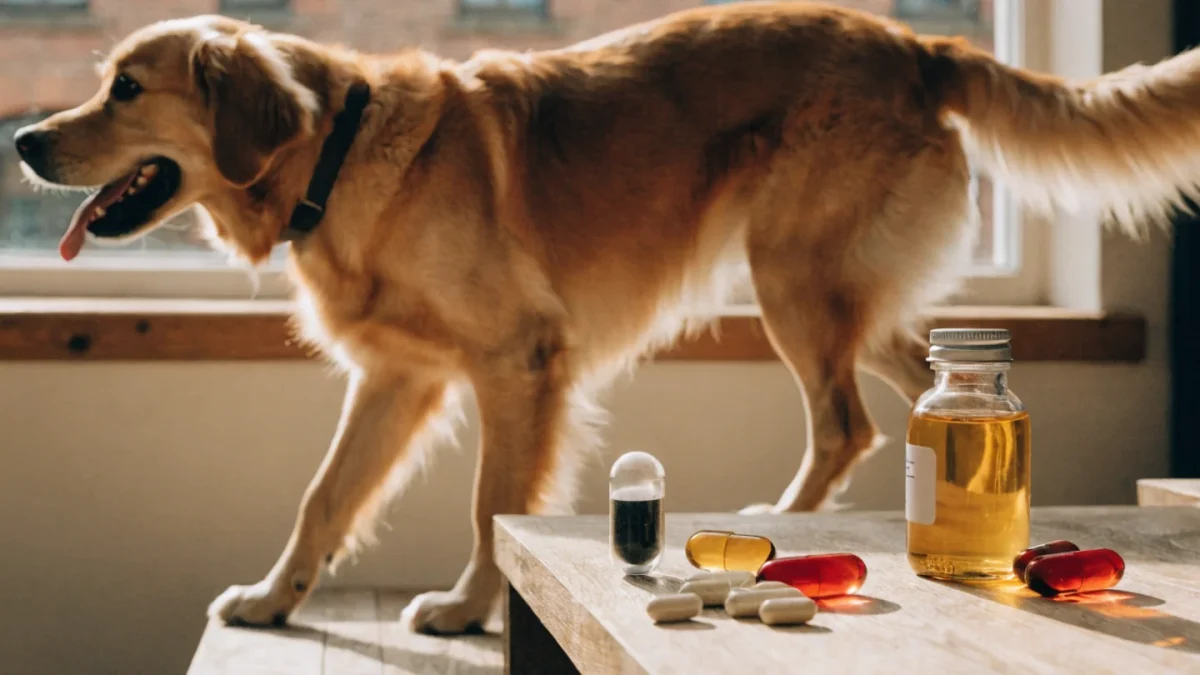
About twice a week I get a question from a client about supplements. Some of them are asking because they've read something credible and want to understand it better. Some are asking because they've fallen into the multi-level marketing hole. And some, honestly, are asking because they're doing a good thing — working at a pet store, or talking to a breeder — and have been given advice that sounds authoritative but isn't.
I don't dismiss these conversations. The impulse to supplement is usually coming from a place of genuine care, and sometimes the supplement in question is actually useful. But this is an area where marketing runs far ahead of evidence, where "natural" gets conflated with "safe," and where a well-intentioned owner can accidentally harm their pet while trying to help.
So here's my honest assessment, category by category.
The Evidence Tier — Supplements With Solid Support
Fish Oil (Omega-3 Fatty Acids)
This is the supplement I recommend most often and with the most confidence. The research on EPA and DHA — the long-chain omega-3 fatty acids in fish oil — is extensive in both humans and companion animals. High-quality fish oil has demonstrated benefits for skin and coat health, inflammatory conditions including osteoarthritis, cardiac function in dogs with certain heart conditions, and kidney disease management in cats. The studies are there, and they're convincing.
The key variables are dose and quality. The dose has to be therapeutic — much of the fish oil sold for pets is dosed far too low to produce the effects shown in studies. And quality matters significantly because fish oil oxidizes readily, and rancid fish oil provides no benefit and may cause GI upset. See more on fish oil dosing and quality for dogs and cats.
Glucosamine and Chondroitin
The evidence here is more mixed than the marketing suggests, but there's genuine signal. Several clinical trials have shown modest improvement in mobility and pain scores in dogs with osteoarthritis on glucosamine/chondroitin, and some pets show quite good clinical responses. The effect size is not dramatic for most animals — it's not equivalent to pain medication — but it's real enough that I regularly recommend these for dogs over seven with any joint concerns, and often earlier for breeds predisposed to hip and elbow dysplasia.
The catch: product quality varies enormously. Some studies on human joint supplements have shown significant discrepancies between labeled and actual content, as documented in independent laboratory testing. The same concern applies to pet products. Look for products that have been independently tested for actual content verification.
Probiotics
Digestive health applications — particularly for dogs prone to soft stools, antibiotic-associated diarrhea, or stress-related GI upset — have the best evidence. Specific strains matter, and not all probiotics are equivalent. The human probiotics studies don't directly translate to dogs or cats, and the companion animal literature is still developing. But the risk of a good-quality species-appropriate probiotic is low, and the upside for GI-sensitive animals is real enough to recommend trying.
Cobalamin (Vitamin B12)
Not a common over-the-counter supplement recommendation, but worth mentioning. Cats and dogs with certain GI conditions — EPI, inflammatory bowel disease, small intestinal malabsorption — often become cobalamin deficient because absorption requires specific mechanisms that these diseases disrupt. For these animals, supplementation (often by injection) is not optional — it's medically necessary. If your pet has a chronic GI condition and has never been tested for cobalamin status, ask your vet.
The Mixed Evidence Tier — Plausible But Unproven
SAM-e and Milk Thistle
Both are commonly recommended for liver support — SAM-e (S-adenosylmethionine) and silymarin from milk thistle. There are reasonable biological mechanisms for both, and some clinical evidence in liver disease management as documented in veterinary hepatology literature. I use them in specific cases of liver disease under veterinary supervision. As general wellness supplements for healthy animals, the evidence isn't there.
Turmeric / Curcumin
The anti-inflammatory properties of curcumin are well-established in laboratory conditions. Whether oral curcumin achieves meaningful tissue concentrations in dogs and cats is much less clear — bioavailability is poor in standard formulations. High doses in cats may be problematic. The excited anecdotal reports from owners don't surprise me, but I can't recommend it as a primary strategy for anything with a straight face.
L-Carnitine
Involved in fatty acid transport in mitochondria, L-carnitine shows up in weight management and cardiac formulas. The theoretical rationale is sound. Clinical evidence in pets is inconsistent — some studies show benefit in specific cardiac conditions, others show little effect, as documented in veterinary cardiology research. I'm not opposed to it in appropriate clinical contexts, but I wouldn't spend money on it as a general health supplement.
Digestive Enzymes
Commonly sold for "digestive support" in healthy pets. For healthy animals with a functional pancreas, adding digestive enzymes to the diet doesn't improve digestion — the pancreas is already producing adequate enzymes and the additional ones are degraded in the gut anyway. The exception: EPI, where pancreatic enzyme replacement is genuinely necessary and life-improving. Don't confuse "wellness digestive support" supplements with medical enzyme replacement therapy.
CBD
I'll be honest — I go back and forth on this one. The evidence in humans is more substantial than it is in companion animals, and the companion animal evidence is still early-stage. There are small studies showing potential benefit for osteoarthritis pain in dogs. The safety picture in dogs and especially cats is still being characterized. Cats in particular may have different CB receptor distribution and metabolize cannabinoids differently than dogs or humans. I'm cautiously watching the research rather than recommending or dismissing.
The Risky Tier — What to Avoid or Use With Caution
Excess Vitamin A
Fat-soluble vitamins accumulate in the body rather than being excreted. Vitamin A toxicity — from excessive supplementation, liver-heavy home diets, or cod liver oil — is a real clinical entity in cats and dogs. Signs include bone abnormalities, lethargy, skin changes, and liver damage. If you're feeding a complete commercial diet, additional vitamin A supplementation is rarely needed and potentially harmful.
Excess Vitamin D
Similar story. The therapeutic index for vitamin D is narrow in pets — the gap between the required amount and the toxic amount is smaller than most owners realize. Dogs and cats have been poisoned by vitamin D supplements and vitamin D-fortified foods — clinical signs of toxicosis in dogs have been documented at doses as low as 0.5 mg/kg of cholecalciferol, and the Merck Veterinary Manual documents vitamin D toxicosis as a real and serious clinical entity causing hypercalcemia, renal damage, and cardiovascular effects. If you're supplementing vitamin D, there should be a clinical reason and veterinary supervision.
Garlic and Onion-Based Supplements
Sometimes marketed as natural flea preventatives or general health tonics. Garlic and onion (and related alliums) cause oxidative damage to red blood cells in dogs and cats, leading to hemolytic anemia. Cats are more sensitive than dogs. The dose that causes toxicity varies, and small doses may not cause obvious illness, but this category of supplements has no proven benefit and real documented risk. I'd avoid them entirely.
Herbal "Immune Boosters" With Uncharacterized Ingredients
This category frustrates me most. Multi-ingredient herbal supplements with vague "immune support" claims often haven't been tested for safety in pets, may contain ingredients that interact with medications, and occasionally include things that are specifically toxic to cats or dogs (pennyroyal, certain essential oils, white willow bark). The general rule I follow: if I can't evaluate each ingredient individually, I don't recommend it.
Iron Supplements
Iron supplementation in pets without documented iron deficiency is unnecessary and can cause GI irritation and, at higher doses, toxicity. Iron-deficiency anemia in pets is usually caused by chronic blood loss — a problem that needs diagnosis and treatment of the underlying cause, not over-the-counter iron supplementation.
General Principles for Supplement Use
Start with a real dietary evaluation before adding supplements. Many supplements are redundant for pets eating well-formulated commercial diets. Before adding joint supplements, fish oil, or vitamins, assess whether the diet already provides adequate amounts. Duplication isn't usually harmful for water-soluble supplements, but it can be for fat-soluble ones.
One supplement at a time, with monitoring. If you start multiple supplements simultaneously and your pet improves, you don't know which one helped. If they develop a problem, you don't know which one caused it. Introduce changes one at a time with adequate time — at minimum four to six weeks — between additions.
Look for products with third-party testing. Independent analytical testing for labeled content is a meaningful quality indicator in the absence of the regulatory oversight that pharmaceutical products receive.
Dosing guidance exists for a reason. "Natural" doesn't mean safe at any dose. Several supplements that are beneficial at appropriate doses become harmful at excess doses. Follow dosing guidelines and when in doubt, ask your vet before adjusting.
Discuss supplements with your vet, especially if there's concurrent disease or medication. Some supplements interact with medications in clinically significant ways — fish oil and anticoagulants, SAM-e and certain neurological medications, antioxidant supplements and chemotherapy. Your vet needs to know what your pet is taking.
I've changed my mind about several things over the years. I used to be more skeptical about joint supplements than I am now. I used to be more credulous about herbal products. The evidence moves, and I try to move with it. What I've stayed consistent about is this: the burden of proof for supplementing a healthy, well-fed animal is on the supplement, not on skepticism.
FAQ
Does my dog or cat need a daily multivitamin?
If they're eating a complete and balanced commercial diet, almost certainly not. These diets are formulated to meet established nutrient requirements, and adding a multivitamin on top creates redundancy at best and risks vitamin toxicity at worst (particularly for fat-soluble vitamins). Exceptions: home-prepared diets without a veterinary nutritionist-formulated supplement plan, and specific medical conditions that cause nutrient depletion. Ask your vet before adding one.
What's the best joint supplement for dogs?
I typically recommend a combination of glucosamine, chondroitin, and EPA/DHA from fish oil as a starting point for dogs with osteoarthritis or high joint-disease risk. The fish oil component is as important as the glucosamine — omega-3 fatty acids have good evidence for anti-inflammatory effects in joints. The glucosamine and chondroitin dose should match clinical trial levels rather than the low doses common in "wellness" products. Your vet can guide you on specific doses.
I've heard probiotics can help with allergies. Is that true?
The gut-immune connection is real and interesting, and some research suggests early-life probiotic use may reduce atopic dermatitis risk in dogs — a study using Lactobacillus rhamnosus GG in genetically predisposed puppies found significantly decreased allergen-specific IgE and partial prevention of atopic dermatitis clinical signs, with effects persisting three years after discontinuation (Marsella et al., Veterinary Immunology and Immunopathology, 2012). The evidence for treating established environmental allergies with probiotics is less compelling. For food sensitivity with GI manifestations, probiotics seem more clearly useful. I'd approach this with cautious interest rather than high expectations.
Are human supplements safe to use for pets?
Some, with appropriate dose adjustment. Fish oil capsules formulated for humans are generally fine for dogs — just calculate the dose based on EPA/DHA content, not the capsule count. Probiotics designed for humans use different strains than those with evidence in companion animals and may not provide the same benefit. Vitamins formulated for humans may include additives (xylitol, for example, is toxic to dogs and appears in some sugar-free human supplements) that are dangerous to pets. Check every ingredient before giving a human supplement to your pet.
What's the single most useful supplement for most pets?
Fish oil, assuming the pet's diet isn't already high in omega-3s (most aren't). The benefits span coat health, inflammation, joint function, and cardiovascular health. It's affordable, widely available, has the best evidence base of any common pet supplement, and the risk profile at appropriate doses is low. I recommend it to more patients than any other supplement category.