

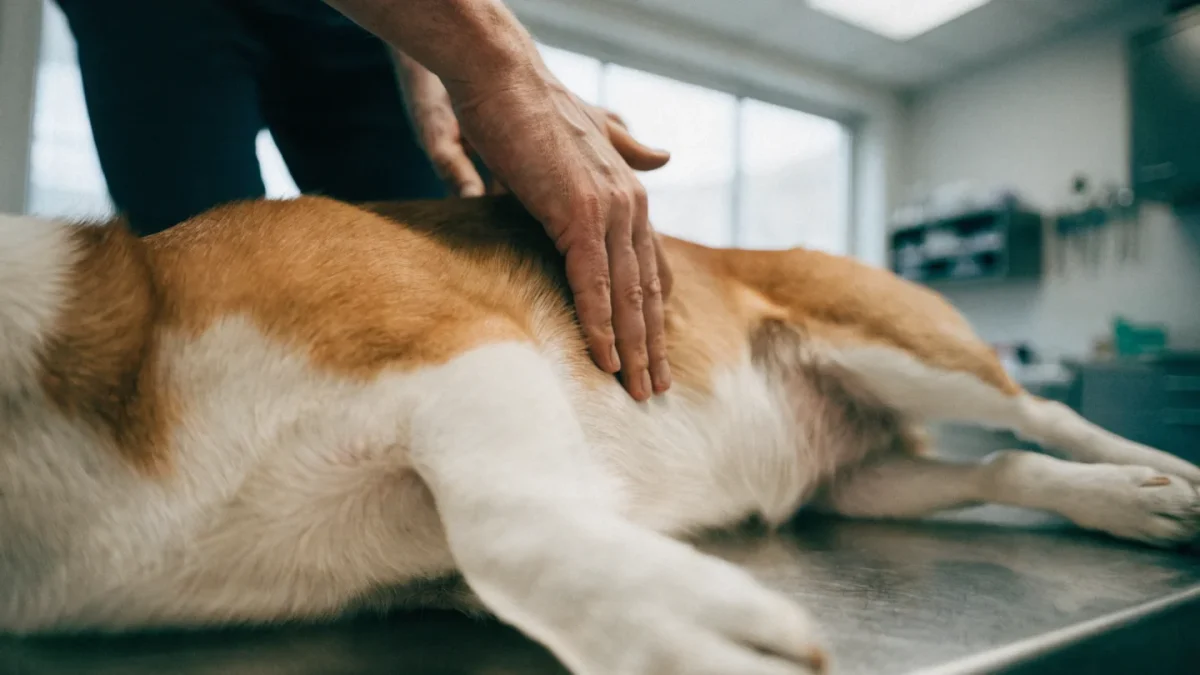
More than half the dogs and cats I see in routine wellness visits are overweight. I've watched this number climb over the fifteen years I've been in practice, and I've thought a lot about why it's so hard to address.
Part of it is perception. Owners become accustomed to their pet's shape over time, and a gradual increase of two or three kilograms over several years doesn't register the way a sudden change would. Part of it is that a round, soft pet genuinely reads as healthy and well-loved to many people — culturally we've associated some heft with prosperity. And part of it is that weight conversations can feel like personal criticism, which makes vets hesitant to raise them and owners defensive when they do.
But obesity in dogs and cats causes real harm. Joint degeneration. Increased diabetes risk. Cardiac strain. Shortened lifespan. A 14-year Purina-funded study following Labrador retrievers found lean-fed dogs lived a median of 1.8 years longer than their overweight littermates — about 15% of total lifespan. The relative risk of osteoarthritis is nearly doubled in obese dogs, and obese cats are 1.79 times more likely to develop diabetes. That's consistent across multiple studies. And the good news is that weight management is one of the most effective health interventions available — it doesn't require medication, it doesn't require specialized equipment, and it's entirely achievable with the right approach.
This guide is the framework I use in my own practice.
Step One: Assess Honestly
Before doing anything, you need to know whether your pet is actually overweight — and by how much. The number on the scale is useful context but not the whole picture; body condition score (BCS) tells you more about whether a pet is carrying excess fat.
The most widely used BCS system runs from 1 to 9. A score of 4 or 5 is ideal: ribs are easily felt with light pressure but not obviously visible; there's a visible waist when viewed from above; there's a slight abdominal tuck when viewed from the side. A score of 6 or 7 means ribs are palpable but require moderate pressure, the waist is less defined, and there may be fat deposits over the lower back. Scores of 8 or 9 indicate frank obesity: ribs are difficult to palpate through a significant fat layer, there's no visible waist, and fat deposits are prominent over the back, base of tail, and belly.
I'll go into the full palpation technique in the how to body condition score your pet article, but the basic version is this: run your thumbs down your pet's spine and your fingers over the ribcage. If you can feel each rib distinctly with light pressure, the weight is likely appropriate. If you have to press to find the ribs, excess fat is present.
BCS assessment combined with your vet's scale gives you a starting point. A pet at BCS 7 with a known ideal weight from previous records is easier to set a target for than one that's always been slightly heavy with no baseline.
Step Two: Calculate a Realistic Target
For most overweight dogs and cats, the target weight isn't a dramatic reduction. A dog at 32 kg who should be 27 kg needs to lose 5 kg — about 16% of current body weight. That sounds like a lot, but at a safe rate of roughly 1–2% of body weight per week, it's achievable in four to five months with consistent management.
Setting an unrealistic target makes the process harder and more likely to fail. I've seen owners aim for a weight their pet hasn't been since puppyhood, many years and a joint condition ago. Sometimes the appropriate target is not the theoretical ideal but the best functional weight for that specific animal given their current health status.
Your vet can help calibrate this. For dogs, the standard formula for resting energy requirement (RER) — 70 × (body weight in kg)^0.75 — is the veterinary standard for calculating calorie needs, usually adjusted to 70–80% of that figure at target weight to drive weight loss without nutrient restriction. This formula is confirmed in veterinary nutrition guidelines from multiple institutions including the Pet Nutrition Alliance. For cats, calorie restriction needs to be even more carefully titrated — the metabolic risks of aggressive restriction in cats are genuinely serious.
Step Three: Food Strategy
There are three main approaches to dietary management for overweight pets, and they're not mutually exclusive.
Calorie reduction with the current food. Reduce portion size by 20–30% from current intake and monitor weight every two weeks. Simple, no food transition required. The limitation: at very reduced portions, the dog or cat may be getting inadequate amounts of certain micronutrients, particularly if the food is calorie-dense to begin with. This works better as a short-term or mild intervention.
Switch to a reduced-calorie or weight management diet. These are formulated to be lower in calories per cup or per can while maintaining complete nutrition at the intended portion size. They often contain higher fiber to improve satiety. The practical advantage: you can feed a larger volume of food for the same or lower calorie count, which addresses the "hungry all the time" experience for food-motivated pets.
Prescription weight loss diet. For pets more than 20% over ideal weight, or for pets with concurrent conditions that complicate dietary manipulation, a prescription obesity management diet offers the most controlled and evidence-supported approach. A large international clinical trial involving 926 dogs across 27 countries found that 97% of dogs on a veterinary therapeutic weight management diet successfully lost weight, averaging 11.4% body weight reduction in three months — results not typically seen with over-the-counter options. These diets are specifically formulated for weight loss rather than weight maintenance, with controlled protein levels to preserve lean muscle mass during fat loss.
Whichever strategy you use, measure food by weight (grams) rather than volume (cups). Cup measurements vary dramatically depending on how the cup is filled, what formula of food is being used, and whether it's wet or dry. A kitchen scale is the most reliable tool in weight management. It costs almost nothing and eliminates one of the most common sources of unintentional overfeeding.
Step Four: Account for Everything Edible
This is where most weight management plans break down. The food has been adjusted, the portions are measured, but treats haven't changed — or someone in the family is giving extra food outside the plan, or the pet has access to another pet's bowl.
Every calorie counts. Treats, table scraps, chews, food used in training, the bits that fall on the floor and get eaten — all of it. For a dog on a 600-calorie weight loss target, a dental chew at 80 calories is more than 13% of the daily budget.
The most workable approach: establish a total daily calorie budget with your vet, allocate 80–85% to meals and the remaining 15–20% to treats and extras, and account for everything that goes in the mouth within that budget. This isn't about deprivation — it's about visibility.
Multi-person households are a particular challenge. The dog who's "not getting any extras" often has three different people each giving them one or two pieces of toast over the course of a day. I've found that a whiteboard in the kitchen where everyone marks down what they gave the pet can be surprisingly effective for about three weeks — long enough to build awareness.
Step Five: Monitor and Adjust
Weight management isn't a set-and-forget process. Pets should be weighed every two weeks for the first two months, then monthly once progress is established. Expect a plateau around the six-to-eight-week mark — it's common and it's not failure. It usually means the calorie target needs to be recalibrated to the pet's new (lighter) body weight.
A safe rate of loss for dogs is 1–2% of current body weight per week. Losing faster than this risks lean muscle mass loss alongside fat loss, which is counterproductive. Losing slower isn't a problem — the timeline is less important than the direction.
For cats, even 1% per week may be too fast for some individuals. Cat weight loss requires particular care; cat weight loss and hepatic lipidosis risk is covered in detail separately because the stakes of doing it wrong are genuinely high.
Common Reasons Weight Loss Plans Fail
Underestimating portion sizes. Half a cup of kibble in most households means a rounded, heaped half cup — often 20–30% more than a level measured half cup. Weigh food.
Treats not accounted for. Already covered, but worth repeating because it's the most common failure point.
Multiple food sources. Other pets' bowls, cats with outdoor access eating elsewhere, pets who steal food from one another.
Feeding guidelines on the bag. These are maintenance guidelines for a healthy adult dog at that weight — not weight-loss guidelines. A dog that needs to lose weight should be fed at or below the maintenance level for their target weight, not their current weight.
Expecting too-fast results. Owners who don't see dramatic weekly change give up. Setting expectations for slow, steady progress at the outset is important.
The Role of Exercise
I want to be honest about exercise in weight management because the expectations are often inflated.
Exercise matters. It matters for lean muscle preservation, for cardiovascular health, for mental wellbeing, and for the overall metabolic efficiency of a weight loss program. I'm not dismissing it. But a thirty-minute walk for a medium-sized dog burns roughly 100–150 calories. One commercial dental chew undoes that. One tablespoon of peanut butter on a lick mat undoes it twice over.
This means exercise alone cannot drive meaningful weight loss in most overweight pets. The math is against it. But exercise combined with dietary management works better than either alone, and for older dogs with arthritic joints, even low-impact activity helps maintain the muscle mass that protects those joints from further deterioration.
For cats — who can't be walked and who are largely in control of their own activity levels — the contribution of exercise is even more modest. Interactive play sessions, puzzle feeders, and vertical climbing opportunities all help, but they're not going to move the scale on their own.
My recommendation: add appropriate exercise for health reasons, not for calorie math reasons. Keep the food strategy as the primary driver of weight loss.
Special Situations That Complicate Weight Management
Hypothyroidism in dogs. An underactive thyroid significantly reduces metabolic rate. Dogs with undiagnosed hypothyroidism will not respond to normal dietary restriction — they'll plateau or continue gaining weight despite reduced intake. If a dog isn't losing weight on a well-managed plan, thyroid testing is one of the first things I check. Treatment with thyroid hormone supplementation normalizes metabolism and makes weight management respond normally.
Post-spay/neuter metabolic changes. Spayed and neutered pets have lower resting metabolic rates than intact animals, and often increased appetite. The period immediately after spay/neuter — the first three to six months — is when many dogs and cats begin their gradual weight gain trajectory. Adjusting food portions proactively at this life stage, rather than waiting until weight gain has already occurred, is much easier than correcting established obesity later.
Senior pets. Older dogs and cats often have reduced lean muscle mass (sarcopenia) even if they appear to be at or above ideal weight. In these cases, aggressive calorie restriction may worsen muscle loss while not adequately targeting fat mass. High-protein weight management approaches that prioritize muscle preservation over simple calorie reduction are often more appropriate for seniors.
Multi-pet households. A dog or cat on a weight management plan whose housemate gets different food or more food will frequently find a way to eat that food. Supervised feeding, separate rooms during meals, and microchip-activated feeders that open only for the right pet are all strategies that work in different household configurations.
Pets on corticosteroids or other weight-promoting medications. Some medications — steroids, certain anticonvulsants, some antihistamines — increase appetite and promote fat storage. Weight management in pets on these medications is harder and requires more aggressive dietary management to counteract the drug effect. Discuss with your vet whether any medication adjustments are possible alongside dietary changes.
What Does Success Actually Look Like
This is worth discussing explicitly because I've seen owners with reasonable plans give up because their expectations weren't calibrated correctly.
In the first two to four weeks: you probably won't see a visible change. The dog will still look overweight. The scale may show a very modest decrease or nothing yet. This is normal — early weight loss is partly water weight fluctuation and partly genuine fat loss, and two kilograms of fat loss on a 35 kg dog doesn't change appearance meaningfully.
At the six-to-eight-week mark: small but real changes start to appear. The waist becomes slightly more defined. The dog moves a bit more easily. The owner starts to feel like the plan is working.
At the four-to-six-month mark for dogs: meaningful progress visible. The dog is tangibly leaner, more active, potentially moving better if joint issues were a factor. At this point many owners report behavioral changes — more playfulness, better energy, increased interest in activity.
The process is slow. Genuinely slow. A dog that takes six months to reach goal weight is following a well-managed, safe plan. A dog that seems to be losing weight rapidly — more than 2% per week — may be losing lean muscle alongside fat, which is not the goal.
After Goal Weight: Maintenance Is Different From Loss
Reaching goal weight is not the end of the program. It's the beginning of a different phase. Maintenance calories are higher than loss calories; without adjustment, a pet who's successfully lost weight will start regaining if their food intake isn't recalibrated upward to maintenance levels.
This sounds obvious but it's a step that gets missed. The pet reaches goal weight on a restricted diet and the owner, relieved, just keeps feeding the same amount — leading to continued weight loss past the goal. Or the owner, relieved, loosens all the controls and the weight comes back within six months.
The recidivism rate in pet weight management is honestly discouraging. Most pets that successfully lose weight regain it within a year or two. The reasons are the same as in human weight management: the habits and environmental factors that drove the weight gain haven't changed, and without sustained vigilance, those factors reassert themselves.
Maintenance requires ongoing monitoring — monthly weigh-ins for the first year, then quarterly — and ongoing intentionality about the same factors that drove the weight gain in the first place. Not the same intensity as active loss, but not complete relaxation either.
I tell owners: the goal isn't to finish the weight management program. The goal is to make the program the new normal.
Frequently Asked Questions
How do I know my pet is actually overweight and not just a "big" breed?
Body condition scoring is breed-independent — the assessment is about fat distribution over bony landmarks, not about absolute weight or size. A large dog can have an ideal body condition score; a small dog can be obese. The scale number relative to breed average is a reference point, but rib palpation and visual waist assessment tell you more about actual fat content. If you're uncertain, your vet can do a formal BCS assessment at any wellness visit.
Can I manage my pet's weight through exercise alone?
Exercise contributes but doesn't substitute for dietary management. A thirty-minute walk burns roughly 100–150 calories for a medium-sized dog — less than one dental chew. Exercise is important for muscle maintenance and metabolic health, but the calorie math of exercise-without-diet-change is challenging. Both together work far better than either alone.
My cat has been the same weight for years. Do I need to worry?
If the weight has been stable and your cat is at an appropriate body condition score, no. If the weight has been stable at an overweight body condition score — BCS 6 or above — then yes, there's value in addressing it even if the trend isn't worsening. The health risks of chronic overweight accumulate over time regardless of whether the weight is increasing.
Is it possible for a pet to be too thin?
Absolutely. A BCS of 1–3 indicates underweight, with visible ribs, prominent spine, and lack of muscle coverage. This is less common than overweight in pet populations but carries real health risks including immune suppression, delayed wound healing, and increased anesthesia risk. Underweight pets need a different approach entirely — generally calorie-dense food and addressing the underlying cause of weight loss.
How long does it realistically take for an obese pet to reach a healthy weight?
For a dog 25% over ideal weight, at 1% of body weight loss per week, you're looking at six to seven months of consistent management. For cats the timeline is longer because the safe loss rate is lower. Owners who expect visible change in three weeks will be disappointed; owners who frame this as a six-month project tend to stick with it. The long view is more accurate and ultimately more successful.