

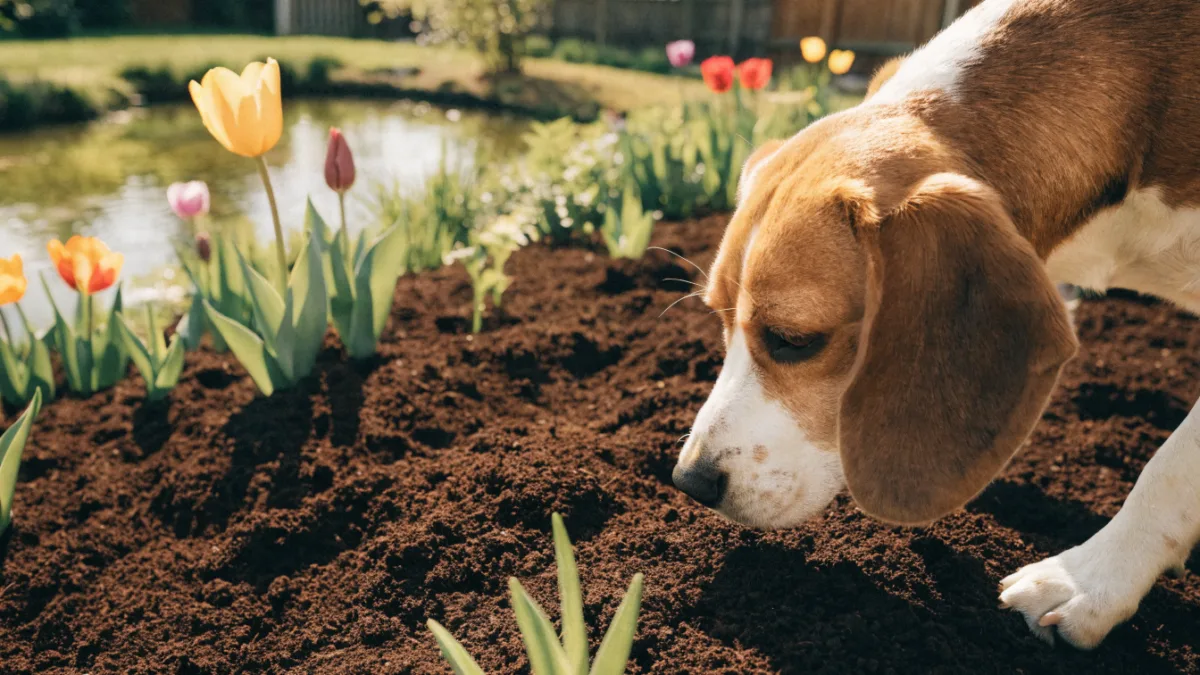
Every spring, I see the same pattern in my clinic. The weather warms up, homeowners dive into weekend landscaping projects, and within a few days, dogs start showing up in my exam rooms with symptoms that puzzle their owners. A Labrador named Biscuit came in last April with a racing heart and muscle tremors. His owner had just put down fresh mulch in the garden beds that morning and assumed it was harmless. Another patient, a three-year-old Border Collie called Pepper, collapsed after a swim in what looked like a normal farm pond. Both cases traced back to hidden dangers that most pet owners don’t even know exist in their own backyards: cocoa bean mulch and blue-green algae.
The Sweet-Smelling Trap in Your Garden Beds
Cocoa mulch is exactly what it sounds like — the shells and hulls leftover from cocoa bean processing, packaged up and sold as an attractive, dark brown garden mulch. It smells like chocolate, retains moisture beautifully, and breaks down slowly. Gardeners love it. Unfortunately, so do dogs.
The problem is that cocoa bean shells contain the same toxic compounds as the chocolate they produce: theobromine (a stimulant that dogs metabolize extremely slowly) and caffeine. While a dog would need to eat a fairly substantial amount of cocoa mulch to reach fatal toxicity, even small quantities can cause serious illness. The sweet smell actually attracts dogs to taste it, sometimes leading them to consume dangerous amounts before their owners notice.
What the Symptoms Look Like
Cocoa mulch toxicity symptoms typically appear within 6 to 12 hours of ingestion. The signs mirror chocolate poisoning and escalate in severity depending on the amount consumed:
- Vomiting and diarrhea
- Abdominal pain and restlessness
- Rapid heart rate — sometimes double the normal rate
- Hyperactivity and agitation
- Muscle tremors that can progress to seizures
When Biscuit came in, his heart rate was 180 beats per minute. A healthy resting heart rate for a dog his size should sit between 60 and 100. His owner had caught him munching on the mulch but figured it was just dirt and wouldn’t cause harm. By the time she brought him in, he was panting heavily and trembling. We induced vomiting, administered activated charcoal to bind the remaining toxins in his gut, and started intravenous fluids. He stayed with us for two days but recovered fully because his owner acted quickly.
The “Sudden Death” Rumor Versus Reality
There’s an older internet claim that circulates every spring stating that cocoa mulch causes instant death in dogs. This is an exaggeration. Sudden death without any prior warning signs is genuinely rare, and veterinary toxicologists — including the team at the,[1] — have worked to clarify this.
However, I want to be clear about something: the fact that cocoa mulch rarely causes sudden death doesn’t mean it’s safe. The severe illness it causes — the vomiting, the cardiac distress, the tremors — is miserable for the dog, expensive to treat, and entirely preventable. I’ve spoken with colleagues who’ve seen cases that progressed to fatal seizures because the owner waited too long to seek help. The risk is real, even if it’s been somewhat sensationalized online.
The Silent Threat in Stagnant Water
If cocoa mulch is a spring landscaping hazard, blue-green algae is its summer counterpart — and frankly, the more dangerous of the two. Blue-green algae, technically called cyanobacteria, is a type of microscopic organism that thrives in warm, stagnant, or slow-moving fresh water. You’ll find it in lakes, ponds, retention basins, and even backyard water features that sit unused for long periods.
Not all blue-green algae blooms produce toxins, but when they do, the results can be devastating. Cyanobacteria can release neurotoxins (which attack the nervous system) and hepatotoxins (which destroy the liver). Dogs are particularly vulnerable because they often swallow water while swimming or lick their fur clean afterward, ingesting concentrated amounts of the bacteria.
Recognizing Toxic Water
One of the challenges with blue-green algae is that a toxic bloom doesn’t always look obviously dangerous. It can appear as:
- Green or blue-green film on the water’s surface
- Paint-like streaks or scum along the shoreline
- Discolored water that looks like pea soup
- Small green specks floating throughout
However, I’ve seen cases where the water looked relatively normal to the naked eye but still contained dangerous toxin levels. This is why the current guidance from environmental agencies and veterinary organizations is simple: if you see any unusual discoloration or scum on a body of water, keep your dog out completely.
What Blue-Green Algae Poisoning Looks Like
Symptoms of cyanobacteria toxicity can appear within hours of exposure and may include:
- Vomiting and diarrhea, sometimes with blood
- Extreme weakness or lethargy
- Pale gums and signs of shock
- Jaundice — yellowing of the skin, eyes, and gums indicating liver damage
- Muscle tremors, seizures, and difficulty breathing
The mortality rate for dogs that ingest toxic blue-green algae blooms is estimated at over 50%, even with aggressive veterinary treatment. When I talk to clients about this, I’m not trying to scare them — I’m trying to convey how quickly this can go from a fun afternoon swim to a life-or-death emergency. Pepper, the Border Collie I mentioned earlier, survived because her owner noticed she was stumbling and drooling excessively within an hour of the swim and rushed her in immediately. Many dogs aren’t that lucky.
Spring Projects: When the Risks Peak
Both of these hazards share a common thread — they tend to spike during spring and early summer when homeowners are actively working on their properties. People are buying mulch, turning on backyard ponds that sat dormant all winter, and heading out for the first warm-weather hikes and swims of the season.
According to veterinary hospitals like [2] the months between March and September bring a noticeable increase in calls about fertilizer ingestion, mulch toxicity, and waterborne illnesses. The pattern is predictable enough that I start warning clients about yard hazards during their annual wellness exams in late winter.
Safer Alternatives and Smart Prevention
Choosing Pet-Safe Mulch
The good news is that the landscaping industry has responded to growing awareness of pet toxicity. Many major retailers now add warning labels to cocoa mulch packaging, and some have phased it out entirely. If you’re mulching your yard this season, look for these pet-safe alternatives:
- Cedar mulch — naturally aromatic, repels some insects, and is non-toxic to dogs and cats
- Pine bark or pine straw — widely available and safe if ingested in small amounts
- Rubber mulch — made from recycled materials, doesn’t break down, and poses no chemical toxicity risk
When shopping, read the packaging carefully. Terms like “cocoa bean,” “cocoa shell,” or “cocoa hull” should be instant red flags in any pet-owning household. As [3] and other practices regularly remind their clients, the garden section is full of products that are perfectly safe for plants but potentially dangerous for the animals who share that space.
Managing Water Features and Swimming Safety
If you have a backyard pond or water feature, you’ll face a choice about how to manage algae growth. There’s an ongoing debate between chemical algaecides and natural bacterial treatments. I’ll be honest — both have drawbacks. Chemical algaecides can cause rapid algae die-off, which actually releases stored toxins into the water all at once. Natural bacteria-based treatments work more slowly but can still leave residual toxins behind during the process. My recommendation is to consult with a water garden specialist who understands the toxicity concerns and to keep pets away from treated water for at least a week after any application.
For natural bodies of water — lakes, ponds, and rivers — the best prevention is vigilance. Check local health advisories before heading out. The EPA and state environmental departments have increased their monitoring of freshwater bodies in recent years and issue more frequent “do not swim” advisories when cyanobacteria levels are high. After any swim in natural water, rinse your dog thoroughly with clean, fresh water right away. This simple step can remove algae residue from their coat before they have a chance to ingest it through grooming.
The “Wait and See” Fallacy
If there’s one message I want every pet owner to take away from this article, it’s this: do not wait to see if symptoms worsen. Toxicity from cocoa mulch and blue-green algae moves fast. By the time a dog is showing obvious neurological symptoms — tremors, seizures, collapse — you’ve already lost valuable treatment time.
If you know or suspect your pet has ingested cocoa mulch or swallowed water from a suspicious-looking pond, call your veterinarian or a pet poison helpline immediately. Don’t wait for symptoms to appear. Don’t try home remedies you read about online. The sooner we can intervene — inducing vomiting, administering binding agents, starting fluid therapy, supporting liver function — the better the outcome is likely to be.
A Growing Concern Worth Taking Seriously
There’s a broader environmental angle to this conversation that I think deserves attention. The rising frequency of toxic blue-green algae blooms isn’t just bad luck. Climate change and agricultural runoff — excess fertilizers from lawns and farms washing into waterways — are feeding massive cyanobacteria blooms worldwide. Warmer temperatures and longer summers create ideal growing conditions. What was once a rare hazard is becoming a predictable seasonal threat.
This means the choices we make in our own backyards matter beyond our pets’ immediate safety. Reducing fertilizer use, choosing organic lawn care options, and supporting clean water policies all contribute to reducing the nutrient loads that feed these toxic blooms. Protecting our pets and protecting our waterways turn out to be the same project.
So this spring, as you’re planning your garden projects and dreaming of summer swims, take a few minutes to audit your yard for hidden hazards. Swap out that cocoa mulch for something safer. Check your water features. Bookmark your local water quality advisory page. The small effort it takes to make these changes could save your dog’s life — and it might just help protect a lake that dozens of other families and their pets rely on, too.
Sources
- Pet Poison Helpline — petpoisonhelpline.com
- BluePearl Pet Hospital — facebook.com
- Harrogate Veterinary Clinic — harrogatevet.com