

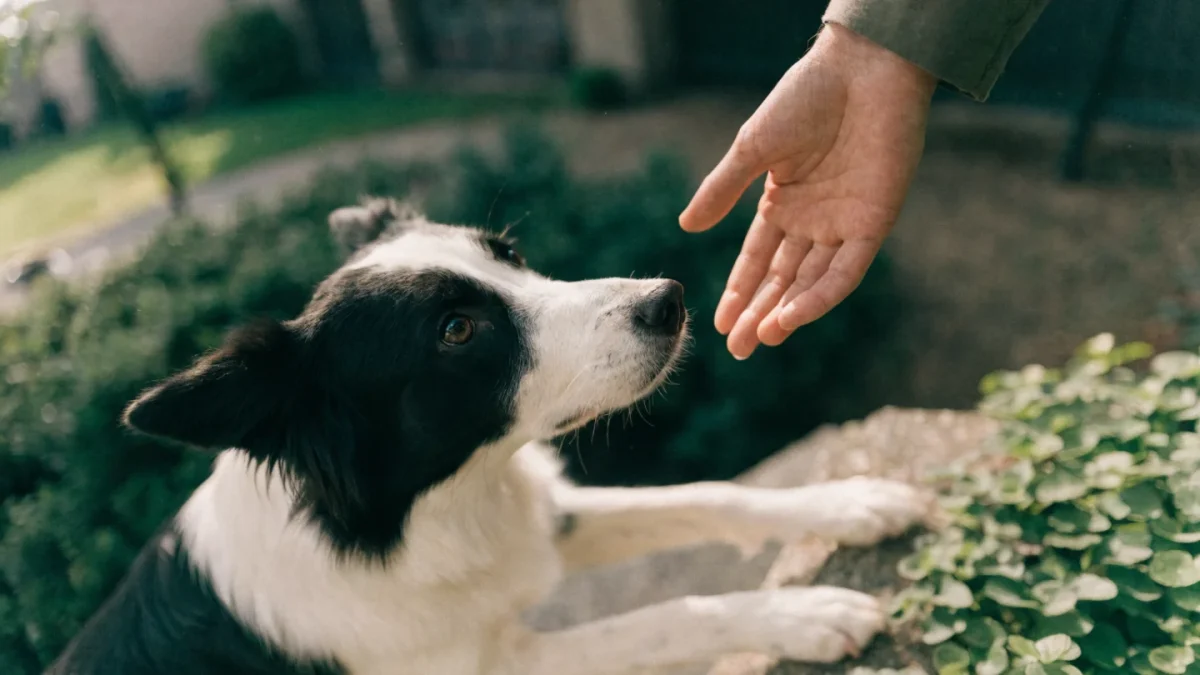
I've had the same conversation probably a thousand times. A client brings in a dog that's "being stubborn" or "knows better but is doing it anyway." When I ask what evidence they have for that, things get quiet.
Dogs don't do things out of spite. They don't disobey to make a point. They don't help around the house because they want to please you. The mental models most people have for how dogs work are borrowed from human psychology — and most of them are wrong.
Here's what behavioral science actually says.
The Two Engines of Learning
Everything a dog learns traces back to two mechanisms.
Classical conditioning: Learning through association. Two events that happen close together in time start to predict each other. The most famous example is Pavlov — bell rings, food appears, dog salivates at the bell alone. Your dog hears the leash jingle and runs to the door. That's classical conditioning. They've associated the sound with going outside.
Operant conditioning: Learning through consequence. Behaviors that produce good outcomes get repeated. Behaviors that produce neutral or bad outcomes get reduced. That's it. Four possible combinations exist — adding or removing good or bad things — but the core principle is simple: consequences shape future behavior. For a full breakdown of operant conditioning for dogs, the science applies directly.
Most training uses both simultaneously. When you click and treat, you're using operant conditioning (the click marks the behavior, the treat reinforces it) and classical conditioning (the click becomes associated with the treat through repetition).
What Dogs Are Actually Good At
Dogs are remarkably good at reading patterns. They notice timing, sequences, and environmental cues that humans often miss entirely.
A dog that "sits when asked" in the kitchen but not at the park isn't being stubborn. The cue "sit" in the kitchen has a long reinforcement history in that specific environment. "Sit" at the park has a different — or absent — history, plus it's competing with a thousand distractions.
Dogs are also excellent at reading human body language. Research published in Evolutionary Human Sciences (Cambridge, 2023) confirmed that dogs functionally respond to and use emotional information from human expressions — tracking gaze direction, emotional state, and even subtle posture shifts, often responding to nonverbal communication as much as to verbal cues.
Common Myths — And What's Actually True
Myth: Dogs are trying to please you
This framing is misleading. Dogs don't have an abstract motivation to make you happy. They have learned that certain behaviors in your presence produce good outcomes. The end result looks like "trying to please," but the mechanism is consequence-based learning, not altruism.
That said, social reward — your attention, interaction, and approval — is a genuine reinforcer for most dogs. So in a practical sense, dogs that have learned your approval predicts good things will work to earn it. But it's not unconditional selflessness.
Myth: The dog "knows" it did something wrong
The "guilty look" — lowered head, whale eyes, tucked tail — is not guilt. Research by comparative psychologist Alexandra Horowitz, published in Behavioural Processes (2009), found that dogs display this submissive posture in response to the owner's behavior — specifically, when the owner seems upset or threatening — not in response to their own prior behavior. Dogs that had not misbehaved but were scolded by misinformed owners "looked guilty" more than dogs that actually ate the forbidden treat.
If your dog "looks guilty" before you even notice the chewed shoe, they've learned to read your body language when you walk in the door. They're anticipating consequences based on contextual cues — not replaying their own actions with remorse.
Myth: Old dogs can't learn new tricks
This one is simply false. Dogs can learn new behaviors throughout their lives. Senior dogs learn more slowly in some cases, especially if there's cognitive decline, but the learning mechanism works the same way.
Myth: You have to be the "pack leader"
Dominance-based training models have been largely discredited by modern behavioral science. Dogs in human households aren't organizing into wolf packs with a rigid hierarchy. The original research was conducted on captive, unrelated wolves in artificial conditions — a design flaw that David Mech, the researcher whose 1970 book popularized the "alpha wolf" concept, has publicly acknowledged and tried to correct for decades.
Positive reinforcement training works because consequences shape behavior, not because it makes you the "alpha."
Why Timing Is So Critical
Dogs can't process explanations. They can't reason backward through a sequence to figure out that the reward they received three minutes ago was for the sit they did before the distraction happened.
They can associate events that are very close in time — roughly within 1-2 seconds. After that, the window closes. This is why timing is the most important mechanical skill in training, and why a well-timed click works better than any amount of praise given after a delay.
Positive reinforcement training also works because the emotional context of training matters. Dogs that train in calm, rewarding environments learn faster and retain more than dogs trained under stress, fear, or punishment. The brain encodes information differently under negative emotional states. Understanding how many commands dogs can learn depends partly on how those skills were taught and in what emotional context.
The Practical Takeaway
Dogs are not defiant. They're not manipulative. They're pattern-matching animals governed by the same principles of association and consequence that govern most animal behavior.
Understanding that changes how you respond to problems. When something isn't working, the first question is: what pattern has the dog actually learned, and is it different from what I think they learned?
Usually it is. And that's fixable.
FAQ
Does my dog feel emotions like guilt or jealousy?
Dogs do experience emotions — fear, anxiety, excitement, contentment are all well-documented in behavioral research, supported by physiological measures including cortisol and oxytocin assays. Whether complex social emotions like guilt or jealousy exist in the human sense is less clear. What looks like guilt is likely submissive or appeasement behavior triggered by the owner's emotional state, not self-reflective awareness of wrongdoing — a distinction supported by Horowitz's 2009 research and subsequent replication studies.
Why does my dog listen at home but not outside?
Behavior is context-dependent. Dogs don't generalize the same way humans do. A cue learned in one environment with one set of distractions is a different behavior-in-context than the same cue elsewhere. The fix is deliberate practice across many different environments — called proofing — not repeating the same command louder or more firmly.
Can punishment-based training work?
Punishment can suppress behavior, but it doesn't teach the dog what to do instead, and it carries costs: increased anxiety, fear of the handler, and risk of aggression. Modern behavioral research consistently finds reward-based methods more effective, more durable, and lower risk. That doesn't mean dogs are never told "no" — it means punishment, when used, should be mild, immediate, and paired with a clear alternative behavior to reinforce.