
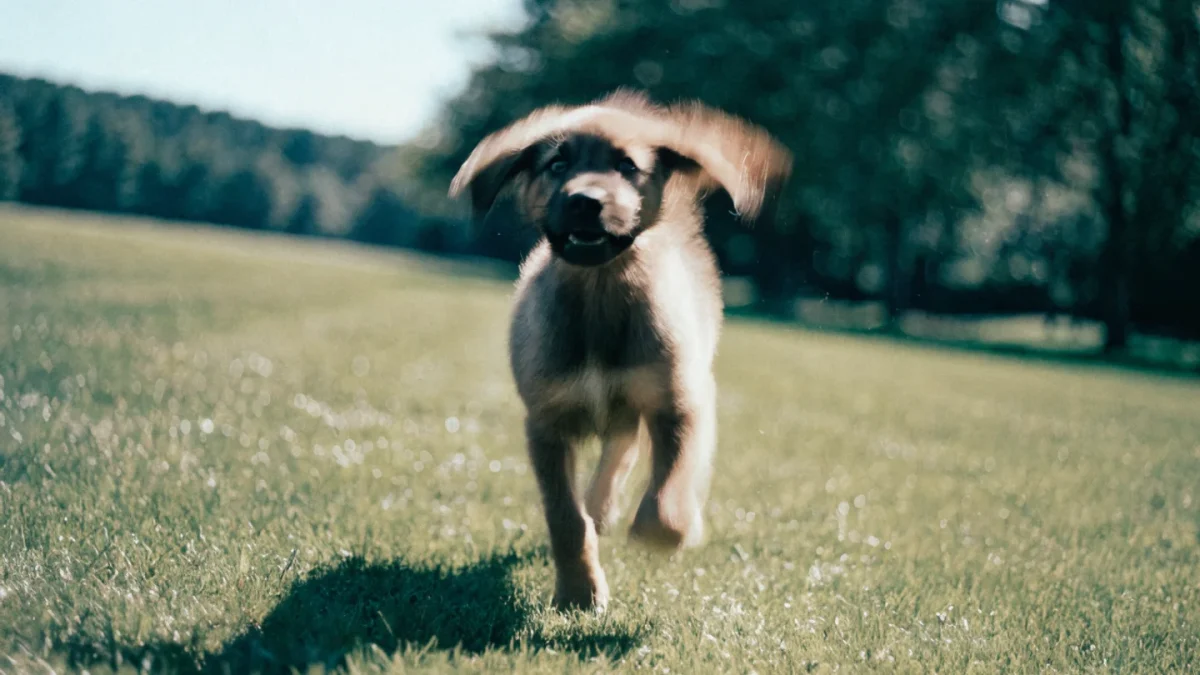
If you've had a puppy for more than a week, you know exactly what zoomies are. It's 7pm. Your puppy was calm five seconds ago. Now they are sprinting in circles, bouncing off the couch, and have the look in their eyes of someone who has just discovered the concept of speed.
Then, as suddenly as it started, it stops. The puppy collapses, panting, looking mildly surprised.
This is completely normal. Here's what's actually happening and what to do — and not do — about it.
What Zoomies Actually Are
The technical term is Frenetic Random Activity Period, or FRAP. The name is perfect. It's a burst of activity driven by accumulated energy or emotional release. Think of it as a pressure valve.
Zoomies tend to happen at predictable times:
- After a bath or grooming (stress relief)
- In the evening (a classic time for puppy energy peaks)
- After the crate door opens (stored energy releasing)
- After a training session (mental stimulation sometimes triggers physical release)
- When meeting new people or in exciting environments
Young dogs get them most frequently. Adult dogs get them occasionally. Most dogs mellow significantly by 1-2 years.
What to Do During Zoomies
Let them run. If they're in a safe, fenced space — your backyard, a fenced room — just watch. Intervening usually makes things more exciting. Chasing them definitely makes it more exciting. Standing still and watching is usually the fastest path to it ending.
I cover this in more depth in my piece on house training a puppy.
Don't chase. I know, I know. It looks like a great game. But chasing a zooming dog teaches them that zooming starts a chase game, which you will lose. You cannot outrun a puppy having a FRAP.
Move breakables. If you're inside and the zoomies start, get the fragile things off coffee tables. Your puppy is not piloting precisely right now.
Don't try to stop it. Attempting to grab a zooming puppy, using a stern voice, or placing yourself in the path usually just adds chaos. You're an obstacle — and obstacles are part of the course now.
When to Gently Redirect
If your puppy has zoomies inside a small space with no safe running room, you can try opening a door to a larger area or the yard. The goal is to give them somewhere to run safely, not to stop the behavior.
If the zoomies have gone on for an unusually long time (more than five or ten minutes), your puppy may be overtired and past the point of self-regulation. A calm, gentle removal to the crate with a chew item may help them settle. Overtired puppies often need help stopping. (See also: destructive dog behavior.)
When to Actually Worry
Zoomies are nearly always normal. But there are things to distinguish from classic FRAP:
Compulsive spinning or tail chasing that doesn't stop. If this happens frequently and independently of the zoomy context, it's worth a vet or behaviorist conversation.
Zoomies with falling, staggering, or disorientation. Normal zoomies are controlled chaos. A puppy that seems genuinely confused about their own movement, or is falling frequently, deserves a vet look.
Aggression or snapping during zoomies. High-arousal states can lower inhibitions in already anxious dogs. If your puppy snaps or bites during FRAP episodes, note whether this is a pattern and consider working with a professional.
For the vast majority of puppies, though? Zoomies are just zoomies. Stand back, admire the speed, and wait for the dust to settle.
If evening zoomies are becoming a household hazard, build in a dedicated physical activity session in the late afternoon. A short fetch game, a training session, or a structured walk around that time can take the edge off the 7pm explosion. Sometimes the pressure valve just needs more outlets.