

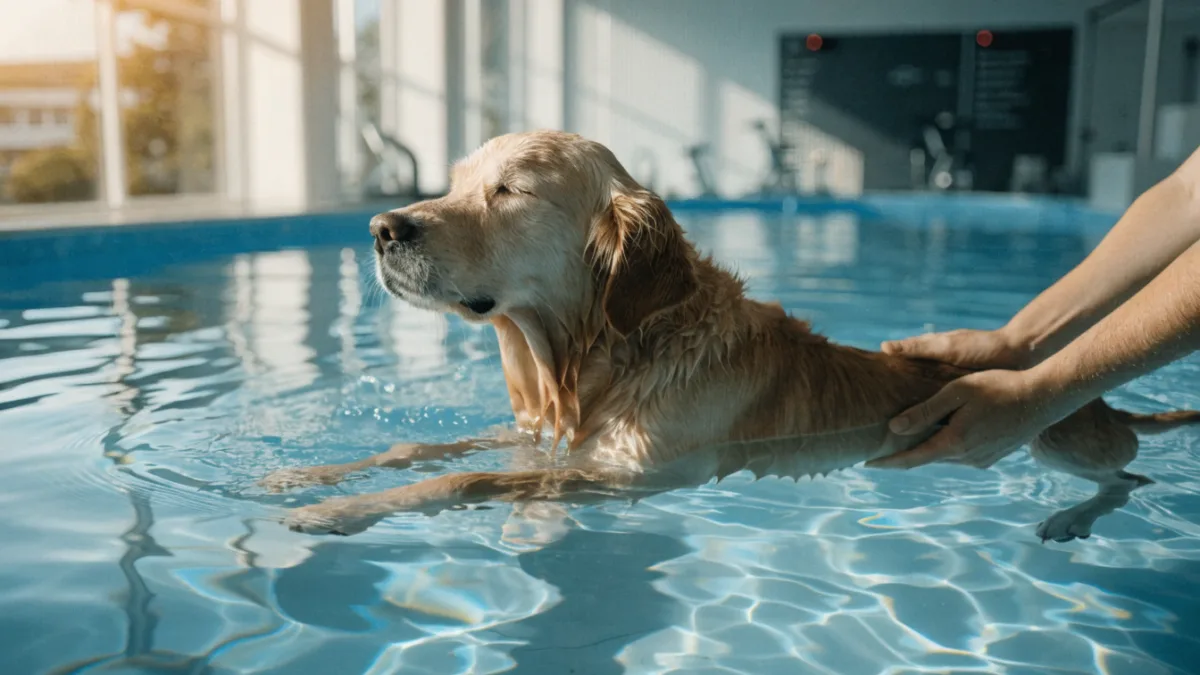
Picture a twelve-year-old Labrador Retriever named Marigold hobbling into a clinic, her owner Karen utterly defeated. Marigold had been diagnosed with osteoarthritis two years prior, and despite daily medication and joint supplements, she’d stopped wanting to walk to the end of the driveway. Her back legs would shake after just a few minutes on pavement, and she’d spend the rest of the afternoon panting and restless. Karen said it almost in a whisper: “I think she’s giving up.”
I understood that feeling. Watching a vibrant, active animal slowly decline because their joints hurt is one of the hardest things a pet owner can experience. But what Karen didn’t know—and what I’m grateful I could offer her that day—is that medication alone is rarely enough for osteoarthritis. What Marigold needed was movement, the right kind of movement, and that’s where hydrotherapy and physical rehabilitation came in. Within four months of starting a structured rehab program, Marigold was trotting again. Not like a puppy—but with a dignity and comfort that had been missing for over a year.
Why Water Works: The Science of Buoyancy, Pressure, and Heat
Hydrotherapy literally translates to “water healing,” and while it might sound like a trendy spa concept, it’s grounded in physics that has been understood for decades. When an arthritic dog or cat enters the water, three physical properties begin working immediately.
The first is buoyancy. When a pet is submerged in water up to chest level, the water carries roughly 30% to 40% of their body weight. That means a 70-pound dog suddenly feels like they weigh around 45 pounds. For joints that have lost their protective cartilage cushion—where every step on hard ground sends bone grinding against bone—removing that much concussive force is transformative. It allows them to move through a full range of motion without pain.
The second property is hydrostatic pressure, which is the gentle, constant pressure that water exerts on a submerged body. Think of it as a full-body compression garment. This pressure helps reduce swelling in the limbs, improves circulation, and can even decrease the perception of pain by stimulating sensory nerves—essentially creating a kind of white noise effect that distracts the nervous system from pain signals.
The third is temperature. Hydrotherapy pools and underwater treadmills are typically heated to between 82°F and 90°F (28°C to 32°C). This warmth acts like a passive heat pack wrapped around every joint simultaneously. It increases blood flow, which delivers oxygen and nutrients to damaged tissues, and it relaxes tight, compensating muscles that have been working overtime to protect sore joints.
“What Karen didn’t know is that medication alone is rarely enough for osteoarthritis. What Marigold needed was movement—the right kind of movement.”
For Marigold, the warm water wasn’t just physical relief. It was the first time in months she could move without anticipating pain, and you could see the tension leave her face within minutes of entering the pool.
Beyond the Pool: What Modern Animal Rehabilitation Looks Like
One misconception I encounter frequently is that hydrotherapy and physical rehabilitation are the same thing. They’re related, but hydrotherapy is just one tool in a much larger toolbox. Modern veterinary rehabilitation looks remarkably similar to human physical therapy—and honestly, that comparison usually helps owners understand what to expect.
The Rehabilitation Toolbox
When I design a rehab program for an arthritic patient, hydrotherapy might be the centerpiece, but it’s almost never the only component. Depending on the individual pet, a comprehensive program might include:
- Manual therapies like therapeutic massage and joint mobilization. These help release adhesions in soft tissue and improve the glide and roll of stiff joints. I’ve had patients who gained ten degrees of motion in a severely arthritic elbow simply from skilled manual work over several weeks.
- Cold laser therapy, also called photobiomodulation, which uses specific wavelengths of light to reduce cellular inflammation and accelerate tissue repair. It’s painless, quick, and remarkably effective for some animals. A Border Collie named Tucker with chronic hip arthritis responded better to laser therapy than he did to increased pain medication.
- Electrical stimulation (often called TENS when used for pain) uses mild electrical currents to block pain signals and stimulate weakened muscles. It’s especially valuable for pets who have lost significant muscle mass and need to rebuild strength before they can handle more active exercise.
- Thermotherapy, which involves alternating heat and cold applications. Heat before exercise prepares tissues; cold after exercise reduces inflammation and prevents soreness.
- Targeted therapeutic exercise on land—things like slow leash walks on varied surfaces, balance work on unstable platforms, and gentle range-of-motion stretches that owners can learn to do at home.
The goal of all these modalities working together is what we call multi-modal management. Rather than relying on a single intervention, we’re addressing pain from multiple angles simultaneously. Research has consistently shown that this approach yields far better outcomes than any treatment used in isolation.
The Feline Challenge: Can Cats Really Benefit from Hydrotherapy?
This is where the conversation gets interesting—and where I’ve genuinely changed my mind over the years. When I first started practicing, I was skeptical about feline rehabilitation in general, and the idea of putting a cat in water seemed almost cruel. Cats are notoriously averse to getting wet. Their stress response can spike cortisol levels, potentially worsening inflammation and undoing any physical benefit.
But the statistics on feline arthritis are staggering. Studies show that up to 60% of cats over age six show radiographic signs of arthritis in at least one joint, and that number climbs to 90% in cats over twelve. For decades, we simply weren’t diagnosing it. Cats are masters at hiding pain, and by the time an owner notices changes—maybe the cat isn’t jumping onto the counter anymore, or they’re using the litter box less neatly—the arthritis is often advanced.
So how do we reconcile the benefits of hydrotherapy with feline stress? The answer lies in specialized approaches. Feline hydrotherapy looks nothing like canine swim sessions. Cats almost never go into open pools. Instead, they typically use specially designed underwater treadmills in quiet, controlled environments. The water level can be adjusted precisely, the speed is slow, and the entire session might last only five to ten minutes. Some facilities use dim lighting and pheromone diffusers to create a calming atmosphere.
That said, I’ll be honest with you: hydrotherapy isn’t right for every cat. For some highly anxious cats, the stress really does outweigh the benefit, and at-home exercises, laser therapy, and environmental modifications are the better route. There are plenty of cats like Saffron, who would have nothing to do with an underwater treadmill despite everyone’s best efforts. Her team pivoted to laser therapy and gentle manual work, and she did beautifully. The key is individual assessment—not forcing a one-size-fits-all approach.
When Water Isn’t the Answer: Safety and Contraindications
Hydrotherapy is powerful, which means it needs to be respected. I want to be clear that it’s not appropriate for every arthritic pet, and this is where proper veterinary oversight becomes essential.
Pets with certain heart conditions face increased workload from hydrostatic pressure, which can strain the cardiovascular system. Active skin infections can be worsened or spread in warm water. Severe respiratory issues make the pressure on the chest wall dangerous. Pets with open wounds, recent surgical incisions that haven’t fully healed, or uncontrolled diarrhea should wait until those issues resolve before entering any body of water.
There’s also an important debate in the veterinary community about who should perform hydrotherapy. Regulations vary wildly depending on where you live. In some areas, anyone can open a canine pool with no formal training. I strongly recommend seeking out facilities staffed by certified rehabilitation professionals—look for credentials like Certified Canine Rehabilitation Practitioner (CCRP) or a licensed veterinary physiotherapist. These practitioners understand the nuances of canine and feline anatomy, can recognize when a pet is in distress, and know how to modify sessions based on individual conditions.
I’d also add: if you’re considering hydrotherapy for your pet, talk to your veterinarian first. Not because they’ll say no—most will be thrilled you’re interested—but because they need to assess your pet’s overall health and help determine if water therapy is safe and appropriate.
The New Frontier: Where Rehabilitation Is Heading
The field of veterinary rehabilitation has grown enormously over the past decade, and some of the developments genuinely excite me. The widespread adoption of underwater treadmills has been a game-changer. Unlike swimming, which puts a pet in a horizontal position and uses primarily swimming muscles, treadmills allow for a natural walking gait in a controlled environment. The therapist can adjust water depth to target specific joints—deeper water unweights more of the body, while shallower water provides more resistance for building strength.
Even more fascinating is the integration of regenerative medicine with rehabilitation. Some advanced facilities are now combining hydrotherapy with treatments like Platelet-Rich Plasma (PRP) therapy or stem cell injections. The concept is elegant: use regenerative cells to address the disease process within the joint, then use hydrotherapy to rebuild the muscle and support structures around it. The two approaches complement each other in ways we’re still understanding.
Weight management also deserves special mention here, because it’s the single most impactful thing most owners can do for an arthritic pet. Arthritic animals gain weight because movement hurts, and that extra weight accelerates joint degeneration—it’s a vicious cycle. Hydrotherapy breaks that cycle by providing a pain-free way to burn calories and rebuild muscle. I’ve seen patients lose significant weight through hydrotherapy programs when they couldn’t exercise effectively on land.
And let me acknowledge something I know many of you are thinking: supplements. Glucosamine, chondroitin, fish oil, green-lipped mussel extract—I hear about these constantly from clients who’ve researched online. Some of these have reasonable evidence behind them. Some don’t. My approach is to evaluate each pet individually and recommend supplements based on the quality of available research and the specific needs of that animal. Please consult your veterinarian before starting any supplement regimen, as dosages matter and some supplements can interact with medications your pet is already taking.
The broader truth is this: arthritis is not curable. I won’t pretend otherwise. But it is manageable, and the quality of life we can offer arthritic pets today is dramatically better than what was possible even ten years ago. Whether through hydrotherapy, laser treatments, careful weight management, or simply learning to read your pet’s pain signals and adjust their environment accordingly, there are real, evidence-based options available. No animal should have to suffer in silence with joint pain—not Marigold, not Saffron, and not the senior companion curled up beside you right now.
If you’re noticing changes in how your dog or cat moves—slower to rise, reluctant to jump, stiff after rest—please don’t wait. Ask your veterinarian about rehabilitation options. The earlier we intervene, the more function we can preserve. And preserving function isn’t just about mobility. It’s about dignity, independence, and the simple joy of moving through the world without fear of pain. That’s something every animal deserves.