

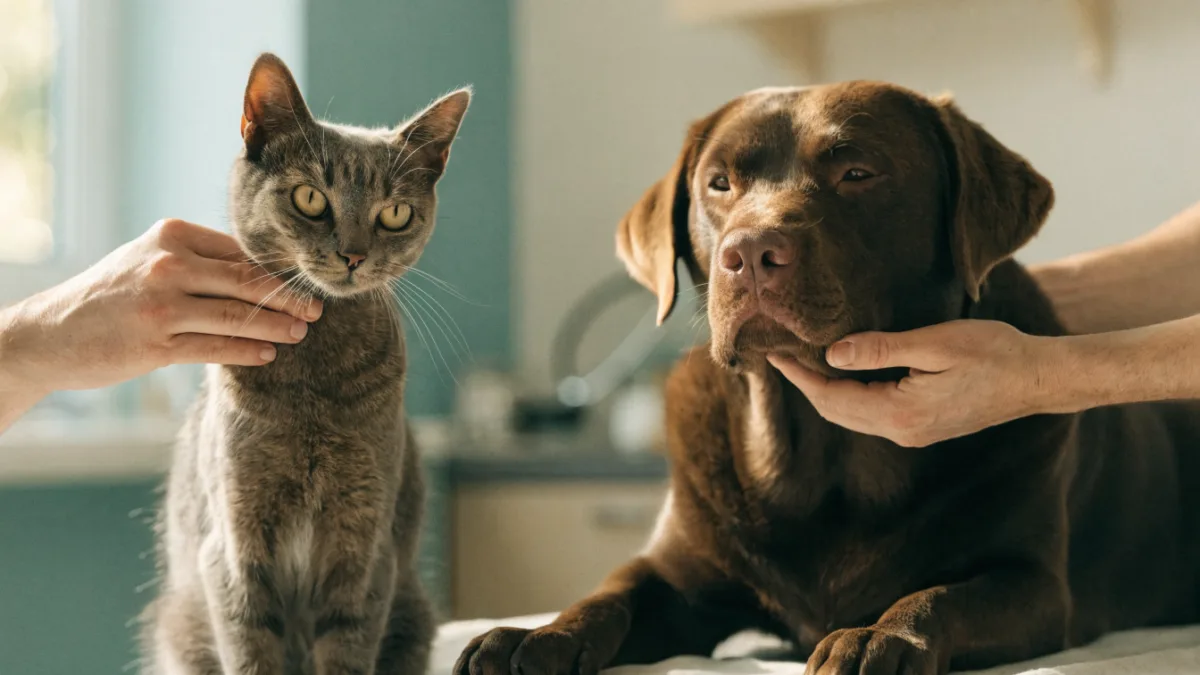
If you’ve ever shared your home with both a senior dog and a senior cat, you might have noticed something peculiar. Your aging Labrador seems to be moving slower, packing on pounds even though you haven’t changed the food. Meanwhile, your twelve-year-old tabby is acting like a kitten again — racing around the house at 3 a.m., eating everything in sight, yet somehow looking thinner every week. This scenario plays out in clinics constantly. And more often than not, the explanation comes down to one small but mighty gland: the thyroid. The strange truth is that dogs and cats tend to get opposite thyroid problems. Dogs almost always develop an underactive thyroid, while cats overwhelmingly develop an overactive one. It’s what you might call the great thyroid divide, and understanding it can genuinely add years to your pet’s life.
The Thyroid: Your Pet’s Metabolic Thermostat
Before we dive into what goes wrong, let’s talk about what the thyroid does when it’s working correctly. This butterfly-shaped gland sits in the neck, wrapping around the trachea, and it produces hormones — primarily thyroxine (T4) and triiodothyronine (T3) — that essentially tell every cell in the body how fast to run. Think of it as a thermostat for metabolism.
When thyroid hormone levels are normal, your pet maintains a healthy weight, a normal heart rate, good energy levels, and a sleek coat. When something disrupts that production, the effects ripple through the entire body. The direction of the disruption — too much or too little — determines everything about how the disease looks, feels, and is treated. And fascinatingly, dogs and cats almost never cross paths on this one.[1]
Hypothyroidism in Dogs: The Engine That Slowed
Let’s start with dogs, because hypothyroidism is one of the most common endocrine disorders I diagnose in canine patients. Hypothyroidism means the thyroid gland is underactive — it’s simply not producing enough thyroid hormone to keep the metabolic fires burning. Without enough hormone signaling, everything slows down.
Consider Bessie, an eight-year-old Golden Retriever brought in last spring. Her owner, Karen, had been worried for months. “She just doesn’t want to go on walks anymore,” Karen said. “And she’s gained almost twelve pounds since winter, even though we cut back her food.” On examination, the classic signs were all there: a dull, thinning coat with patches of hair loss along her flanks, skin that felt thickened and slightly greasy, and a dog who clearly just wanted to lie on the floor rather than greet anyone.
What Hypothyroidism Looks Like
The symptoms of hypothyroidism in dogs are essentially a picture of a body running in slow motion:[2]
- Weight gain despite a normal or reduced appetite
- Lethargy and exercise intolerance — dogs who used to chase balls now prefer the couch
- Skin and coat changes — thinning hair, a dull or brittle coat, dry or oily skin, and sometimes recurrent ear or skin infections
- Cold intolerance — seeking out warm spots, shivering in temperatures that never bothered them before
- Mental dullness — some owners describe their dogs as seeming “depressed” or less engaged
One thing I always emphasize: hypothyroidism is not a death sentence. Once we confirm the diagnosis with a simple blood test measuring total T4 — and sometimes free T4 and thyroid-stimulating hormone for a more complete picture — treatment is straightforward. We supplement what the body can’t make. Most dogs receive an oral thyroid hormone replacement medication, given once or twice daily, and the transformation can be remarkable. Within four to eight weeks, Bessie was back to her old self — bright-eyed, eager for her walks, and steadily losing the excess weight. The medication is typically lifelong, but it’s inexpensive and remarkably effective.
Hyperthyroidism in Cats: The Engine That Won’t Quit
Now let’s flip the script. In cats, the thyroid doesn’t slow down — it revs up. Hyperthyroidism, or an overactive thyroid, means the gland is producing far too much thyroid hormone, flooding the body with signals to go faster, burn hotter, work harder. It is one of the most common endocrine disorders in cats, particularly in cats over ten years old.[3]
A classic case turned up at a clinic last year: a thirteen-year-old tabby named Jasper. His owner, Michael, was baffled. “He’s eating more than he ever has — sometimes he wakes me up screaming for food at four in the morning — but he looks like he’s wasting away. And he’s drinking water constantly.”
That pattern — ravenous appetite with weight loss — is almost a hallmark of feline hyperthyroidism. When I felt Jasper’s neck, I could actually detect a small, firm lump. In approximately 70% of hyperthyroid cats, both lobes of the thyroid gland are enlarged, forming what we call adenomatous hyperplasia (essentially, benign but overactive tissue). The remaining 30% involve enlargement of just a single lobe.
What Hyperthyroidism Looks Like
Because hyperthyroidism is the metabolic opposite of hypothyroidism, the symptoms contrast sharply:[1]
- Weight loss despite an increased, sometimes voracious appetite
- Hyperactivity or restlessness — cats may pace, vocalize excessively (especially at night), or seem unable to settle
- Increased thirst and urination
- Vomiting or diarrhea
- A racing heart — on exam, I often hear a heart rate well over 200 beats per minute, when a normal resting cat heart rate is 120-160
- Poor coat condition — cats may stop grooming, leading to a matted, unkempt appearance
One symptom that worries me most is the heart. Over time, the constant flood of thyroid hormone forces the heart to work too hard, which can lead to thickening of the heart muscle (hypertrophic cardiomyopathy). This is why early diagnosis matters so much — untreated hyperthyroidism doesn’t just make cats feel frantic, it can damage their hearts.
The Feline Hyperthyroidism Epidemic: What’s Really Going On?
Here’s where the story gets genuinely fascinating — and a little unsettling. Feline hyperthyroidism wasn’t always common. In fact, the first case was described in 1979. Today, it’s one of the most prevalent endocrine diseases in cats. Dr. Mark Peterson, a veterinary endocrinologist whose research is foundational to our understanding of this disease, has called it nothing short of an epidemic. So what changed?
The honest answer is that we don’t yet have a single cause, but researchers are actively investigating several potential culculprits:
- Environmental toxins: Polybrominated diphenyl ethers (PBDEs), chemical flame retardants used in furniture, carpets, and electronics, have been found at elevated levels in hyperthyroid cats. These compounds can mimic thyroid hormones and disrupt normal gland function.
- Dietary factors: Studies have identified associations between hyperthyroidism and certain commercial cat foods — particularly fish-flavored varieties, foods packaged in pop-top cans (which may leach compounds like bisphenol A), and diets containing soy.
- Canned food linings: The epoxy resins used to line some canned food containers are under scrutiny as potential endocrine disruptors.
I want to be careful here — these are associations, not proven causes. The research is ongoing, and I’ve honestly changed my mind about this topic over the years. Early in my career, I told owners it was simply an age-related change. Now I believe we’re looking at a complex interaction between genetics, age, diet, and environment. If you have a senior cat, it’s worth discussing these risk factors with your veterinarian, but please don’t panic. The most important thing is regular screening, because early detection makes treatment dramatically more successful.
Why Dogs and Cats Go Opposite Directions
You might reasonably wonder: why don’t dogs get hyperthyroid? And why is hypothyroidism so rare in cats? The short answer is that the underlying disease mechanisms differ between species.
In dogs, hypothyroidism is almost always caused by an immune-mediated destruction of the thyroid gland — the body’s own immune system mistakenly attacks and gradually destroys the thyroid tissue. This is called lymphocytic thyroiditis, and it’s fundamentally an autoimmune process. The gland simply wears out and can’t keep up with demand.
In cats, hyperthyroidism is driven by functional adenomatous hyperplasia — the thyroid tissue itself changes and becomes overactive, churning out hormone without responding to the body’s normal feedback loops. This type of pathological change is exceedingly rare in dogs. Conversely, the autoimmune destruction seen in dogs essentially never produces an overactive gland in cats. The diseases arise from completely different cellular processes, which is why the species split so cleanly.
Treatment: Two Roads, One Destination
Both conditions require professional diagnosis and lifelong management, but the treatments are essentially mirror images of each other.[2]
For Dogs: Replacing What’s Missing
Canine hypothyroidism is managed with daily oral thyroid hormone replacement. The medication is a synthetic version of the natural hormone, and it’s one of the most rewarding treatments in veterinary medicine because the response is so predictable. We monitor blood levels periodically — usually four to six weeks after starting, then annually — and adjust the dose as needed. Most dogs live full, normal lives with this simple daily pill.
I always remind owners: please don’t adjust the dose on your own, even if symptoms seem to improve or worsen. The dose needs to be tailored precisely based on blood work, and that’s something that should happen in partnership with your veterinarian.
For Cats: Calming the Storm
Feline hyperthyroidism offers more treatment options, and choosing the right one depends on the cat’s overall health, the owner’s lifestyle, and practical considerations like cost and accessibility. The main options include:
- Daily medication: Anti-thyroid drugs (methimazole) can effectively block thyroid hormone production. This is often the first line of treatment, but it requires twice-daily pill administration and regular blood monitoring for side effects.
- Radioactive iodine (I-131) therapy: This is widely considered the gold standard — and the closest thing to a cure. A single injection of radioactive iodine selectively destroys the overactive thyroid tissue while leaving normal tissue unharmed. The cat stays at a specialized facility for a few days while the radioactivity clears. It’s not available everywhere, and it requires a significant upfront investment, but for many cats, it eliminates the need for daily medication permanently.
- Surgical removal: The affected thyroid lobe(s) can be surgically removed. This was more common before I-131 became widely available, and it’s still a good option in some cases, particularly if a malignant thyroid tumor is suspected (though the vast majority of hyperthyroid cats have benign changes).
- Therapeutic diet: A prescription diet with strictly controlled iodine levels can, in some cats, reduce thyroid hormone production by limiting the raw material the gland needs. This requires the cat to eat nothing else — no treats, no hunting, no stealing the dog’s food — which is why I discuss it as an option rather than a default.
For Jasper, the thirteen-year-old tabby I mentioned earlier, his owner Michael opted for I-131 therapy. Within two months, Jasper had gained back nearly all his lost weight, his heart rate normalized, and — much to Michael’s relief — the four a.m. wake-up calls stopped.
Bringing It All Together
The thyroid divide between dogs and cats is one of those quirks of veterinary medicine that reminds me why I love this field. Two species, one gland, opposite diseases. If you share your life with both a dog and a cat, knowing the contrast can help you catch problems early. That sluggish, weight-gaining dog might not just be “getting old” — and that skinny, frantic cat isn’t necessarily “feeling young again.” Both could have a treatable thyroid condition.
My advice is simple: schedule annual or biannual wellness exams for your senior pets, and ask for senior blood panels that include thyroid screening. These tests are inexpensive, and they can reveal disease long before symptoms become obvious. Early intervention doesn’t just improve quality of life — it can literally add years to the time you have together. And isn’t that what we all want? Not just more days, but better ones, for the animals who give us so much of themselves.
Sources
- ([source]) — lebanonanimalhospital.com
- ([source]) — milfordanimalvet.com
- ([source]) — auroravet.com