

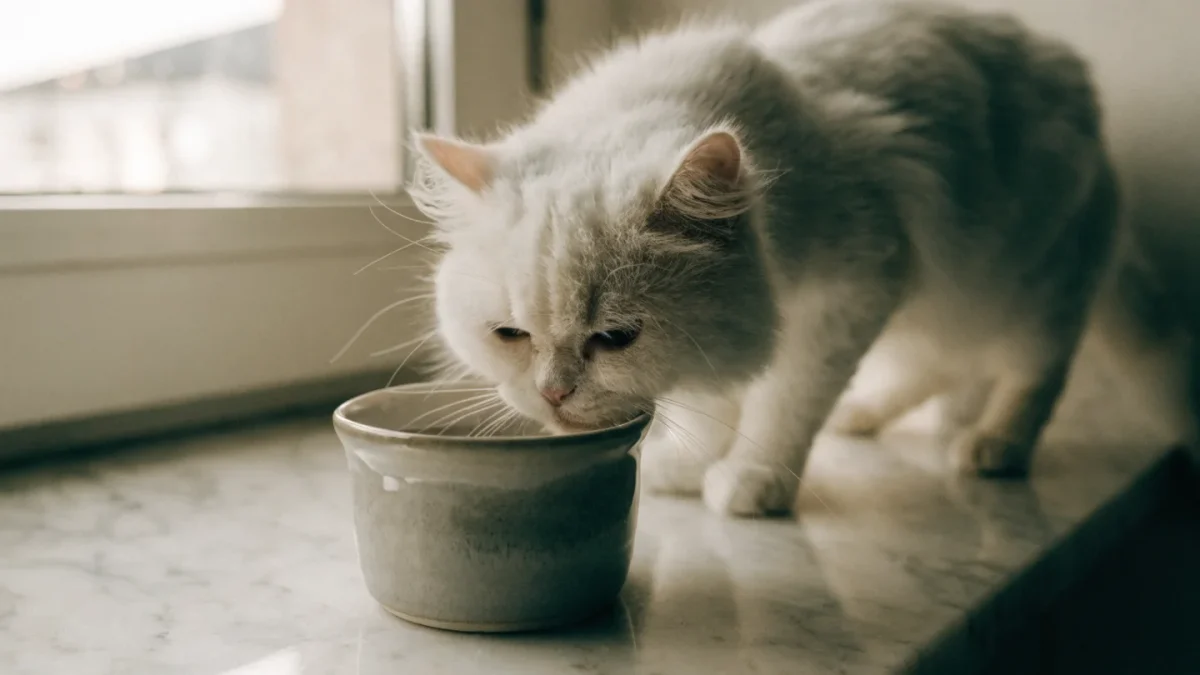
A few years ago I had a client — retired, very engaged with his cat's care — who'd done his own research before our appointment. His twelve-year-old Siamese had just been diagnosed with stage 2 chronic kidney disease. He'd printed out two conflicting sets of advice from different online sources: one insisting on severe protein restriction, another saying protein restriction was outdated and even harmful. He wanted to know which was right.
The honest answer was that both had some validity, which is not what people want to hear at a stressful appointment. But it's accurate. The evidence on kidney disease diets is real and meaningful, and it also has nuance that gets lost when veterinary research filters down to pet owner forums.
What the Evidence Actually Shows
The strongest evidence in veterinary nephrology — and this is solid, peer-reviewed data — is for phosphorus restriction. Phosphorus accumulates in the blood as kidney filtration declines, and elevated phosphorus directly accelerates kidney damage. One large study found that for every 1 mg/dL increase in serum phosphorus, a cat's risk of death increased by nearly 12%. It also contributes to secondary hyperparathyroidism, a cascade of hormonal problems that affects bone and cardiovascular health. Studies in both dogs and cats show that phosphorus-restricted diets slow disease progression and extend survival compared to standard diets. In a well-cited randomized feline trial, no cats on the renal diet experienced a uremic crisis over 24 months, while 26% of those on a maintenance diet did — and median survival was more than double in the renal diet group.
This is not subtle or disputed. If I could convey one thing to owners of pets with CKD: the phosphorus number on the food label matters more than almost anything else.
Protein restriction is more complicated. The traditional approach — dramatically lower protein across all stages — came from human nephrology research showing that high protein intake increased uremic waste load on failing kidneys. That logic applies to pets too.
But here's where it gets nuanced: protein restriction too early, or too aggressively, causes muscle wasting. And muscle wasting in kidney disease patients is associated with worse outcomes, not better. Current consensus — including IRIS guidelines and the ISFM feline CKD consensus — leans toward moderate protein restriction beginning at IRIS stage 2 or 3, with the level scaled to disease stage and the individual's body condition, alongside careful monitoring of muscle condition and caloric intake to catch protein-energy wasting early. A cat with stage 4 kidney disease who's already thin and losing muscle probably needs more protein than the textbook recommendation, not less.
What Commercial Kidney Diets Do
Prescription kidney diets for dogs and cats are formulated to hit specific targets: reduced phosphorus (typically 0.3–0.6% dry matter for cats, 0.2–0.5% for dogs), restricted protein, added omega-3 fatty acids — EPA and DHA have demonstrated anti-inflammatory effects in kidney tissue and are a consistent feature of evidence-based renal diets — and potassium supplementation, since cats with advancing CKD often become potassium-depleted, causing muscle weakness and the classic drooped-head posture.
They also tend to have increased moisture content, especially the wet food versions, which matters because hydration is protective for kidney function. Cats with CKD are often chronically dehydrated because of their low thirst drive, and getting more water into them through food helps.
The trade-off is palatability. These diets are lower in protein than what cats and dogs evolved to find maximally appealing. Many pets accept them readily; many don't. This is not a trivial problem — a cat that loses significant weight refusing its kidney diet is, in some scenarios, worse off than a cat eating a non-ideal diet that it will actually consume.
Phosphorus Binders: The Other Tool
When dietary phosphorus restriction alone isn't enough to bring serum phosphorus into target range, phosphorus binders can be added to food. These compounds bind phosphorus in the GI tract before it's absorbed — aluminum hydroxide, lanthanum carbonate, and calcium-based binders are the main options, each with different efficacy, cost, and side effect profiles. They don't replace dietary restriction but work alongside it.
I mention this because sometimes owners focus entirely on finding the perfect food and don't realize there are pharmacological tools available. If your pet's phosphorus isn't controlled by diet alone, ask your vet about binders.
Hydration and Kidney Disease
I want to spend a moment on this because it doesn't get enough attention in food-focused conversations. Chronic kidney disease impairs the kidney's ability to concentrate urine, which means CKD pets lose more water through urination. Combined with any reduction in water intake — which sick pets often have — this creates a chronic dehydration spiral that accelerates kidney decline.
Wet food is protective because it adds water to the diet. For cats especially, transitioning from dry to wet food (or at least adding wet food) during kidney disease management is one of the more impactful things owners can do. Water fountains help some cats drink more. Subcutaneous fluid therapy, administered at home, is often part of management in advanced cases.
Early vs. Advanced Disease: Different Strategies
Early kidney disease (stages 1-2) calls for increased monitoring, dietary phosphorus awareness, and supporting hydration — but may not yet require a full prescription renal diet, depending on the pet's current food. The goal at this stage is slowing progression.
Advanced kidney disease (stages 3-4) requires more aggressive intervention. Protein restriction becomes more important as uremic toxin buildup increases. Phosphorus must be tightly controlled. Potassium, B vitamins, and caloric density all need attention. For cats specifically, stage 3-4 disease often involves a constellation of concurrent issues — anemia, anorexia, nausea from uremia — that affect what dietary approach is even feasible.
The guidance on advanced-stage kidney disease in cats and phosphorus management covers the harder end of this spectrum in more detail.
For feeding pets with chronic conditions: the full picture, including how kidney disease interacts with other diagnoses, that broader context matters. And if you're dealing with both kidney disease and diabetes — which does happen — how diet management works in another common chronic disease shows the kind of careful balance that's sometimes required.
FAQ
How quickly does a renal diet slow down kidney disease?
Measurable benefits — in terms of BUN, creatinine, and phosphorus levels — can often be seen within two to three months of starting an appropriate diet. Survival data in studies comparing renal diet versus standard diet show meaningful differences over one to two years. That said, diet slows progression; it doesn't reverse damage that's already occurred. Expect to see stabilization and slower decline rather than improvement in kidney values.
My cat won't eat the prescription kidney diet. What are my options?
This is genuinely one of the harder situations in feline medicine. Options include: trying different textures or temperatures of the same diet, trying a different brand's kidney formulation, mixing a small amount of the old food with the kidney diet and very gradually shifting the ratio, or working with your vet to identify a non-prescription diet with lower phosphorus than your cat's current food as an interim step. Some cats in early-stage disease do acceptably on carefully chosen over-the-counter foods. In advanced disease, the options narrow.
Does potassium matter in kidney disease diets?
For cats, yes — significantly. Hypokalemia (low potassium) is common in cats with CKD and causes muscle weakness, neck ventroflexion (the classic "droopy head" posture), and lethargy. Many prescription feline kidney diets supplement potassium, and additional supplementation is sometimes needed. Dogs are less prone to CKD-related hypokalemia, though it can occur. Your vet should be monitoring serum potassium as part of regular kidney disease monitoring.
Can I make a homemade renal diet for my dog or cat?
It's possible, but it requires precise formulation by a veterinary nutritionist. Homemade renal diets that aren't properly balanced can easily be higher in phosphorus than the pet's condition warrants, or protein-deficient in ways that accelerate muscle loss. If you want to pursue a homemade approach — for palatability reasons, or because your pet has multiple conditions — consult a board-certified veterinary nutritionist rather than using a generic recipe.