

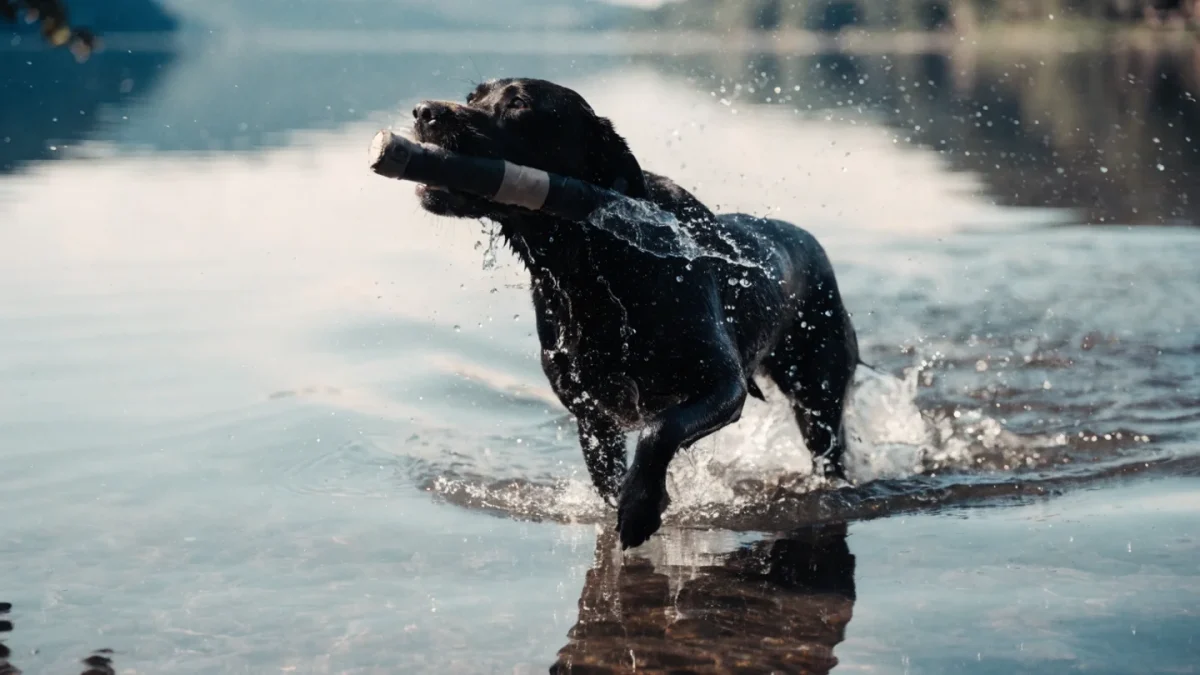
A labrador retriever that doesn't move enough will make sure you know about it. Chewed baseboards, excavated gardens, three-hour barking sessions directed at nothing — these aren't personality flaws. They're an energy debt collecting interest. The breed was built for full workdays hauling nets and retrieving waterfowl in freezing water, and that blueprint doesn't disappear because the dog lives in a house with central heating.
1. Puppies (8 Weeks to 12 Months)
Growth plates remain open until roughly 12 to 18 months. Repetitive impact on immature joints contributes to developmental problems, including the hip and elbow dysplasia the breed is already predisposed to.
The guideline: five minutes of structured exercise per month of age, twice daily. A four-month-old gets two 20-minute sessions. This means walking, gentle play, and controlled exploration — not forced running, jumping from heights, or extended fetch on hard surfaces.
Mental exercise fills the gap. Short training sessions, puzzle feeders, and socialization outings tire a puppy's brain without stressing its skeleton.
2. Adolescents (12 to 24 Months)
This is the period that breaks people. Adolescent labs have near-adult stamina, maximum energy, and the impulse control of a toddler. Aim for 60 to 90 minutes daily, split across at least two sessions. Swimming is ideal — it works the entire body without joint impact, and the breed's retrieving instinct makes water work self-motivating.
What doesn't work: a single 30-minute leash walk and the assumption that the yard handles the rest. A lab left alone in a yard doesn't exercise itself. It stands by the door waiting, then channels pent-up energy into whatever is destructible and available.
3. Adults (2 to 7 Years)
The baseline remains 60 to 90 minutes daily. Show-line labs may do well with 60 minutes; field-line labs often need closer to two hours. Variety matters as much as duration — rotate between swimming, retrieving, hiking, and nose work.
Weight management and exercise are inseparable with this breed. As the full labrador retriever breed guide details, obesity is the breed's most common health problem. Exercise is half the equation. Calorie control is the other half.
4. Seniors (8+ Years)
Cutting exercise entirely accelerates decline. Joint stiffness, muscle loss, and weight gain form a feedback loop. Keep daily walks on the schedule — shorten and slow them as needed. Swimming becomes even more valuable, maintaining muscle and cardiovascular fitness with minimal joint stress.
Watch for sudden exercise intolerance — lagging on walks, reluctance to climb stairs, stiffness after rest. Gradual slowing is normal. Abrupt changes warrant veterinary evaluation.
Signs Your Lab Isn't Getting Enough
The pattern is reliable: destructive chewing, excessive barking, counter-surfing, hyperactivity indoors, pulling harder on leash, and digging. Before adjusting training for any of these, increase exercise first. Understanding lab temperament puts these behaviors in context — they're a working breed telling you something essential is missing.
Frequently Asked Questions
Can I take my labrador jogging with me?
Yes, once growth plates have closed — typically 14 to 18 months. Start with short distances on soft surfaces and build gradually. Watch for overheating; the dense double coat traps heat more than many owners realize.
Is a fenced yard enough exercise for a labrador?
No. Most labs won't self-exercise in a yard. They'll wait by the door, bark, or dig. A yard supplements structured exercise but doesn't replace walks, swims, or retrieving sessions.
How do I exercise my labrador in bad weather?
Extended training sessions, hide-and-seek with treats, and puzzle feeders take the edge off. Tug-of-war on a non-slip surface provides physical engagement. These won't fully replace outdoor exercise but manage energy on difficult days.