

For a breed that has dominated popularity rankings across multiple countries for over three decades, the labrador retriever gets misread with remarkable consistency. People assume "popular" means "easy." They assume "friendly" means "calm." They see a wagging tail and a soft mouth and picture a dog that slots neatly into any household without friction. That version of the labrador exists — but only after years of consistent effort from an owner who understood what they signed up for.
The labrador retriever temperament is a specific cocktail of traits shaped by centuries of selective breeding for water retrieval, endurance, and close human cooperation. Understanding those traits — not the greeting-card version, but the real ones — explains both why labs hold that top spot and why so many end up in breed-specific rescues before their second birthday.
The Core Temperament: What Drives a Labrador
Three traits define the labrador temperament at a biological level: social drive, food motivation, and biddability. Every behavior you'll see — the good, the frustrating, and the destructive — traces back to some combination of these three.
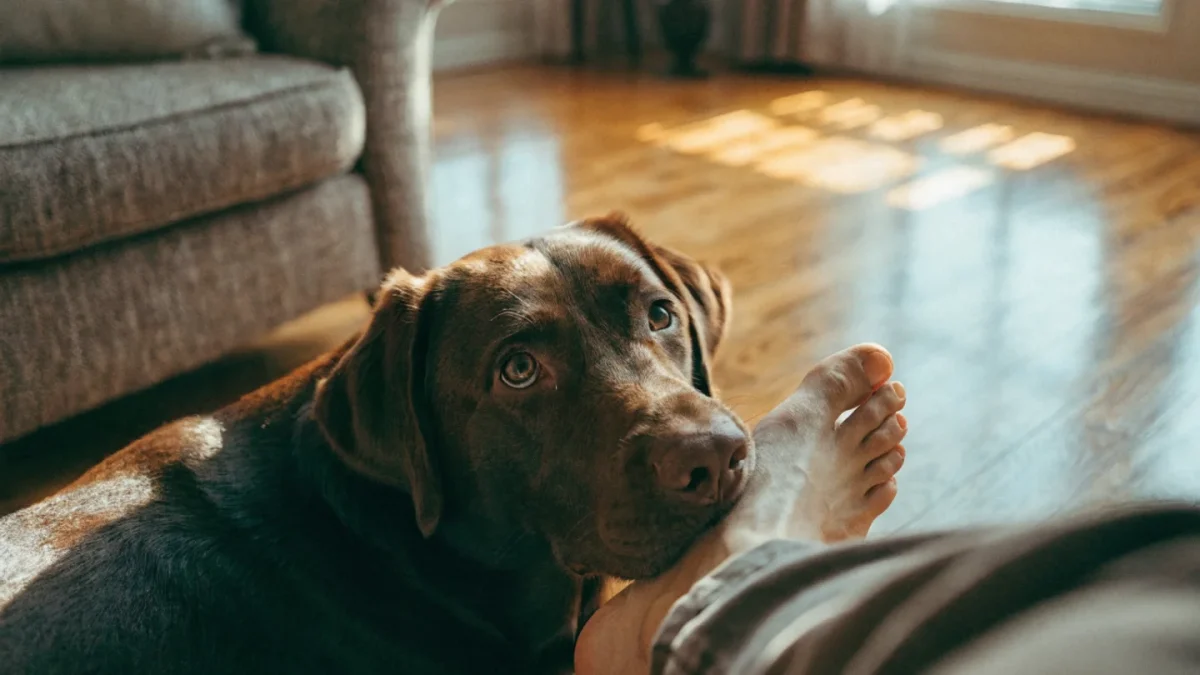
Social drive is the most fundamental. Labs were developed to work in physical contact with fishermen on small boats and alongside hunters in the field, all day, every day. That history produced a dog that doesn't just tolerate people — it needs them. A labrador alone in a yard isn't relaxing. It's suffering. This breed regulates its emotional state through proximity to humans, which is why separation anxiety runs so high in the breed and why a lonely lab will chew through drywall, eat furniture cushions, and bark until the neighbors file complaints.
Food motivation is partly genetic. Research published in 2016 identified a deletion in the POMC gene affecting hunger signaling in a significant percentage of labradors. Dogs with this variant don't feel full the way other dogs do. That makes labs intensely responsive to food-based training — they'll work hard and learn fast for a treat — but it also means they will steal, scavenge, and eat non-food items with alarming dedication. This isn't greed. It's a neurological signal that never turns off.
Biddability — the willingness to cooperate with human direction — is what holds everything together. Labs want to do what you ask. They find cooperation inherently rewarding, not just because of the treat at the end, but because working with a person satisfies a deep-seated drive. This is the trait that makes them dominant in service work, detection, search-and-rescue, and therapy roles worldwide.
What This Looks Like Day to Day
Here's the part that catches people off guard: a young labrador is not the dog you saw in the park belonging to someone else's well-trained five-year-old. A labrador between eight weeks and roughly three years old is an exuberant wrecking ball that needs every atom of that biddability channeled through consistent structure.
They mouth everything. This isn't aggression — it's a breed built to carry objects in its jaws, and every new surface, hand, shoe, and corner of furniture gets the mouth test. They jump on people because greeting a human is the single greatest event in their day, and their excitement expresses itself vertically. They counter-surf because their nose told them something edible was up there, and their food drive overrode whatever impulse control they'd developed so far.
The golden retriever comparison is useful here. Both breeds are friendly, trainable retrievers. But where a golden tends toward an eager-to-please steadiness, the lab brings a higher-octane enthusiasm that reads as chaos without direction. A golden might wait by the door hoping for a walk. A lab will bring you the leash, your shoes, and a tennis ball, then start circling your legs.
After age three or four, most labs settle into a calmer version of themselves — still active, still food-driven, still deeply social, but with the impulse control that puppyhood and adolescence lacked. That mature labrador is the dog people imagine when they decide to get the breed. The journey there requires patience.
The Social Animal: Why Labs Need People
Labrador social drive goes beyond enjoying company. It's a structural need. Labs that get adequate human interaction are stable, confident, and adaptable. Labs that don't — because the family works long hours, because they're kenneled too often, because nobody engages with them beyond feeding — develop behavioral problems that look like defiance but are actually distress.
This social wiring is also why labs tend to be good with children, other dogs, and even cats when properly introduced. Their threshold for aggression is among the lowest of any breed. It takes extraordinary circumstances to provoke genuine aggression in a well-socialized labrador. That doesn't mean they can't cause harm — a 35 kg dog with poor impulse control can knock a toddler down without any aggressive intent whatsoever.
Multi-dog households generally work well with labs, provided the second dog isn't resource-guarding food. Labs will defer in most social conflicts, but their food motivation creates a genuine flashpoint around meals and high-value treats. Separate feeding is standard advice for any household with a lab and another dog.
The Popularity Paradox
Labs top the charts because their temperament hits a specific sweet spot: social enough to bond with anyone, trainable enough to adapt to various roles, sturdy enough to handle children, and forgiving enough to tolerate beginner mistakes. No other breed combines those traits as consistently.
But that same popularity creates problems. High demand means high breeding volume, and high breeding volume means wide variation in temperament outcomes. A lab from a careful breeding program that selects for stable temperament produces different results than a lab from a volume operation that selects for nothing beyond coat color. The breed's temperament ceiling is extraordinary — guide dogs, bomb detection dogs, therapy dogs working hospital wards. The floor is a hyperactive, anxious dog that destroys a house. The gap between those outcomes is mostly human decisions: breeding choices, early socialization, training investment, and exercise commitment.
If you want to understand the full picture, the complete labrador retriever breed guide covers health, grooming, and physical characteristics alongside temperament. For context on why these traits exist, the breed's working origins in Newfoundland explains the functional pressures that shaped the modern lab's personality. And for a reality check, there are several common misconceptions about labs worth confronting.
What Most People Get Wrong About Labrador Temperament
"Labs are naturally gentle." They're naturally biddable, which looks like gentleness in a trained dog. An untrained lab has no special gentleness — it has the same energy and mouth as any sporting breed, just more willingness to learn not to use them inappropriately.
"My lab is hyper because he's still young." Maybe. Or maybe he's under-exercised. A lab getting 20 minutes of walking a day when it needs 90 minutes of real activity isn't being "a puppy" — it's being energy-deprived. Age calms labs eventually. Exercise calms them reliably.
"Labs are dumb because they eat everything." Their food drive is genetic, not intellectual. Labs are consistently among the most trainable breeds in working contexts. Eating a sock doesn't reflect intelligence — it reflects a hunger signal that doesn't shut off.
Frequently Asked Questions
Are labrador retrievers aggressive?
Labradors have one of the lowest aggression thresholds among breeds. Properly socialized labs almost never display aggression toward people or other animals. Rare exceptions typically involve dogs that were poorly socialized, abused, or suffering from pain-related irritability. Resource guarding around food can occur given the breed's food drive, but this is manageable with early training.
At what age do labrador retrievers calm down?
Most labradors begin to settle noticeably between ages three and four, though individual variation is significant. Field-line labs often take longer to mature than show-line labs. Exercise level matters more than age — a well-exercised two-year-old lab is calmer than an under-exercised five-year-old.
Can labrador retrievers be left alone during the workday?
An adult lab can tolerate four to six hours alone once past the destructive puppy phase, provided it has been gradually conditioned to alone time and receives adequate exercise before and after. Full eight-hour workdays without any midday break push most labs past their comfort zone and frequently lead to anxiety-driven behaviors.
Why is my labrador so mouthy?
Mouthiness is hardwired into the breed. Labs were selectively bred for a "soft mouth" — the ability to carry game without damaging it — which required generations of dogs that wanted to hold things in their jaws. That same genetic predisposition makes puppies and adolescents mouthy with hands, clothing, and objects. Redirect to appropriate items rather than punishing the impulse itself.
The Right Owner for This Temperament
The labrador temperament rewards a specific type of owner: someone who enjoys being needed, who has the time and energy for genuine daily engagement, and who finds a dog's enthusiasm charming rather than exhausting. If you want a dog that's happy to exist quietly in the background while you work from home, look elsewhere. If you want a dog that inserts itself into every activity, greets you like a returning hero, and will happily swim laps in a lake until you physically call it out — then this temperament is exactly what you're looking for.
Just know what you're signing up for in the first three years. The mature lab is worth the investment. Getting there is the work.