

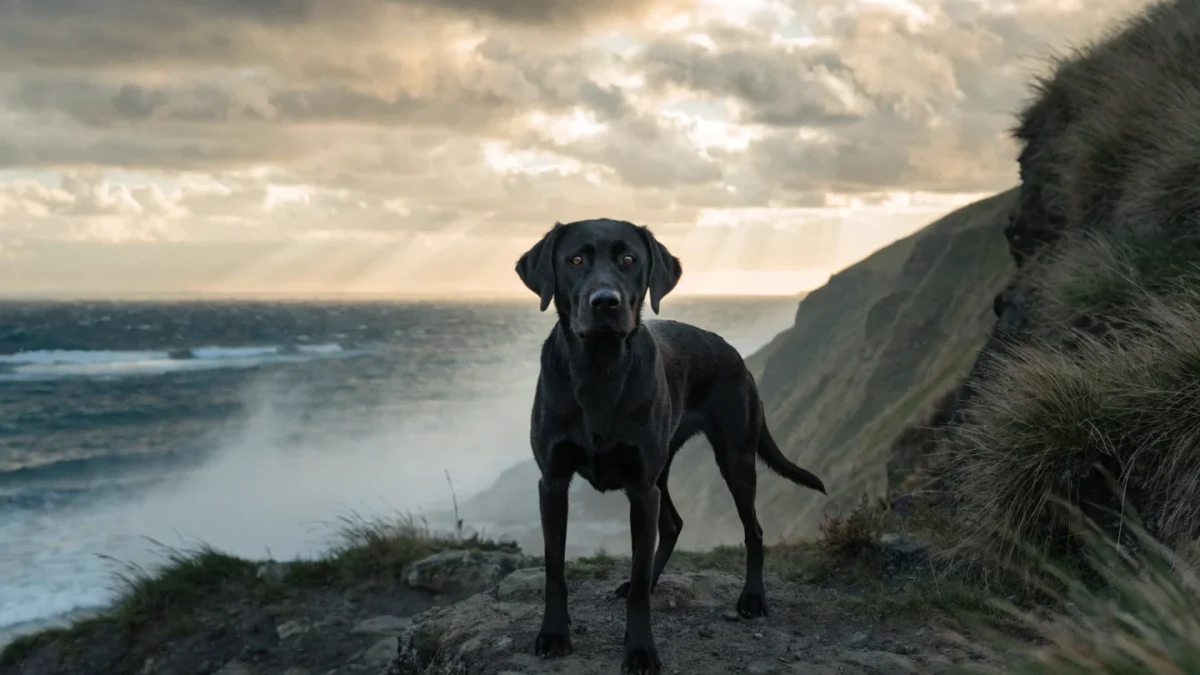
The labrador retriever is not from Labrador. That's the first thing most people get wrong about this breed's history, and it sets the tone for a story full of misattributions, near-extinction, and unlikely survival. The breed descends from the St. John's water dog of Newfoundland — a distinct working type that emerged centuries before anyone thought to give it a formal name — and its survival into the modern era depended on a handful of British aristocrats, improbable timing, and the extinction of the very dog it came from.
I've spent years tracing breed lineages, and the labrador's origin story is one of the more dramatic ones. It involves transatlantic shipping, cod fishing, sheep protection laws, and a quarantine act that nearly severed the genetic pipeline forever.
The St. John's Water Dog: A Working Dog Built by Necessity
By the late 1500s, European fishing fleets were working the Grand Banks off Newfoundland, and the communities that grew along the island's coast needed dogs. Not companions — tools. The fishing economy required a dog that could leap from a boat into near-freezing water, retrieve escaped cod and fishing gear, haul nets to shore, and do it from before dawn until after dark.
Over generations, the fishermen of Newfoundland bred exactly that. The St. John's water dog — also called the lesser Newfoundland or St. John's dog — was compact and short-coated, typically black with white markings on the chest, chin, and paws. Its coat was dense enough to resist cold water but short enough to avoid ice buildup, a critical distinction from the larger, shaggier Newfoundland breed that developed alongside it. The two types shared the island but served different functions: the larger Newfoundland pulled carts and heavy loads on land, while the smaller St. John's dog was a water specialist.
What made the St. John's water dog remarkable wasn't any single trait. It was the combination. These dogs had an instinctive desire to retrieve, a soft mouth that could carry fish without damaging it, the physical toughness to swim in water cold enough to kill most breeds, and a cooperative temperament that made them reliable partners on crowded boats. Every one of those traits transferred directly into what we now call the modern labrador's temperament.
There are no formal breed records from this period. What we know comes from written accounts by visiting Europeans. One of the earliest descriptions, from an English traveler in the 1620s, mentions small water dogs used by the fishermen of Newfoundland, though the specifics are sparse. By the 1700s, descriptions become more detailed and consistent — short-coated, medium-sized, black, and extraordinarily willing in the water.
The British Connection: Aristocrats and Gun Dogs
The story shifts across the Atlantic in the 1820s. British sportsmen visiting Newfoundland — or more accurately, stopping there on transatlantic voyages — encountered the St. John's water dog and immediately saw its potential as a gun dog for waterfowl shooting, which was a major aristocratic pursuit in Britain at the time.
The second Earl of Malmesbury is recorded as one of the first to import St. John's water dogs to England, establishing a breeding program at his estate, Heron Court, in Dorset. His son, the third Earl, continued the program with serious commitment. In an 1887 letter to the sixth Duke of Buccleuch, the third Earl wrote that he always called his dogs "Labrador dogs" and described the effort he took to keep the breed "as pure as I could from the first." This letter is where the name "Labrador" enters the written record — applied, ironically, by a man in Dorset to a dog from Newfoundland, neither of which is Labrador.
Why "Labrador"? The most likely explanation is geographical confusion. The Labrador Peninsula and Newfoundland are adjacent, and to an English aristocrat in the 1800s, the distinction between the two was academic. The name stuck because the Earl used it consistently and his breeding program was influential enough that others adopted his terminology.
Meanwhile, the Duke of Buccleuch's family was running a parallel breeding program in Scotland. The Buccleuch and Malmesbury lines eventually merged in the 1880s when the two families exchanged dogs. This combining of bloodlines established the core genetic base from which virtually all modern labradors descend. It is a remarkably narrow foundation for a breed that now numbers in the millions worldwide.
The Extinction That Almost Ended Everything
Here's where the story becomes precarious. Throughout the late 1800s, Newfoundland implemented a series of laws designed to protect sheep from roaming dogs. Heavy taxes were levied on dog ownership — with females taxed more than males, creating an economic incentive to cull female puppies. These laws progressively reduced the St. John's water dog population on the island.
Then, in 1895, Britain enacted the Rabies Order, imposing a strict six-month quarantine on all imported dogs. The combination of Newfoundland's dog restrictions and Britain's quarantine effectively severed the supply line of new St. John's water dog stock to English breeding programs. No more foundation animals were coming across the Atlantic.
The St. John's water dog declined steadily through the early twentieth century. The last known pair was photographed in the 1980s. The breed is now extinct.
The labrador retriever survived only because the Malmesbury, Buccleuch, and a handful of other British programs had already built self-sustaining populations before the supply was cut off. Had those importations happened ten or fifteen years later, the genetic pipeline would have closed before enough breeding stock existed in Britain. The labrador retriever as we know it would likely not exist.
Recognition and the Field-Show Split
The Kennel Club in Britain recognized the labrador retriever as a distinct breed in 1903, with early standards emphasizing working ability — broad skull, otter tail, dense coat, and strong retrieving instinct. The first registered labrador was Ben of Hyde, a dog from Major C.J. Radclyffe's kennel, in 1903.
For the first several decades, labradors were working dogs first. They competed in field trials, served as gun dogs on shooting estates, and earned their reputation through performance. The breed standard reflected this: function over form.
The divergence between field and show lines began in the mid-twentieth century as conformation showing became popular. Show breeders selected for heavier bone, broader heads, shorter muzzles, and a stockier build — the traits judges rewarded in the ring. Field breeders continued selecting for speed, endurance, nose, and trainability. Over decades, the two lines diverged enough that a field labrador and a show labrador standing side by side look like different breeds. The labrador retriever breed guide covers the practical implications of this split.
Neither type is more "correct." Both descend from the same foundation stock. They simply reflect different priorities applied over many generations — a living demonstration of how selective breeding shapes a breed within a remarkably short evolutionary timeframe.
The Popularity Explosion
Labradors entered North America primarily through sporting and hunting circles in the early 1900s. The breed gained its first formal recognition there in 1917. Through the mid-twentieth century, labs were primarily hunting dogs and wealthy families' companions — not yet the suburban household staple they would become.
The shift happened gradually through the 1960s and 1970s, driven by the breed's success in service roles. Labs proved exceptional as guide dogs for the blind, search-and-rescue dogs, and eventually drug-detection dogs. Each high-profile role increased public visibility, and the breed's genuine friendliness made it appealing to families who saw labs working and thought, "That's the dog I want."
By 1991, the labrador retriever reached the top position in registration statistics and has held it, or a position near it, in multiple countries ever since. That kind of sustained dominance is unprecedented among dog breeds and speaks to the temperament's broad appeal. It also created the breeding volume problems — puppy mills, backyard breeding, temperament-blind reproduction — that remain the breed's biggest ongoing challenge.
Color History: A Footnote That Matters
The original St. John's water dogs were predominantly black. Black remained the only "correct" labrador color for decades. Yellow labs appeared occasionally in litters — the first recorded yellow, Ben of Hyde (not to be confused with the first registered lab of the same name), was born in 1899. Chocolate puppies appeared too, but for much of the breed's history, non-black puppies were culled.
Yellow labs gained acceptance in the early twentieth century. Chocolate labs took longer — they weren't seriously bred for until the mid-1900s. The consequences of that late start are still measurable today. Because chocolate requires both parents to carry the recessive gene, breeding for chocolate color necessarily narrowed the gene pool. The genetics behind labrador coat colors explains why this matters for health outcomes.
Frequently Asked Questions
Why is the labrador retriever called "Labrador" if it comes from Newfoundland?
The name was coined by the third Earl of Malmesbury in 1887 to distinguish his dogs from the larger Newfoundland breed. "Labrador" likely reflected geographical imprecision common among the British aristocracy — Labrador and Newfoundland are adjacent regions, and the distinction wasn't meaningful to English dog breeders. The misnomer stuck because the Malmesbury program was foundational to the breed.
Are there any St. John's water dogs left?
No. The St. John's water dog is extinct. The last known pair was documented in the 1980s in Newfoundland. The breed was progressively eliminated by dog taxes, sheep protection laws, and the loss of the fishing economy that sustained it. Its genetic legacy survives in the labrador retriever, the Newfoundland, and several other retriever breeds that incorporated St. John's water dog bloodlines.
When did labradors become the most popular dog breed?
The labrador retriever reached the top position in registration statistics in 1991 and has maintained dominance or near-dominance in multiple countries since then. The breed's rise to popularity was gradual, driven by its success in service roles through the mid-twentieth century and subsequent adoption by suburban families drawn to its temperament and public image.
The Right Way to Understand This Breed's History
The labrador retriever exists because of a chain of contingencies: fishermen needed a specific type of working dog, aristocrats recognized its potential, and a handful of breeding programs preserved the genetics just before the source population disappeared. Understanding that chain matters because it explains every trait the breed carries today — the water obsession, the food drive, the social dependence, the tireless retrieving instinct.
These weren't design choices made by a committee. They were survival traits forged by the North Atlantic and refined by British country estates. Every time a labrador leaps into a lake after a tennis ball, it's expressing a drive that was being selected for before the breed had a name.