

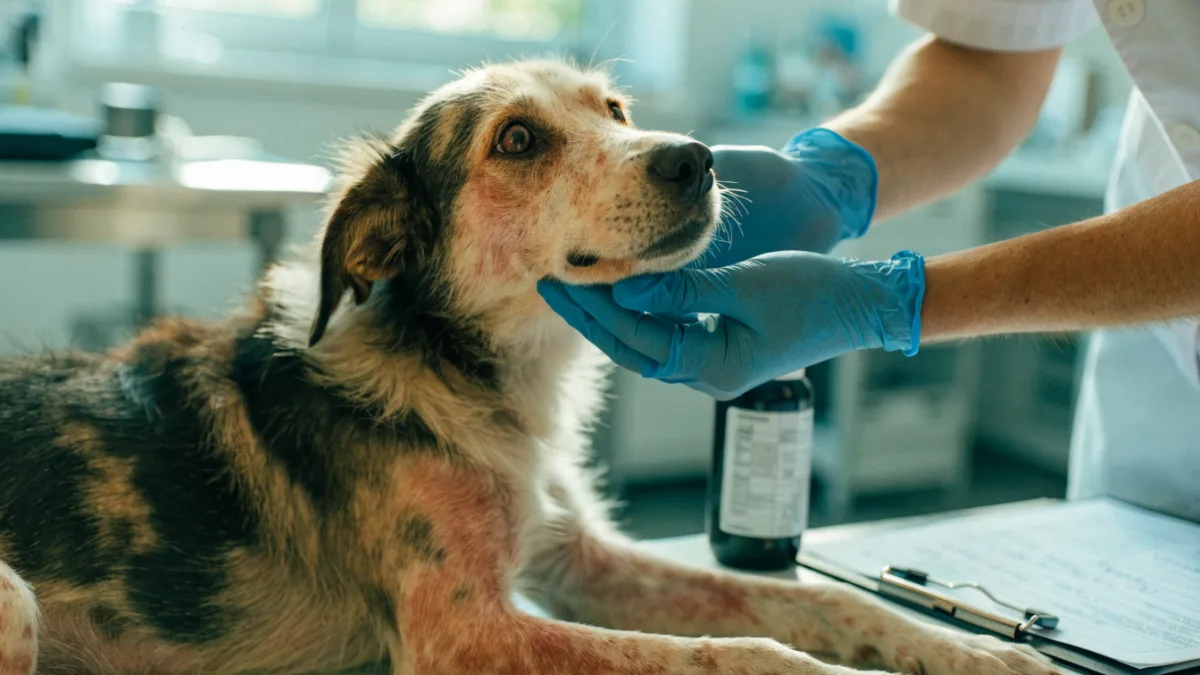
When Maria brought a six-month-old terrier mix named Gus into my exam room, she was near tears. Gus was a recent rescue from a local shelter, and over the past week, he had started losing the hair around his eyes and chewing his paws until they bled. His skin was reddened, crusty, and smelled faintly of yeast. Maria was terrified that she had brought home a terminally ill dog. After a quick skin scraping and a look under the microscope, I could give her the news she desperately needed to hear: Gus didn’t have a fatal disease. He had demodectic mange.
Conditions like Gus’s are running rampant in shelters and rescues right now. Post-pandemic overcrowding, limited resources, and the sheer stress of kennel life have created the perfect storm for contagious skin conditions to flourish. Just recently, a single,[1] for demodex mange all at once. When you see a dog with patchy fur and inflamed skin, it’s easy to feel overwhelmed. But the truth is, [2] not a behavioral flaw or a death sentence.
The Tale of Two Mites: Sarcoptic vs. Demodectic Mange
Whenever I diagnose a patient with mange, the first question I get is almost always, “Is it contagious to my other pets?” The answer entirely depends on which microscopic mite we’re dealing with. Understanding the difference between the two main culprits is crucial for effective treatment.
Sarcoptic Mange (Canine Scabies)
Sarcoptic mange is the highly contagious variety. It is caused by Sarcoptes scabiei mites, which literally burrow down into the dog’s skin to lay their eggs. This burrowing triggers extreme pruritus—the medical term for intense, miserable itching. Dogs with scabies will often scratch themselves raw, leading to severe hair loss, scabs, and secondary skin infections.
Because sarcoptic mange is zoonotic—meaning it can jump between species—these mites can temporarily infect humans and other household pets. While they prefer to complete their life cycle on dogs, they will happily bite humans, causing an itchy, red rash on our arms and bellies. In a shelter environment, a dog with sarcoptic mange requires strict isolation protocols to prevent a massive, facility-wide outbreak.
Demodectic Mange (Demodicosis)
Demodectic mange, which is what little Gus had, is a completely different story. These mites (Demodex canis) are naturally occurring. In fact, they live peacefully in the hair follicles of almost all healthy dogs without causing any issues at all. Demodex mites are passed from mother to nursing puppies in the first few days of life.
So, if all dogs have these mites, why do some dogs get mange? The answer is almost always a compromised immune system. When a dog’s immunity drops—due to stress, malnutrition, or simply being a young puppy with an immature immune system—the mites seize the opportunity to overpopulate. They multiply rapidly, causing the hair loss and skin inflammation we associate with the disease. [3] in the way scabies is. You cannot catch demodex from your dog, and it rarely spreads to healthy adult animals.
The Shelter Dilemma: Stress, Overcrowding, and the Immune System
To understand why shelters are battling such high numbers of mange cases, you have to look at what the kennel environment does to a dog’s body. Stress is an immunosuppressant. When a stray dog is brought into a loud, unfamiliar shelter, their cortisol levels skyrocket. Their immune system essentially takes a nap, and naturally occurring demodex mites wake up and start multiplying.
This creates a frustrating debate in the rescue community. Do you hold a dog in a stressful shelter kennel until their skin is completely healed, or do you place them in a foster or adoptive home while they are still undergoing treatment?
I’ve changed my mind on this over the years. Early in my career, I felt dogs should stay isolated in the shelter until they looked perfect before going to an adopter. But clinical experience has shown me that keeping a dog with demodex in a high-stress kennel actively works against their recovery. The stress continues to suppress their immune system, feeding the very mites we are trying to kill. This is why so many progressive rescues, like *Friends of Strays*, actively advocate for placing dogs with demodex into homes while they are still being treated. Getting them out of the shelter is often the best medicine.
From Scratching to Thriving: Treating the Underdog
One of the most rewarding parts of my job is treating these cases. Seeing a dog go from scaly and suffering to fluffy and full of life feels like watching a small miracle unfold.
Treatment involves a two-pronged approach: killing the mites and treating the secondary damage. Modern veterinary medicine has made this incredibly manageable. Today, we rely heavily on modern oral parasite preventives belonging to the isoxazoline class of drugs. These medications are highly effective at killing both sarcoptic and demodectic mites, usually resolving the infestation within a few months.
However, you must consult with a veterinarian to get the correct dosage and rule out other underlying issues. Never attempt to treat mange with over-the-counter remedies or random agricultural products you find online. I frequently see well-meaning owners try home remedies like motor oil or harsh chemical dips. Not only do these fail to kill the mites, but they also cause severe, painful chemical burns and can lead to systemic toxicity.
When treating these dogs, we also have to address the secondary pyoderma (a bacterial skin infection) that sets in from all the scratching. For patients like Gus, we used a combination of the oral preventive medication, a short course of antibiotics for his skin infection, and weekly medicated baths containing an ingredient like chlorhexidine to soothe the inflammation. Within four weeks, his hair was growing back. By week eight, he looked like an entirely different dog.
“I thought I was bringing home a broken dog,” Maria told me during one of our final check-ups. “But it turns out he just needed a little medical help and a calm place to sleep.”
That is the core message of the “underdog” movement in rescue. Rescues are increasingly marketing dogs with mange as medical miracles in the making, often offering waived or reduced adoption fees. As long as the adopter is educated on the condition and committed to follow-up vet visits, adopting a dog with demodex is incredibly rewarding.
Ripple Effect: Mange in the Wild
While our domestic pets are manageable, mange is a devastating force in wildlife conservation. The same contagious sarcoptic mange mites that affect our dogs can easily spill over into wild animal populations, often with catastrophic results.
In urban and suburban areas, it is increasingly common to see mangy foxes and coyotes wandering during the daytime. Because these wild canids are incredibly susceptible to the mites, and because they don’t have access to warm beds and veterinary care, sarcoptic mange can be a slow, painful death sentence for them. The mites cause them to scratch obsessively, leading to hair loss. Without their fur to protect them from the cold, many wild foxes and coyotes succumb to hypothermia during the winter months.
But the threat goes far beyond local wildlife. Mange is a highly significant factor in global conservation efforts, heavily impacting endangered species like the San Joaquin kit fox in California and the Iberian lynx in Spain. When these rare populations are already stressed by habitat loss and environmental pressures, a spillover of sarcoptic mites from domestic animals can decimate their fragile numbers.
This is why treating mange—and preventing its spread—is about more than just helping our domestic pets. By managing parasite infestations in our own backyards and supporting local shelters, we are actively reducing the reservoir of mites available to jump into the wild. Every dog we cure is a win for animal welfare, but it is also a vital step in protecting the vulnerable wildlife that share our ecosystems. The next time you see a scruffy, patchy rescue dog looking for a home, remember that beneath that damaged skin is a healthy pet just waiting for a second chance—and treating them helps protect the natural world, too.
Sources
- shelter shared a video highlighting that they were actively treating eight dogs — instagram.com
- mange is a highly treatable medical condition — animalhumanesociety.org
- Demodex is not highly contagious — ruffstartrescue.org