

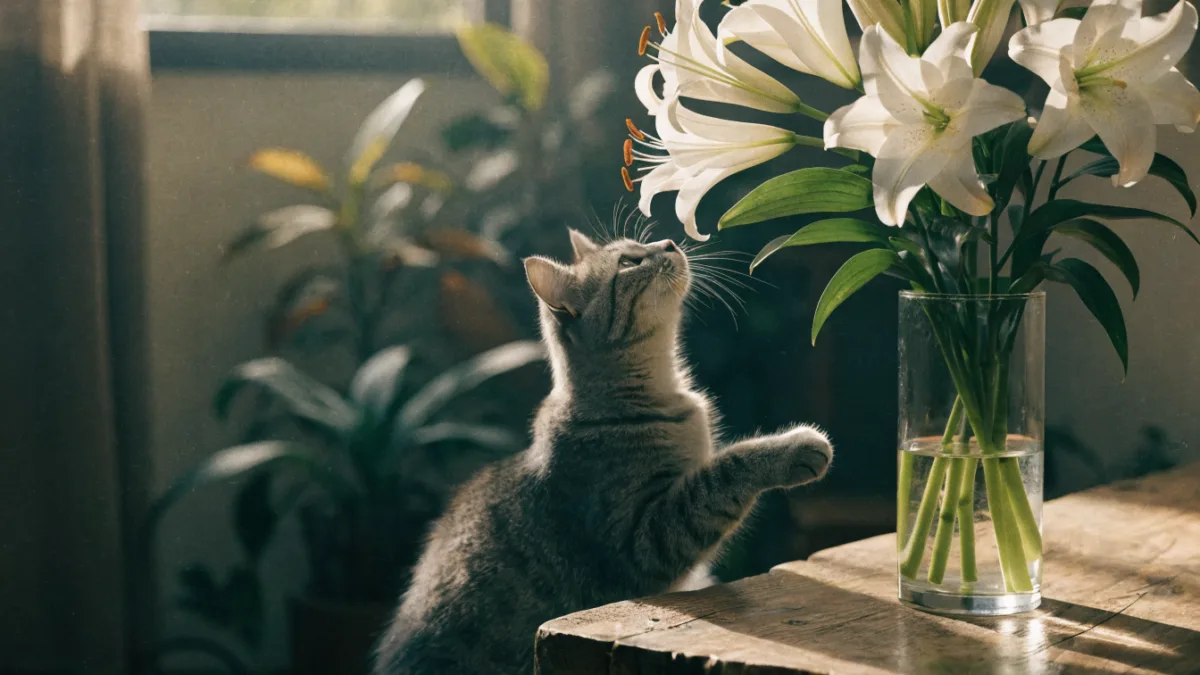
Let me tell you about Leo. Leo is a four-year-old indoor tabby cat with a personality roughly three times his actual size. Last spring, his owner brought home a beautiful bouquet for the dining room table. She didn’t think twice about it until she walked into the living room and found Leo casually batting at a fallen piece of plant debris. Within twelve hours, Leo was lethargic, hiding under the bed, and refusing his favorite treats. That innocent-looking bouquet contained Asiatic lilies, and Leo was in the early stages of acute kidney failure. We managed to save Leo, but it required three days of intensive, round-the-clock intravenous fluids in our ICU. It was a stark reminder of a collision course happening in modern homes: the surge in pet adoptions intersecting with the booming popularity of houseplants and outdoor gardening.
The Unforgivable Sins: Lilies, Bulbs, and Palms
When we talk about dangerous plants, they aren’t all created equal. Some cause mild stomach upset, while others are unforgiving. At the absolute top of that “unforgiving” list is the true lily.
The Lethal Reality of Lilies
Plants belonging to the Lilium and Hemerocallis families—which include Tiger, Asiatic, Easter, and Japanese Show lilies—are incredibly lethal to cats. I cannot stress this enough: every single part of this plant is toxic. The petals, the leaves, the stems, and even the pollen. If a cat brushes against the plant, gets pollen on their fur, and grooms themselves later, the result can be fatal. Even drinking the water from a lily vase can cause severe toxicity.
These plants cause renal tubular necrosis. In plain English, they trigger the rapid destruction of the cells lining the kidney tubules, leading to sudden, catastrophic kidney failure. If a cat ingests even a tiny amount, time is of the essence. They need immediate veterinary intervention to hopefully flush those toxins out before the kidneys sustain permanent damage.
Destructive Diggers and Toxic Bulbs
While cats bear the brunt of lily toxicity, dogs have their own gardening nemesis: spring bulbs. Tulips and daffodils are absolute staples in spring gardens, but their bulbs are highly toxic to both dogs and cats. The highest concentration of the toxic compounds (like tulipalin in tulips and lycorine in daffodils) is locked inside that underground bulb.
Take Barnaby, a wildly enthusiastic three-year-old Golden Retriever I treated last fall. His owner was busy planting a new border of tulip bulbs along the fence. Barnaby, doing what dogs do best, decided to “help” by digging up the freshly turned dirt. He swallowed a few of the unplanted bulbs before his owner realized what was happening. Within a few hours, Barnaby was drooling heavily, experiencing severe gastrointestinal distress, and showing early signs of tremors. The bulbs can cause intense vomiting, diarrhea, and in severe cases, convulsions and heart abnormalities.
A couple of other outdoor offenders you need to know about include:
- Sago Palms: These popular ornamental plants are highly toxic to dogs, cats, and horses. Ingesting any part, especially the seeds, can cause severe liver failure.
- Azaleas and Rhododendrons: These contain grayanotoxins, which can interfere with nerve function and cause cardiovascular collapse if eaten in sufficient quantities.
The “High Ground” Strategy and Why I Changed My Mind
There is a lively, ongoing debate in the pet and plant-loving communities. Can you safely keep mildly toxic plants in a home with pets if you just put them out of reach? This is what I call the “High Ground Strategy”—hanging plants from the ceiling in macramé hangers, placing them on dangerously high shelves, or dedicating a locked “plant room” to your greenery.
If you had asked me early in my career, I would have said yes. I used to think that strategic placement was a perfectly fine workaround. I’ve changed my mind on this. I see too many cases like Misha, a two-year-old tortoiseshell cat whose owner kept a mildly toxic plant on a high bookshelf. Misha, like most cats, was a talented climber who viewed the high shelf as a challenge rather than a boundary. She jumped up, knocked the plant down, and chewed on the leaves while her owner slept.
For dogs, hanging a trailing vine like a Pothos safely out of reach usually works beautifully because dogs aren’t exactly known for scaling bookshelves. But for cats? If there is one thing I have learned from clinical experience, it is that cats view gravity as a suggestion. Furthermore, fallen leaves or petals from high places can easily be ingested by a dog or cat on the ground below. If you have a curious feline, physical barriers aren’t a guarantee—they are just a delay tactic.
Pet-Safe Gardening Without Losing Your Mind
Outdoor gardening presents a different set of challenges. Many dedicated gardeners feel understandably frustrated when they learn that their favorite spring staples are suddenly off-limits. It often leads to the debate of whether physical barriers—like raised beds or decorative fencing—are enough to protect a curious pet.
Physical barriers can certainly help, especially for dogs who stay at ground level. However, gardening with pets is much less stressful if you simply design with them in mind from the start. You don’t have to sacrifice a lush, vibrant garden to keep your pets safe. There are plenty of spectacular, non-toxic alternatives that thrive outdoors:
- Snapdragons: These produce beautiful, tall spikes of color and are completely non-toxic to dogs and cats.
- Sunflowers: They add dramatic height to your garden beds and are perfectly safe if your dog decides to take a bite.
- Zinnias and Marigolds: Excellent for adding pops of bright, warm color to your borders without the panic of a poisoning risk.
If you are planting bulbs in the fall, the safest approach is to supervise your dog closely while you work, keep the bulbs in a sealed bucket, and fill in the holes immediately. Better yet, if you have a breed prone to digging—like a Terrier or a Dachshund—consider dedicating a specific “digging zone” in the yard with loose soil and safe toys to keep them distracted from your prized flower beds.
Building a Beautiful, Non-Toxic Indoor Jungle
Inside the home, the good news is that you can still cultivate a stunning, lush indoor jungle without putting your pets at risk. There is an incredible variety of aesthetically pleasing, pet-safe houseplants available. When you are shopping, look for these gorgeous, completely non-toxic options:
- Spider Plants: They are incredibly resilient, produce beautiful arching leaves, and are entirely safe for cats (in fact, they seem to be a favorite feline snack!).
- Boston Ferns: Perfect for adding a touch of lush greenery to a bathroom or a shaded porch.
- Calathea: Known for their striking, painterly leaf patterns, they offer the same visual impact as toxic prayer plants, but are completely pet-safe.
- Parlor Palms: If you want a tropical vibe without the deadly risks of the Sago Palm, this is your go-to plant.
Before you bring any new greenery into your home or garden, do your homework. Bookmark the [1] on your phone. It is the ultimate, evidence-based go-to resource for pet owners, allowing you to search by plant name or species to verify its safety.
When Accidents Happen
Despite our best efforts, accidents happen. Pets are fast, and we can’t watch them every second of the day. If you even suspect that your pet has chewed on a toxic plant—especially if you find a chewed lily or an empty hole where a tulip bulb used to be—don’t wait for symptoms to appear. By the time a cat starts vomiting or a dog starts drooling, the toxins are already at work in their system.
Disclaimer: Always contact your veterinarian or a local emergency animal hospital immediately for specific guidance if you suspect a poisoning. Do not attempt to induce vomiting or give any over-the-counter medications without explicit dosage instructions from a veterinary professional, as improper treatment can cause further damage to the lungs or esophagus.
Ultimately, sharing our lives with animals means adapting our environments to keep them safe. Our homes and gardens should be sanctuaries for all the creatures living in them, not obstacle courses. By choosing pet-safe plants, we do more than just avoid a tragic emergency room visit. We create a harmonious, stress-free environment where both our leafy companions and our furry family members can grow and thrive side by side. A beautiful home doesn’t require lethal sacrifices—sometimes, it just requires a slightly different seed catalog.
Sources
- ASPCA's comprehensive database of toxic and non-toxic plants — aspca.org