

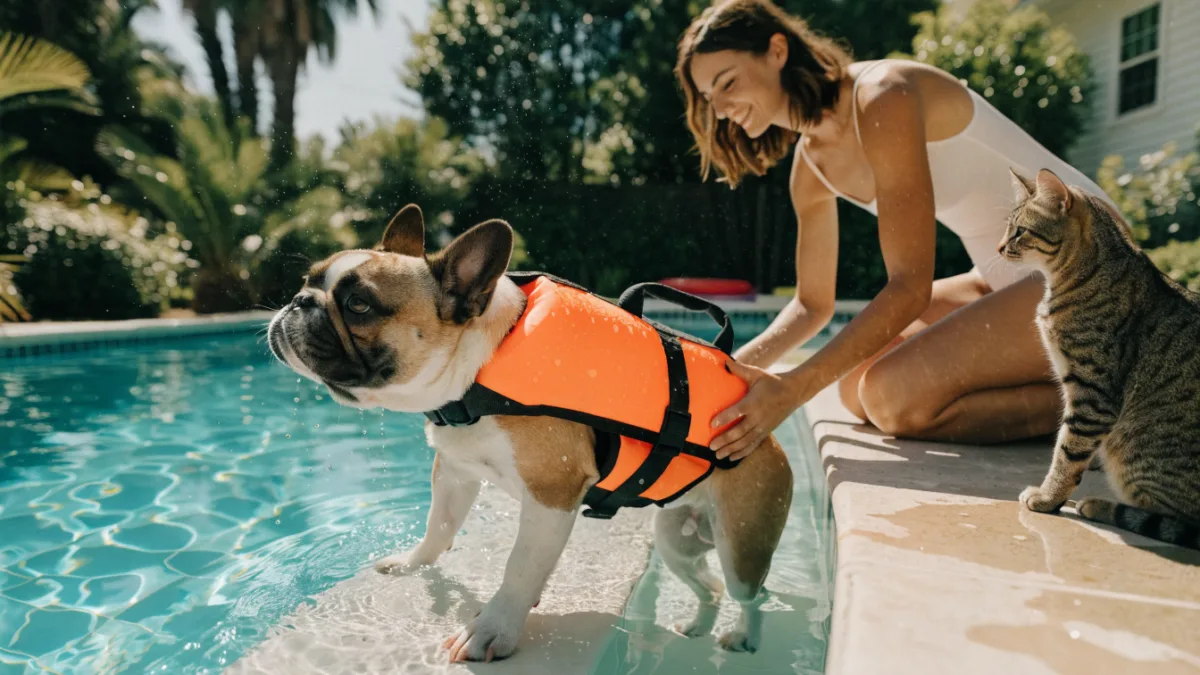
I used to think all dogs were natural-born swimmers. It’s a pretty common assumption, right? You throw a stick, the dog paddles out, and everybody has a great afternoon. I held onto that belief until I watched my buddy’s seventy-pound American Bulldog launch himself into a backyard pool after a tennis ball. He hit the water, sank like a rock, and immediately started thrashing. He wasn’t paddling forward; he was just vertically clawing at the air, taking on water. I was fully clothed, but I was in the pool before I even had time to think. That panic-stricken scramble changed how I look at water safety forever. The idea that domestic pets are born knowing how to swim is a dangerous myth. Whether you’re dealing with a Golden Retriever or a stubborn Bulldog, swimming is a learned skill. And if you have a pool, teaching them how to navigate it isn’t just a fun summer activity—it’s necessary to keep them alive.
Sinking the “Instinctual Swimmer” Myth
Let’s get one thing straight right away: the doggy paddle is not an automatic survival reflex. While some dogs will instinctively kick their legs when placed in water, that kicking doesn’t mean they know how to stay afloat, steer, or breathe properly.
When an untrained dog or cat falls into a pool, they almost always panic. They verticalize. Their front paws splash frantically at the surface, their back end sinks, and they essentially try to climb out of the water rather than swim through it. This thrashing exhausts them in minutes. Worse, they swallow pool water in the process. A major cause of pet pool accidents isn’t a lack of love from the owners; it’s sheer exhaustion and panic because the animal was never actually taught how to move its body in the water.
Veterinary professionals and animal welfare groups constantly push back against this myth. If you just toss your pet into the shallow end expecting them to figure it out, you’re rolling the dice with their life. They need a controlled environment, clear guidance, and a whole lot of patience.
Gear Up: What to Look For in a Life Jacket
I used to think life jackets were only for boating trips or weak swimmers. I was wrong. If you’re introducing your dog or cat to water, a personal flotation device (PFD) is mandatory gear. Even strong swimming breeds benefit from the extra buoyancy when they are first learning to navigate the pool.
When you’re shopping for a jacket, don’t just grab the first brightly colored vest you see. You want to look for specific features that actually keep your pet safe:
- Bright colors and reflective strips: Neon orange or yellow isn’t just a fashion choice. It makes your pet highly visible against the dark water or the bottom of the pool. If they slip under the surface, you need to spot them instantly.
- A top handle: This is non-negotiable. When your pet gets tired, or panics near the edge of the pool, a sturdy top handle allows you to lift them straight up out of the water. Trying to lift a wet, squirming seventy-pound dog by their collar is a great way to choke them and pull your own back out.
- Chin float: Look for a jacket that has flotation material right under the pet’s chin or neck. If they get exhausted and stop paddling, this piece of foam keeps their nose and mouth above the water.
- Adjustable, secure straps: Dogs move differently in water than on land. A poorly fitted jacket will slip to the side, trapping their legs. Make sure it fits snugly without restricting their shoulders.
And yes, they make life jackets for cats. If your feline friend is going to be anywhere near the water, get them one. They might hate wearing it initially, but you can condition them to it indoors using treats before you ever head to the pool deck.
The First Dip: Step-by-Step Training
Teaching your pet to swim is about building confidence. You don’t start in the deep end. You start on the stairs.
The Shallow End
Put the life jacket on your dog. Take them to the top step of the pool. Sit with them. Let them feel the water on their paws without the pressure of having to swim. Keep them on a leash so you have control if they suddenly bolt or slip. When they are comfortable with their paws wet, use a high-value treat—like a piece of roasted chicken or a smelly training treat—and slowly lure them down to the second step. You want them to realize that the water holds them up, but they are still touching the bottom.
Supporting the Hindquarters
When your dog finally commits to stepping off the ledge into water where they can’t touch, physically support them. Keep one hand under their belly or hindquarters. Remember that vertical thrashing I mentioned earlier? By holding their back end up, you force their body into a horizontal position. This allows them to realize that kicking their back legs actually propels them forward. Let them paddle for just ten or twenty seconds, then guide them right back to the stairs. Short, successful sessions are infinitely better than long, terrifying ones.
The Exit Strategy
This is the single most important skill your pet will ever learn regarding the pool. I had a client once with a gorgeous Irish Setter. The dog loved the water, would jump in constantly, but would immediately swim to the far edge of the pool and frantically claw at the fiberglass wall. She didn’t know where the stairs were. She was exhausted and terrified, entirely stranded in the middle of her own backyard.
You have to dedicate time to teaching your dog how to find the exit. Don’t just let them exit anywhere they please. Guide them to the stairs every single time. When they get out on the stairs, throw a massive party. Give them jackpot treats. I literally walk dogs along the perimeter of the pool, showing them that the stairs are the only magic portal that leads to dry land.
If you have a pool fence, gate, or a specific exit ramp, the principle is exactly the same. Repetition creates muscle memory. If they fall in unexpectedly at 2 AM, you want them to rely on muscle memory to swim directly to the stairs and climb out, rather than panicking at the nearest wall.
Feline Water Safety: Yes, Your Cat Needs This Too
We usually associate water safety with dogs, but what about the cats? If you have an indoor-outdoor cat, or even an indoor cat who likes to sneak onto the screened-in patio, pool safety matters. Felines are notorious for hating water, but that doesn’t make them immune to falling in. A cat slipping on a wet pool deck and plunging into cold water is a recipe for disaster. Their fur gets heavy, they panic, and they cannot claw their way up a slick fiberglass wall.
Even if your cat has zero interest in swimming, they need to know how to get out. Carry your cat out to the pool stairs and gently place them on the steps. Let them walk out on their own terms. Do this a few times a year. It builds a mental map. If they ever fall in while chasing a lizard or slipping on the edge, knowing exactly where those stairs are could save their life.
Hidden Hazards: Water and Sand Ingestion
Drowning isn’t the only danger at the pool. Animals don’t understand that pool water is basically a chemical bath. Dogs will enthusiastically lap up chlorinated water while they are swimming. Drinking too much pool water can cause stomach upset, vomiting, and chemical imbalances. You have to provide fresh, cool water in a bowl right next to the pool. If they have access to clean water, they are less likely to drink the pool water.
If you take your dog to the beach or a lake instead of a pool, keep an eye on their mouth. I once treated a dog who spent twenty minutes digging frantically in the wet sand and snapping at the waves. Turns out, he was swallowing mouthfuls of sand every time he dove for rocks. Sand impaction in the intestines is a horrific, life-threatening emergency that requires immediate surgery. Always monitor what goes into their mouth.
The Golden Rule
No pet should ever be allowed near the pool without adult supervision. Ever. Not for a minute. Not even to “just run inside and grab a drink.”
We get complacent. We think the fence is closed, or the dog knows where the stairs are, or the cat is sleeping inside. It takes thirty seconds for a pet to slip, fall, and panic. Treat your pool like you would a toddler. If you aren’t out there with them, they don’t get to be out there. Animal welfare organizations routinely push out reminders right before summer holidays, because that’s exactly when emergency vets see a spike in near-drownings. People get distracted by the barbecue, the guests, and the drinks, and the dog ends up in trouble.
Our pets rely entirely on us to navigate the human world we’ve built for them. A swimming pool is a luxury for us, but an unnatural hazard for them. Take the time to buy the right gear. Force them to learn the stairs. Watch them like a hawk. When the summer heat hits, you want those pool days to be filled with relaxed splashing and happy panting, not a frantic trip to the emergency vet. Being a good steward for your companion animals means preparing them for the worst, so you can both enjoy the best of the summer.