

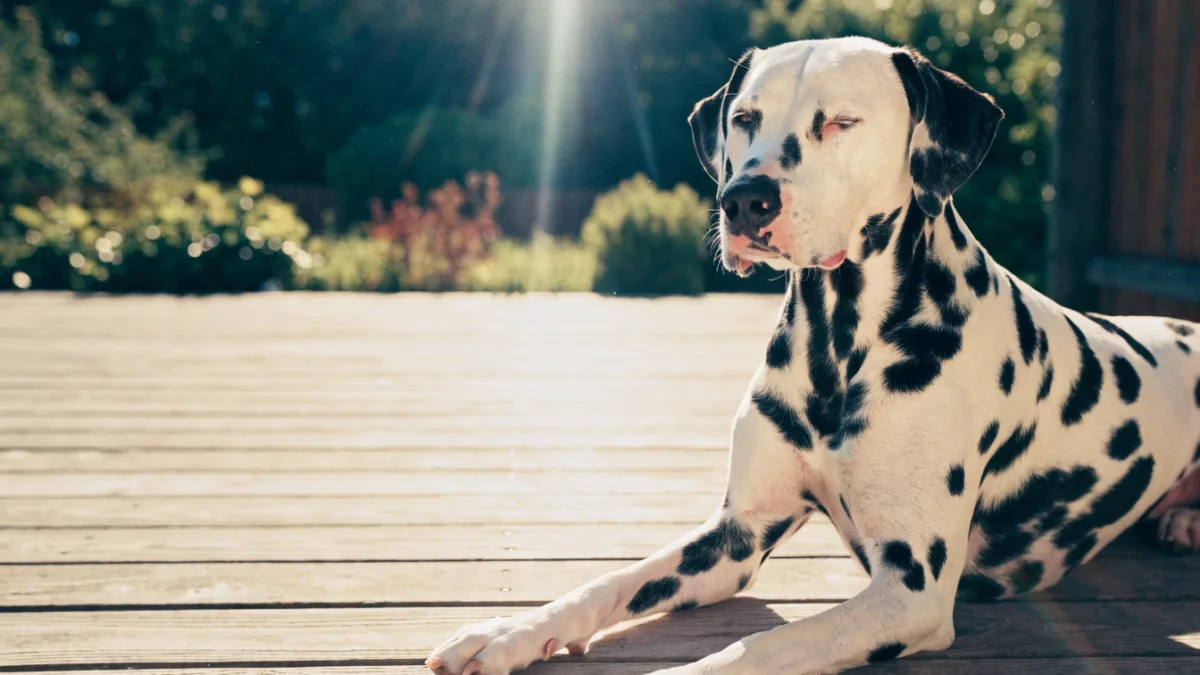
Last summer, a client named Maria brought her Dalmatian, Cooper, into the clinic. Cooper had been spending his afternoons lounging on their sunny patio, and Maria had noticed some rough, scaly patches developing along the top of his nose and the edges of his ears. She figured it was just dry skin from the heat. When I examined those patches under magnification, I felt that familiar knot form in my stomach. We biopsied the tissue, and the results confirmed what I suspected: actinic keratosis, a precancerous condition caused by cumulative sun damage. Cooper was only six years old. Maria was devastated, and honestly, she was frustrated that nobody had ever told her dogs could get sun damage. The truth is, most pet owners don’t realize that the same ultraviolet rays responsible for their own sunburns are quietly affecting their pets too. UV radiation doesn’t discriminate, and the consequences of repeated exposure can be just as serious for the animals we love.
The Fur Coat Myth: Why Your Pet’s Natural Armor Isn’t Enough
One of the most common things I hear from pet owners is some variation of, “But doesn’t his fur protect him?” It’s a reasonable assumption. A thick golden coat or a dense double layer of fur certainly looks like it should block out the sun. And to be fair, it does provide a baseline level of protection, significantly more than bare human skin gets. Fur scatters and absorbs a portion of UV radiation before it reaches the living layers of the epidermis, which is the outermost layer of skin.
But here’s where the comparison to human clothing helps: a white t-shirt only offers an SPF of about 7 when dry. Fur is similar. It reduces UV exposure, but it doesn’t eliminate it, especially in pets with thin coats, light-colored fur, or areas where the hair naturally parts and exposes skin. UVB rays, which are the primary cause of sunburn, can penetrate through sparse fur and reach the skin beneath. Over time, that repeated damage accumulates.
Just like in humans, cumulative sun damage in pets can lead to skin cancer. The,[1] has highlighted that pets are vulnerable to several types of malignancies from UV exposure, including hemangiosarcoma, a cancer that originates in the blood vessels and can develop on skin that’s been repeatedly burned. Hemangiosarcoma is an aggressive cancer, and when it appears on the skin due to sun damage, it often affects areas with minimal hair covering.
Who’s Most at Risk?
Not every pet faces the same level of danger from the sun. Some animals are built for it, with dense, dark coats that absorb UV radiation before it reaches their skin. Others are essentially sitting ducks for sunburn and long-term skin damage. Understanding where your pet falls on that spectrum matters enormously.
High-Risk Breeds and Characteristics
The pets most vulnerable to UV damage tend to share a few characteristics. Hairless breeds like the Chinese Crested and the Xoloitzcuintli, or Mexican Hairless Dog, have almost no natural barrier against the sun and require vigilant protection any time they’re outdoors. But you don’t need an exotic breed to be in the danger zone.
- Light-colored or white-coated pets: Light fur provides far less UV protection than dark fur. A white Boxer, for instance, is significantly more susceptible to sunburn than a fawn-colored one.
- Pink-nosed pets: Skin pigment is one of the body’s natural defenses against UV radiation. Pink or lightly pigmented noses, eyelids, and ear margins have very little melanin, the pigment that absorbs and scatters UV rays, leaving that tissue essentially unprotected.
- Pets with thin coats or naturally sparse belly fur: Even heavily coated dogs often have very little hair on their undersides, which become exposed when they sunbathe on their backs.
- Recently shaved pets: This is the category I see cause the most preventable damage in clinical practice.
The Shaving Debate
I want to address this directly because it’s one of the most persistent myths I encounter, and honestly, it’s one I’ve had to evolve my own thinking on as the research has matured. Many owners of thick-coated breeds like Huskies, Golden Retrievers, and Bernese Mountain Dogs ask me whether they should shave their dog for summer. The logic seems sound on the surface: less fur equals a cooler dog, right?
But a dog’s coat functions as an insulating system that works in both directions. In cold weather, it traps body heat close to the skin. In hot weather, that same coat prevents external heat from reaching the skin and actually helps regulate the dog’s core temperature. When you shave a double-coated dog, you strip away that insulation and expose bare skin to direct UV radiation. I’ve seen shaved Huskies come into the clinic with second-degree sunburns across their backs, something their coat would have prevented entirely. The damaged coat may also grow back with a different texture, a phenomenon called post-clipping alopecia, where the guard hairs fail to regrow properly and the undercoat becomes thick and woolly, permanently compromising the dog’s natural temperature regulation.
I used to hedge on this topic, telling owners it was a personal choice. I don’t hedge anymore. Unless there’s a specific medical reason, such as severe matting or a surgical procedure, I strongly advise against shaving double-coated breeds. The risks far outweigh any perceived cooling benefit.
Practical Sun Protection That Actually Works
Protecting your pet from UV damage doesn’t require a complete lifestyle overhaul. It requires awareness and a handful of consistent habits. The most effective strategy is also the simplest: keep your pet out of direct sunlight during peak UV hours. The sun’s rays are most intense between 10:00 AM and 4:00 PM, and as [2] pets should have access to shade year-round, not just during summer months. UV radiation penetrates clouds, reflects off surfaces like water, sand, and concrete, and can cause damage even on overcast days.
Timing Your Outdoor Activities
One of the easiest adjustments you can make is shifting your walks and outdoor play sessions to early morning or evening hours. I walk my own Border Collie, Jessie, at 6:30 AM during the summer. Not only does it protect her from UV exposure, but the pavement is also cool enough that I don’t have to worry about her paw pads burning, which is a separate but related summer hazard.
Pet-Safe Sunscreen: What to Look For and What to Avoid
This is where I see well-meaning owners make mistakes that can harm their pets. Human sunscreen is not safe for dogs or cats. Many human formulas contain zinc oxide, which is highly effective at blocking UV rays in people but is toxic to pets if ingested. And since dogs and cats groom themselves constantly, any topical product applied to their skin will eventually end up in their mouth. Other common human sunscreen ingredients like para-aminobenzoic acid (PABA) and certain fragrance compounds can also cause gastrointestinal upset or allergic reactions.
Look specifically for sunscreens formulated for pets. The product should be fragrance-free, contain no zinc oxide, and ideally be labeled as safe for the species you’re applying it to. [3] recommend applying pet-safe sunscreen to the areas most vulnerable to UV damage: the nose, the tips of the ears, the belly and groin area, and any spots around the lips where the fur is thin or absent. Apply it about 30 minutes before sun exposure and reapply every few hours if your pet is swimming or licking the area excessively.
UV-Protective Gear
The growing market for pet sun protection has introduced some genuinely useful products. UV-protective sun shirts designed for dogs can provide excellent coverage for pets with thin coats or those recovering from procedures that required shaving. Look for garments with a UPF rating of 50+, which indicates the fabric blocks at least 98% of UV radiation. Dog goggles with UV-protective lenses can shield the eyes, which is particularly important for breeds prone to ocular conditions like pannus, an inflammatory disease of the cornea that worsens with UV exposure.
I was initially skeptical about some of these products. A dog in sunglasses felt like a gimmick. But after seeing the clinical evidence and watching dogs with ocular conditions improve dramatically with consistent UV protection, I’ve become a genuine advocate. The key is fit and comfort. A sun shirt that rubs or goggles that pinch will end up pulled off within minutes, so take time to find gear that fits your pet properly.
Recognizing the Signs of Sun Damage
Early detection of sun damage gives you and your veterinarian the best chance of intervening before precancerous changes become malignant. Check your pet’s skin regularly, particularly in vulnerable areas. Look for redness, crusting, scaling, or areas of hair loss that don’t resolve within a week or two. Pay special attention to any new lumps, bumps, or changes in skin color, especially on the nose, ears, and belly.
If your pet seems unusually sensitive when you touch their ears or nose, or if they’re scratching or licking at a particular area more than usual, that’s worth investigating. Actinic keratosis, the condition Cooper developed, often appears as a rough, scaly patch that feels slightly raised when you run your hand over it. Caught early, it can be managed and monitored. Left untreated, it can progress to squamous cell carcinoma, a malignant cancer that requires more aggressive intervention.
What I Want Every Pet Owner to Remember
Skin cancer in pets is largely preventable. That statement should be both reassuring and motivating. When Maria brought Cooper in for his follow-up appointment last fall, his precancerous lesions had responded well to treatment, and we’d established a sun safety routine that included morning walks, pet-safe sunscreen on his nose and ears, and a shaded patio area where he could still enjoy the outdoors without exposure to peak UV. Maria told me she wished she’d known all of this years ago.
That’s exactly why I write about this topic. The awareness gap around pet sun safety is enormous, and the consequences of that gap are entirely preventable. Your pet relies on you to make informed decisions about their environment, their activities, and the products you use on their body. By understanding how UV radiation affects them, recognizing their individual risk factors, and taking consistent protective measures, you’re giving them the best possible chance at a long, healthy life under the sun, safely in the shade.
Sources
- Skin Cancer Foundation — skincancer.org
- veterinary dermatologists emphasize — haarstadveterinarydermatology.com
- Veterinary experts — nutrenaworld.com