

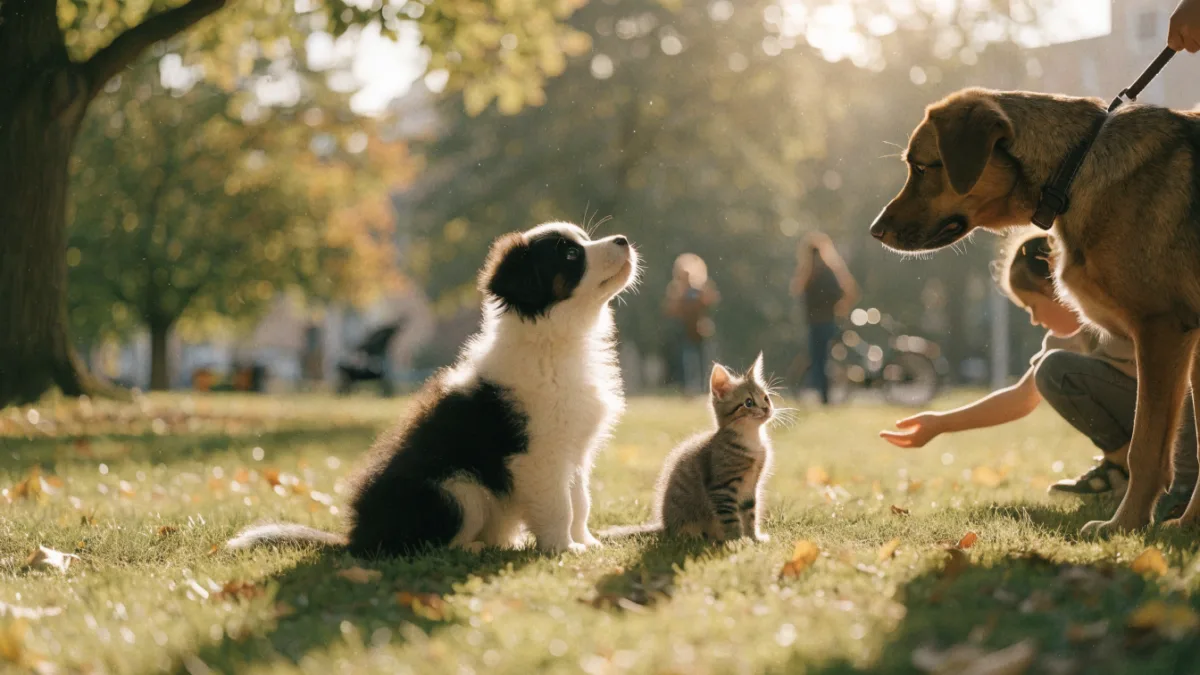
I used to do it the old-school way. I’d tell new puppy owners to keep their dogs locked down in the house until they hit 16 weeks. You know the drill—wait until the final round of shots is done before letting those paws touch the sidewalk. It felt safe. It felt responsible. It was completely wrong. By the time those dogs finally hit the pavement, their brains had already wired themselves to view the outside world as a threat. I wasn’t preventing disease; I was creating neurotic, fearful dogs.
When we talk about socialization, most people picture a puppy playing in a pile of other dogs. But socialization is really about brain development. It’s a finite window of time where an animal’s nervous system is primed to accept new things as normal. Miss this window, and you’re playing catch-up for the rest of their life. And here’s the kicker: if you’re treating puppies and kittens like they’re on the same schedule, you’re already behind. Cats and dogs operate on entirely different biological clocks. Let’s break down how this actually works.
The Great Vaccination Debate
Let’s address the elephant in the vet’s office. The primary socialization window for puppies happens to overlap exactly with the time they are most vulnerable to diseases like parvovirus. For decades, the standard advice was to keep them isolated. But animal behaviorists have been sounding the alarm on this for years, and the data is clear.
The [1] and the American Veterinary Society of Animal Behavior (AVSAB) now officially recommend starting socialization classes before puppies are fully vaccinated. Why the sudden shift? Because the math doesn’t lie. Behavior issues are the number one cause of death for dogs under three years of age. We are losing more dogs to behavioral euthanasia than we are to infectious diseases.
The risk of a puppy developing severe behavioral issues due to poor socialization is vastly greater than the risk of them catching an illness in a well-managed, clean training facility.
That doesn’t mean you should take an eight-week-old puppy to a busy dog park or let them sniff around the local pet store floor. It means you need to manage the risk. Carry them into the vet’s office. Let them play on a sanitized floor in a small, structured puppy class. Introduce them to vaccinated, friendly adult dogs. You balance the medical risk with the behavioral necessity.
Puppies: The 3-to-14 Week Sprint
For dogs, the broader critical window runs from about 3 to 20 weeks. But the real magic happens between 3 and 14 weeks. During this time, a puppy’s brain is incredibly plastic. They are little sponges. If they experience something new and realize they don’t die from it, that thing is permanently filed away in their brain as “safe.”
What Should You Actually Do?
I had a client a few years back with a Belgian Malinois. Beautiful dog, incredibly smart, but by four months old, she was terrified of shiny floors and men in hats. Why? Because the breeder kept the litter in a single room with rural carpeting until they went home at ten weeks. The dog’s brain had already decided that slick surfaces and unfamiliar silhouettes were dangerous.
You have to create an enriched environment. Socialization isn’t just about meeting humans and other dogs. You need to expose them to:
- Different surfaces: Grass, concrete, gravel, metal grates, slick floors, and wet grass.
- A variety of sounds: Vacuums, blenders, doorbells, traffic, and babies crying. (You can use audio tracks played at a low volume while they eat).
- Visual variety: People in wheelchairs, folks wearing big coats, hats, sunglasses, and people of all different ages and backgrounds.
Flooding is Not Socialization
If your puppy is scared of the vacuum, do not tie them to a chair and turn the vacuum on high right next to their face. That’s called flooding. It’s a terrible training method, and it usually backfires into deep-seated panic. Proper socialization is about structured exposure. You introduce the stimulus at a distance or volume where the puppy notices it but doesn’t freak out. You feed them high-value treats. You make the scary thing a predictor of good things. You build confidence, not just tolerance.
The Kitten Curveball: They Grow Up Faster
Here is where most people mess up with cats. They treat kittens like puppies. They figure, “I’ll get the kitten at ten weeks, and we’ll start socializing.” Here’s the problem: for kittens, you’re already late to the party.
While puppies peak around 8 to 14 weeks, a kitten’s primary socialization window is massively compressed and happens way earlier. We are talking about 2 to 7 weeks of age. Some studies stretch it to 9 weeks, but the bottom line is that by the time most people adopt a cat, the biological doors are already closing. [2] is the breeder’s or foster parent’s job.
If a kitten doesn’t meet a human, experience being handled, or hear household noises before 7 weeks, they are highly likely to grow into a feral or deeply suspicious adult cat. That feral stray you took in who hides under the bed for six years? It’s not because the cat is holding a grudge. It’s because the [3] slammed shut before they ever learned that humans are safe.
The Secondary Window
Don’t panic if you adopt a 10-week-old kitten. They still have a secondary socialization window that lasts from 9 weeks up to 14 or 16 weeks. During this time, they are still learning, but it takes more effort. You have to actively engage them with wand toys, gently handle their paws and ears, and introduce them to friendly, vaccinated dogs. You just won’t get the same effortless brain-wiring you would have gotten at four weeks old.
It’s Not Just About the First 16 Weeks
It’s easy to obsess over the first 16 weeks, but what happens after the window closes? Do they just stop learning?
No, but the rules change. Once that window shuts, the animal’s default setting shifts from “everything is safe until proven dangerous” to “everything is dangerous until proven safe.” You can still socialize an older dog or cat, but it requires counter-conditioning and a lot more patience. You can’t just throw them into a new environment and expect them to figure it out anymore.
This is why maintaining the habit is crucial. I constantly see owners do an amazing job socializing their Border Collie mix for the first four months, and then the dog never leaves the backyard for the next two years. By age three, the dog is barking at the neighbor’s garbage can. If you don’t use it, you lose it. Your dog or cat needs ongoing, positive exposures throughout their entire life to stay confident and adaptable.
Give your puppy or kitten the best possible start by respecting their biological clock. For kittens, early human contact before 8 weeks is the difference between a cuddly companion and a ghost in your hallway. For puppies, get them out into the world safely and smartly before 14 weeks. The effort you put in right now shapes exactly who they will be for the next fifteen years. Taking the time to do it right doesn’t just build a better pet—it keeps animals out of shelters and exactly where they belong: in your home, on your couch.
Sources
- American Veterinary Medical Association (AVMA) — avma.org
- Kitten socialization — nutrenaworld.com
- socialization window — facebook.com