

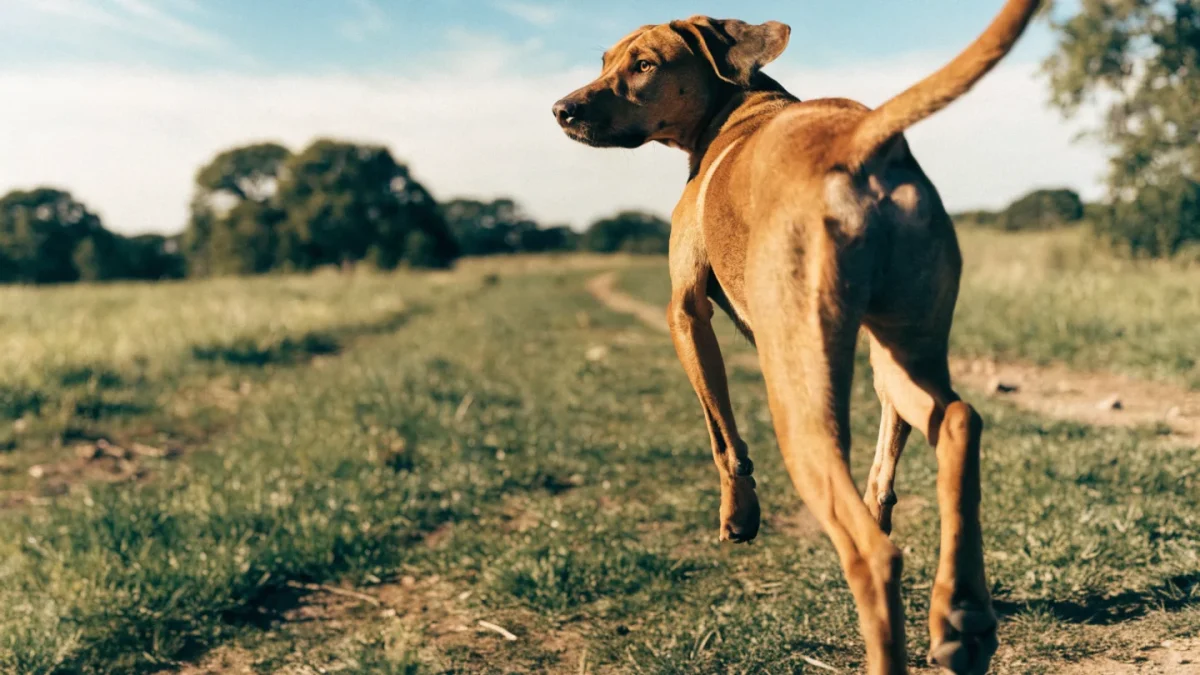
The Rhodesian Ridgeback's ancestors covered distances of 30 to 50 kilometers in a day alongside mounted hunters in the southern African bush — tracking, flushing, and holding game at bay across open savanna and broken scrubland for hours. That job required a dog that could sprint in bursts, sustain a trot over long distances, and make independent decisions about pace and direction in extreme heat. Every one of those physical and mental demands is still wired into the breed today, regardless of whether the closest thing to a lion in your neighborhood is the cat next door.
An adult Rhodesian Ridgeback in good condition needs a minimum of 60 to 90 minutes of vigorous exercise daily. That's the floor, not the ceiling. This is a breed with genuine athletic ability — fast, powerful, and built for endurance — and it requires an owner who takes that seriously.
What Vigorous Means
Running and Jogging
A mature Ridgeback (over 18 months, after growth plates have closed) is one of the finest running companions in the dog world. The breed's efficient, ground-covering stride and heat tolerance make it suited to distance running in ways that many large breeds are not. A Ridgeback can comfortably maintain a pace alongside a jogger for 5 to 10 kilometers once conditioned, and some fit individuals handle considerably more.
Build distance gradually. Start with shorter runs and increase by no more than 10 percent per week, just as you would for your own training. Run on forgiving surfaces — trails and grass are preferable to asphalt, which stresses joints and heats paw pads. Carry water for both of you.
Long Walks and Hikes
If running isn't your preference, extended walks and hikes fill the requirement. A single 20-minute stroll doesn't register for this breed. Two walks of 40 to 50 minutes each, at a pace that keeps the dog moving with purpose, is the minimum baseline for a non-running exercise plan.
Hiking is particularly effective. Ridgebacks handle varied terrain well — their agility and sure-footedness on trails reflects the breed's history navigating the African bush. A three- to four-hour hike covers the day's exercise needs with room to spare and provides the environmental enrichment that flat, repetitive routes don't.
Lure Coursing
If your Ridgeback has prey drive — and most do — lure coursing offers a controlled outlet. The breed's sprint speed is impressive, and coursing engages both the body and the chase instinct simultaneously. Organized coursing events exist in many regions, and some facilities offer recreational sessions for non-competitive dogs.
Structured Play
Fetch, flirt poles, and chase games work well with Ridgebacks, though the Ridgeback temperament means the dog may decide when it's had enough before you do. These are independent dogs, and a Ridgeback that drops the ball and lies down at the 15-minute mark is expressing a preference, not a deficiency. Short, intense play sessions often work better than prolonged repetitive games.
The Mental Component
Physical exercise alone does not produce a settled Rhodesian Ridgeback. This is an intelligent, independent breed that needs its brain engaged. A Ridgeback that has run five kilometers but has nothing to think about will find its own projects — and those projects typically involve remodeling your furniture, your garden, or your fencing.
Puzzle feeders, scent games, and short training sessions provide cognitive work. Even a 10-minute session working on a new behavior engages the dog's problem-solving capacity in ways that physical exercise doesn't.
The Ridgeback breed guide covers the breed's independent decision-making heritage. Channel that independence into appropriate cognitive challenges, and you'll see a calmer, more content dog at home.
Puppy Exercise Caution
Ridgeback puppies grow rapidly — reaching 30 or more kilograms by six months in many lines. That weight on developing joints demands caution.
The five-minutes-per-month-of-age guideline applies. Structured exercise like jogging, running alongside a bicycle, or repetitive ball-throwing on hard surfaces should wait until growth plates close, typically around 14 to 18 months. Free play on soft ground where the puppy controls the pace and intensity is separate from structured exercise and can be more liberal.
Swimming, where available, provides safe exercise for growing puppies — no joint impact, full-body engagement. Not every Ridgeback loves water (the breed wasn't developed for aquatic work), but those that accept it benefit significantly.
Signs of Insufficient Exercise
A Ridgeback that isn't getting enough activity doesn't sulk quietly. The signals include: repetitive pacing, digging (often along fence lines), chewing furniture or baseboards, increased reactivity on leash, and a general restlessness that the dog cannot seem to resolve on its own. Weight gain is the slower consequence, and an overweight Ridgeback faces accelerated risk for joint problems in a breed already carrying orthopedic predispositions.
The dogs that end up in breed rescue most commonly come from homes that underestimated the exercise requirement. The quiet, dignified Ridgeback in the living room is only that dog because someone ran it for an hour first.
The Right Routine
A solid daily routine for an adult Ridgeback: a morning run or vigorous walk of 30 to 45 minutes, an afternoon activity session (hike, lure coursing, structured play, or a second walk) of similar duration, and a mental enrichment component — puzzle feeder, training practice, or scent game — that engages the brain independently of the body. Owners who maintain this routine consistently describe a calm, companionable house dog. Owners who don't describe something else entirely.