

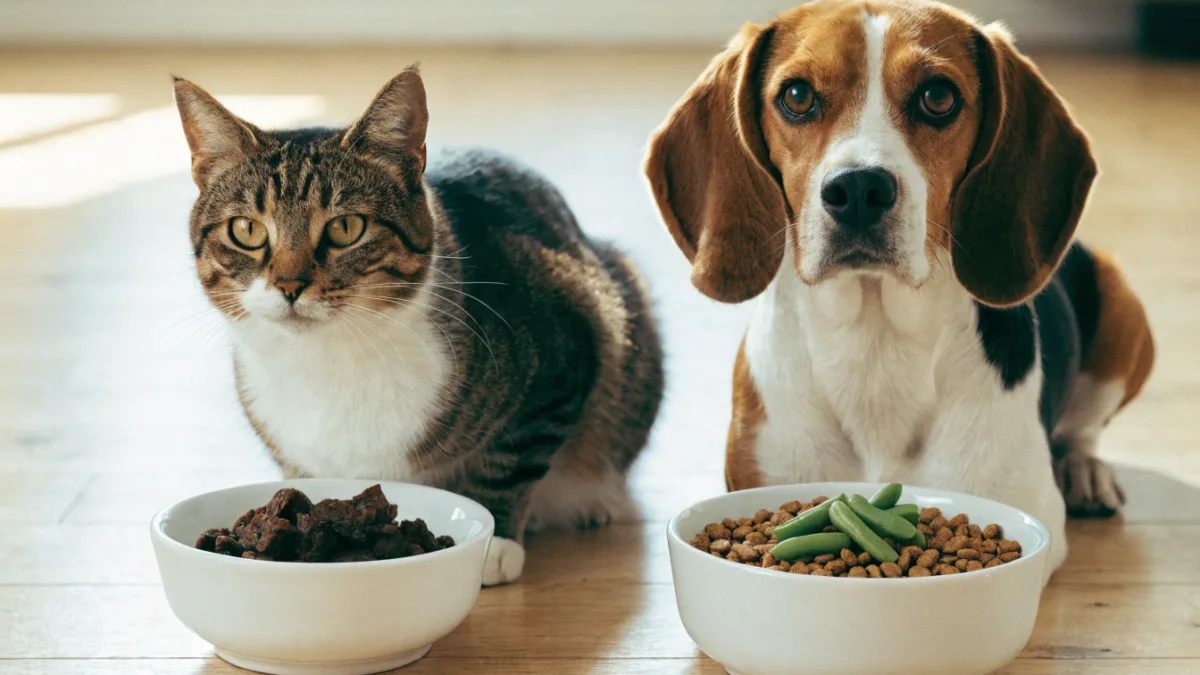
When Mrs. Henderson brought her two pets into the clinic last spring, she was at her wits’ end. Her eight-year-old Beagle, Buster, had developed a serious talent for breaking into the pantry, and her nine-year-old indoor cat, Cleo, had practically merged with her favorite velvet armchair. Both pets were significantly overweight, and Mrs. Henderson was exhausted from trying to manage their chronic begging. She asked me if she could just buy a “light” bag of food for both of them. It is a common assumption, but the reality of safe, effective weight loss for our companion animals is incredibly species-specific. Helping a dog trim down requires a completely different nutritional strategy than helping a cat, largely because of how their bodies evolved to process food.
Why Cats Need Meat: The High-Protein Feline Strategy
When we put a cat on a diet, our primary goal is to force the body to burn fat while fiercely protecting lean muscle mass. To do this, we have to respect what cats are at their core: obligate carnivores. This means their bodies are biologically hardwired to derive nutrients primarily from animal meat. They have a significantly higher biological requirement for dietary protein than dogs do.
If you restrict a cat’s calories without providing enough protein, you trigger a dangerous metabolic state. The cat’s body, desperate for the amino acids that make up protein, will begin breaking down its own muscle tissue to survive instead of tapping into stored fat. This is the exact opposite of what we want to achieve.
This is also why I always emphasize the taurine factor when talking to owners like Mrs. Henderson. Taurine is a critical amino acid found almost exclusively in animal protein. While dogs can synthesize taurine internally from other amino acids, cats have a very limited ability to do so. If a cat’s diet leans too heavily on plant-based fillers to cut calories, their taurine levels can plummet, eventually leading to a severe heart condition called dilated cardiomyopathy, as well as vision loss. For Cleo, the prescription was straightforward: a [1] that was dense in high-quality animal protein to keep her muscles strong and her heart healthy while her fat stores shrank.
Why Dogs Need Volume: The High-Fiber Canine Strategy
Dogs, on the other hand, are omnivores. Their digestive tracts are beautifully designed to extract nutrients from both plant and animal sources, which gives us a lot more flexibility when designing a canine weight loss plan. For dogs like Buster, the biggest hurdle to losing weight isn’t just metabolic; it is behavioral. Dogs love to eat, and when you hand a food-motivated Beagle a drastically smaller portion of standard kibble, he is going to let you know about his displeasure all night long.
This is where dietary fiber becomes a canine weight loss superpower. Fiber is essentially calorie-free. When a dog eats a high-fiber diet, the fiber physically stretches the stomach and slows down digestion. This triggers the release of satiety hormones, sending a signal to the dog’s brain that says, “I am full.” Buster can actually eat a satisfying, physically large volume of food, feel completely content, and still consume far fewer calories than he did with a small scoop of dense, standard kibble. By diluting the caloric density of the food, fiber addresses the behavioral side of dieting—meaning Mrs. Henderson gets her sleep without Buster pestering her for midnight snacks.
The Rise of the Hybrid Canine Diet
While high-fiber diets have been the gold standard for dogs for years, veterinary nutrition has recently shifted its focus to body composition rather than just the number on the scale. [2] have shown incredible success with a hybrid approach: combining high protein with high fiber. This combination allows a dog to lose fat rapidly while maintaining healthy lean muscle mass, giving us the metabolic benefits of a canine high-protein diet with the appetite-suppressing benefits of fiber. It is a true best-of-both-worlds scenario for our canine patients.
Even cats can benefit from carefully selected, carnivore-appropriate fiber sources—like beet pulp or certain grasses—to help them feel full. However, because of their strict carnivorous needs, we have to be incredibly careful not to let fiber displace their crucial animal protein intake.
The Grain-Free Trap and Nutrient Dilution Risks
When owners start looking for weight loss foods, they often fall into what I call the “grain-free trap.” It is incredibly common for well-meaning pet parents to assume that “grain-free” equates to “high-protein” or “low-calorie.” But the science tells a completely different story. [3] indicates that many of these formulas actually feature protein and fat levels that are comparable to, or even lower than, standard grain-containing diets. Instead of adding extra meat, manufacturers often just replace grains with alternative carbohydrates like lentils, peas, or potatoes.
I frequently have to gently redirect owners away from grain-free marketing trends. Following marketing trends rather than veterinary guidance can sometimes lead to real harm; the FDA has previously investigated potential links between certain grain-free diets and dilated cardiomyopathy (DCM) in dogs. If you want to put your pet on a diet, the ingredient list should focus on specific meat sources and precise fiber blends, not a “grain-free” label that guarantees nothing about the food’s caloric makeup.
Furthermore, whenever you restrict calories to help a pet lose weight, you run the risk of nutrient dilution. By feeding less food, you are also feeding fewer vitamins, minerals, and essential fatty acids. This is exactly why I strongly recommend veterinary-formulated weight loss diets over simply feeding smaller amounts of a maintenance food. A scientifically formulated diet ensures that even when a pet is eating 30% fewer calories, they are still receiving 100% of their required taurine, calcium, B-vitamins, and other essential nutrients.
Cross-Species Diet Tweaking: Why One Size Doesn’t Fit All
One of the most heated debates I hear from clients is whether human weight-loss trends—or diets meant for the “other” species—can be safely applied to their pets. The short answer is absolutely not.
Imposing a high-fiber, plant-heavy weight-loss diet on a cat can be highly detrimental. A cat cannot thrive on the low-protein, high-roughage diet that might work beautifully for a dog. It will starve their muscles and deprive them of essential amino acids. Conversely, feeding a dog a strictly meat-based diet with zero plant-based fibers means they will miss out on the beneficial roughage that regulates their digestion and keeps them feeling full. You will end up with a hungry, miserable dog that isn’t losing weight effectively.
A Final Takeaway for Healthful Weight Loss
Watching a pet struggle with obesity is tough, but the solution should never compromise their metabolic health. Safe weight loss is about working with an animal’s biology, not against it. Cats need the robust, meat-based protein to fuel their carnivorous engines and protect their muscles, while dogs thrive on fiber-rich diets that physically satisfy their omnivore appetites without the caloric overload. Always consult with your own veterinary team before making changes to your pet’s food. They can help you calculate exact caloric needs and recommend a diet formulated to prevent nutrient dilution—ensuring that when your furry companion reaches their target weight, they do so vibrantly, safely, and with plenty of energy to enjoy their newly found agility.
Sources
- diet specifically formulated for felines — allureveterinarypartners.com
- Recent studies on obese dogs — sciencedirect.com
- Research into grain-free diets — pmc.ncbi.nlm.nih.gov