

I’ll never forget the first time I treated a dog for what I now think of as “beach fever.” It was a beautiful Saturday afternoon, and a panicked owner rushed into the clinic with Barnaby, a three-year-old Labrador Retriever. Barnaby had spent the morning happily splashing in the waves, but by early afternoon, he was lethargic, vomiting, and stumbling when he tried to walk. His owner, visibly shaken, told me, “He was just having fun in the water! I didn’t think letting him swim for a few hours could do this.”
She was half-right. The water itself wasn’t the initial problem, but what Barnaby was doing in it certainly was. Like many dogs, Barnaby was swallowing mouthfuls of saltwater with every retrieved tennis ball. The beach is a fantastic place for exercise and mental stimulation, but the combination of sun, sand, and surf requires a bit of medical awareness to keep your pet safe. Let’s talk about how to make sure your beach day ends with a tired, happy pup rather than a trip to the emergency clinic.
The 10-Second Rule: Reading the Sand
One of the biggest misconceptions I hear from clients is that because dogs are descendants of wild canines, they are naturally equipped to handle the elements. While their paw pads are tough, they are not made of Kevlar.
I had to treat a sweet seven-year-old Beagle mix named Daisy last July. Her family decided to take her for a noonday beach stroll. By the time they got back to the car, Daisy was holding up her front paw and crying. Her paw pads were blistered and peeling. The sand had acted like a hot griddle.
Dogs don’t dissipate heat through their skin by sweating over their whole bodies like we do. They rely primarily on panting to cool down. When they are forced to walk on surfaces that are dangerously hot, their internal body temperature spikes, putting them at high risk for heat exhaustion and heatstroke. Before you even step onto the sand, you need to perform what I call the 10-second rule. Take off your shoes and place your bare foot on the sand. If you can’t comfortably stand there for a full ten seconds, it is definitively too hot for a dog’s paws. It’s really that simple. If the sand passes the test at 9:00 AM but fails by 11:00 AM, it’s time to pack up.
The Ocean is Not a Water Bowl
Let’s go back to Barnaby the Labrador. When dogs swim, especially when they excitedly fetch toys from the surf, they inevitably swallow water. If that water is salty, it severely disrupts their electrolyte balance. Electrolytes are minerals in the body—like sodium, chloride, and potassium—that carry electric charges. They control everything from muscle function to hydration. Ingesting too much ocean water pushes sodium levels to dangerous highs, a condition called hypernatremia. This leads to severe dehydration, neurological issues, and gastrointestinal distress—which is exactly why Barnaby was vomiting and stumbling.
Hydration as Preventative Medicine
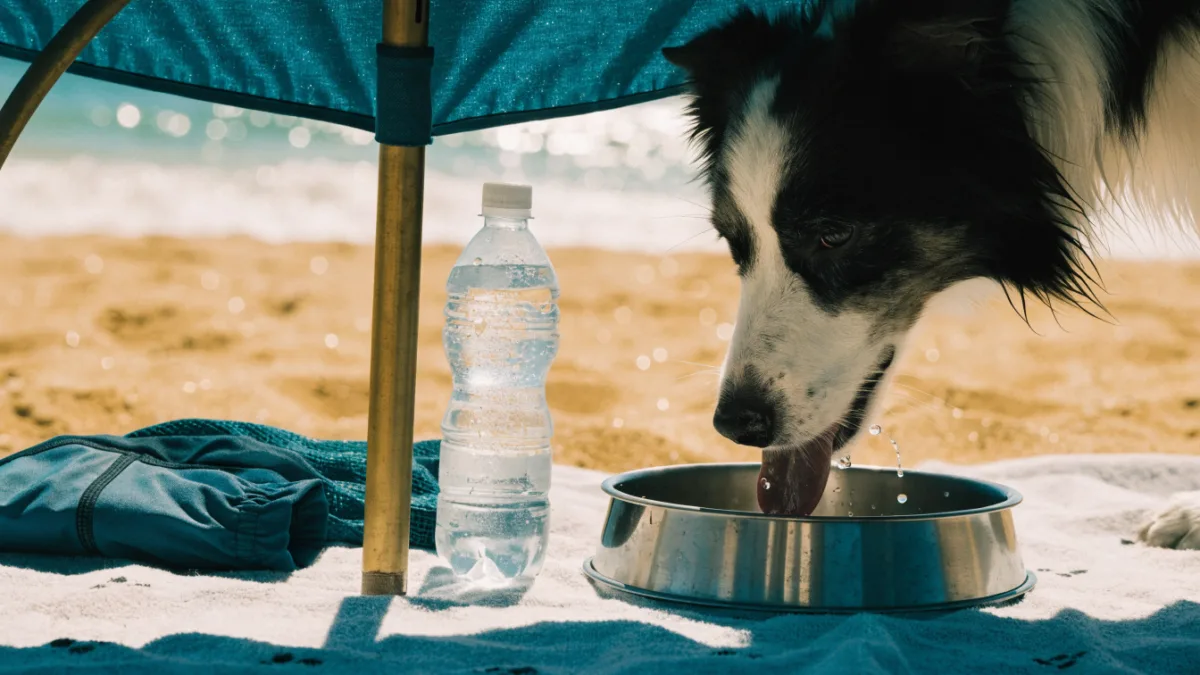
The absolute best way to stop your dog from drinking ocean water is to offer them plenty of clean, fresh water throughout the day. Bring a dedicated, collapsible bowl and a large jug of water from home. Offer it to them every 15 to 20 minutes. If they are fixated on fetching from the waves, make them take a mandatory fresh-water drinking break between throws.
I know some folks advocate for giving dogs sports drinks or even offering ice cubes to restore electrolytes after a beach day. I understand the impulse to replenish what they’ve lost, but please skip the home remedies here. The sodium and sugar ratios in human drinks are not formulated for a dog’s digestive tract and can make things worse. Plain, fresh water is the safest, most evidence-based way to support their hydration. If your dog has been drinking a lot of seawater and starts vomiting or acting disoriented, don’t wait—call your vet immediately. We can safely correct fluid imbalances with specific therapies, but time is of the essence.
The Invisible Threat: Salt and Sand Chafing
Even if your dog avoids drinking the water, simply being in the ocean environment can cause medical issues. Saltwater and beach sand act as harsh irritants. As the water dries, the salt draws moisture out of their skin through a process called osmosis, leaving the skin dry and vulnerable. Combined with the physical friction of coarse sand, this acts like sandpaper, chafing and damaging a dog’s sensitive paw pads and belly.
Consider Captain, a five-year-old Standard Poodle I see regularly. His owner took him to the coast for a weekend getaway. They hosed him off quickly before getting in the car, but missed the dense sand matted in his armpits and between his toes. Two days later, Captain was in my exam room, licking his paws raw and suffering from acute moist dermatitis—painful, infected skin lesions commonly known as hot spots. He had actually ingested even more salt when grooming himself, trying to soothe the irritation caused by the residual sand.
A thorough post-beach bath with fresh, clean water is absolutely mandatory. This isn’t just a quick sprinkle; it means getting in between the toes, under the collar, and in the armpits. You want to remove all residual salt and sand from the coat to prevent prolonged skin irritation and stop them from ingesting salt later when they groom themselves.
Sometimes, Love Means Leaving Them Home
There is a bit of a debate in the pet community about how far we should go to manage risks at the beach versus just avoiding the environment entirely. I’ve changed my mind on this over the years. Early in my career, I thought that with enough preparation—cooling vests, specialized paw wax, shade tents—any dog could have a safe beach day.
But after seeing too many cases of heatstroke and severe paw burns, I’ve realized that sometimes the safest choice is to leave the dog at home. If the sand is burning hot and there is no natural shade, the environment simply poses an inherent threat to their well-being. We have to remember that dogs are eager to please. They will often run on blistering sand or play fetch in the blazing sun just because you asked them to, ignoring their own exhaustion until they collapse. We have to be their advocates and set boundaries for them.
Think about brachycephalic breeds—dogs with flat faces like Bulldogs, Pugs, or Frenchies. Their anatomy makes panting highly inefficient. Taking a flat-faced dog to a hot, humid beach in the middle of the afternoon is asking for a medical emergency. For these dogs, avoiding the beach during peak heat isn’t just a precaution; it’s a medical necessity. If you want to include them, stick to the early morning hours or late evening when the sun is low and the sand is cool.
A Final Thought on Shared Shores
Enjoying the outdoors with our dogs is one of life’s great joys, but we have to respect the elements to keep them safe. Test the sand, bring plenty of fresh water, and always make time for a thorough rinse at the end of the day.
Finally, let’s remember that while we are enjoying the coast, we are sharing it. Keeping dogs leashed in designated areas doesn’t just protect them from wildlife or dangerous currents; it actively protects fragile coastal ecosystems. Unleashed dogs can easily disturb nesting shorebirds and sea turtles, or trample sensitive dune vegetation that prevents coastal erosion. By keeping our pets safe and under control, we ensure that these beautiful coastal havens remain healthy and vibrant for all the species—human, canine, and wild—that call them home.