

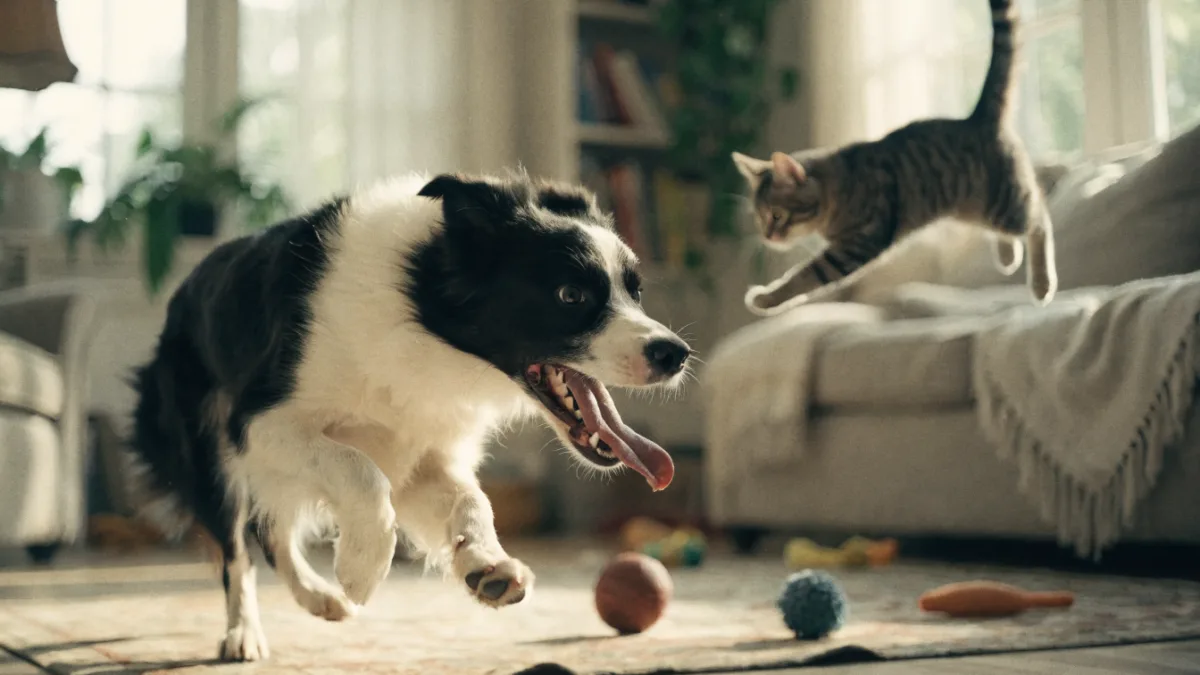
You haven’t truly lived until you’ve watched a ten-pound terrier ricochet off a living room sofa like a furry pinball. Last week, I was finishing up a session with a client and her young Australian Shepherd, Duke. We’d just done a long, structured leash walk. He was laying down calmly on his bed. Then, out of nowhere, he launched into a full-blown sprint around the coffee table. Ears back, eyes wide, claws scrambling on the hardwood. She looked panicked, grabbing her phone to call the emergency vet, asking if he was having a neurological episode.
I told her to hold on and just watch. Duke did three laps, threw himself onto the rug, and started rolling on his back with his tongue hanging out. He wasn’t sick. He just had the zoomies.
If you have a pet, you’ve seen this. One second they’re lounging, the next they’re treating your hallway like a NASCAR track. It looks like they’ve completely lost their minds. But there’s actually a lot of fascinating biology happening behind those wild eyes.
FRAPs: The Science of the Silly
Veterinarians don’t usually call them “the zoomies.” The official, scientific term is Frenetic Random Activity Periods, or FRAPs.
What was once simply considered “crazy pet behavior” has been formally recognized by veterinarians under the acronym FRAPs. This shift in terminology has helped normalize the behavior, transitioning it from a nuisance to a recognized, healthy part of companion animal psychology.
It sounds clinical, but the behavior is anything but. A FRAP is characterized by sudden, unexpected bursts of high-speed running, sharp turns, and a total lack of spatial awareness. Your dog or cat isn’t doing this to ruin your floors or knock over your favorite lamp. They’re experiencing a massive surge of energy that needs an immediate physical outlet.
There is a minor debate in the animal behavior world about the primary cause of FRAPs. Some experts view it purely as a metabolic release. Your pet’s body builds up excess energy, their heart rate spikes, and they burn it off in a quick, explosive sprint. Others lean heavily into the behavioral and instinctual side. Those sudden stops, sharp pivots, and fast sprints perfectly mimic the exact movements a predator uses to chase down prey in the wild.
The truth is probably somewhere in the middle. They’re burning off calories, but they’re also practicing ancient survival skills.,[1] that these bursts are completely normal, but it helps to understand exactly what triggers them.
Why Your Dog Goes Nuclear After a Bath (and a Poop)
Dogs get the zoomies for a few specific reasons. The most common trigger is intense emotion. When a dog feels a sudden spike of excitement—say, when you grab their leash or when you come home from work—they don’t have the words to express it. So, they run.
Then you have what I call the post-bath freakout. I see this constantly. You wash off all the dirt, take them out of the tub, and they immediately sprint around the house rubbing their faces on the couch. This is actually a deeply ingrained instinct. In the wild, smelling like strongly scented shampoo makes you obvious to predators. That frantic running is your dog’s ancient brain telling them to dry off and get their natural scent back as fast as possible.
But the most famous canine trigger? The post-poop zoomies.
I used to think dogs did this just because they were happy to have an empty colon. I was missing part of the picture. When a dog has a satisfying bathroom break, their vagus nerve gets stimulated. This drops their heart rate and makes them feel a sudden wave of physical relief. For dogs, that wave of relaxation feels so good that it translates into a sudden burst of playfulness. They feel lighter, so they run.
What You Should Do When Your Dog FRAPs
Here’s where a lot of owners mess up. They try to chase their dog, grab them by the collar, or yell at them to stop. Don’t do that.
If your dog gets the zoomies, your job is to stay calm and stay out of the way. If you start chasing them, you’ve just turned a simple energy release into a high-stakes game of keep-away. Your dog will think you’re playing, and they’ll run faster.
If they are doing laps around a glass coffee table or sliding on a slick floor, quietly toss a soft toy in the opposite direction to redirect their path. Otherwise, just let them get it out of their system. Most FRAPs only last a minute or two.
The Midnight Cat Stampede
Cat owners, I haven’t forgotten about you. Cats get the zoomies, too. But instead of running after a bath, they usually wait until exactly 2:00 AM to sprint from the living room to the bedroom, ricocheting off your ribcage in the process.
Why the nocturnal schedule? Because cats are naturally crepuscular. That means they are biologically hardwired to be most active during the hours of dawn and dusk. [2] if your cat sleeps all day while you’re at work, their biological clock is still telling them to hunt when the sun goes down. When there are no mice to catch in your apartment, they direct that predatory energy toward your ankles.
[3] their pets exhibiting this random late-night behavior. A cat doing the zoomies is doing exactly what an outdoor cat would do when stalking prey. They crouch, their rear end wiggles, and then they explode into a dead sprint. It’s a beautiful display of agility. But when it happens while you’re trying to sleep, it’s incredibly annoying.
When Zoomies Are a Red Flag
I’ll be honest. I used to think zoomies were always harmless fun. I was wrong.
While FRAPs are a completely normal part of canine and feline psychology, behaviorists are starting to pay more attention to how often they happen. If your dog is getting the zoomies once a day, or multiple times a day, they aren’t just naturally high-energy. They are likely severely under-stimulated.
Zoomies are a pressure valve. They release pent-up energy. If your dog or cat has to blow a gasket every single night just to feel normal, it means they aren’t getting enough enrichment during the day.
Rethinking Your Daily Routine
If your pet is constantly getting the zoomies, you need to change how you meet their needs. A slow walk down the sidewalk where they get to sniff a few trees isn’t enough.
Here is what you should focus on instead:
- Intense physical exercise: Dogs need to actually run or move briskly to burn off metabolic energy. A structured game of fetch in a safe area or a fast-paced hike will do wonders.
- Mental fatigue: I had a client with a working-line Border Collie who was getting the zoomies every night. We started doing fifteen minutes of scent-work training in her living room—teaching the dog to find hidden treats under plastic cups. The zoomies stopped entirely within a week. Mental fatigue tires out a dog faster than a physical marathon.
- Honoring feline instincts: Don’t play with your cat at noon and expect them to sleep through the night. Schedule a vigorous play session right before you feed them their evening meal. Use a wand toy that mimics a bird or a mouse. Let them stalk, chase, and catch the toy.
In the wild, cats hunt, eat, groom, and sleep. If you mimic that sequence in your living room, your cat will let you sleep.
Embrace the Chaos
Ultimately, the zoomies are a reminder of who our pets really are. Underneath the expensive dog beds and the automated laser toys, they’re still athletes. They’re still predators. They have muscles built for sprinting and minds wired for the chase.
When you see your dog or cat get a wild look in their eye, don’t get frustrated. Make sure they have a clear path, clear the breakables off the coffee table, and enjoy the show. Just make sure you’re doing the work beforehand so they don’t feel the need to run just to keep from crawling out of their skin.
A tired dog is a good dog, and a cat that has hunted its feather toy is a cat that sleeps until morning. Give them an outlet for their instincts during the day, and you’ll both enjoy a much quieter night.
Sources
- Experts agree — facebook.com
- According to PetMD — petmd.com
- Cat owners frequently report — reddit.com