

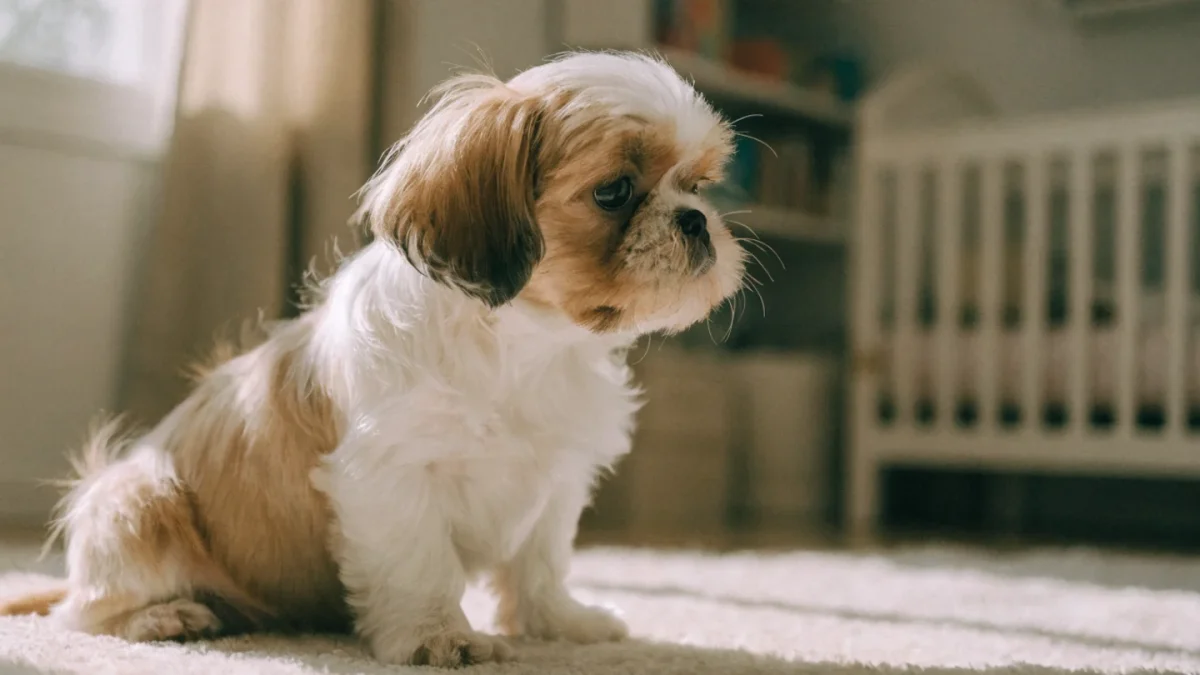
A three-hundred-year-old breed that descends from just fourteen dogs has a health profile you cannot afford to leave to chance. Choosing a shih tzu puppy is not about finding the cutest face in a litter — it's about evaluating structural health, breathing function, and breeding integrity before an adorable puppy short-circuits your judgment. The ten minutes you spend assessing these factors could spare years of veterinary bills and heartbreak.
Breathing Comes First
Before anything else, listen. A healthy shih tzu puppy at rest should breathe quietly. If you hear audible snoring, whistling, or labored effort in a puppy that is awake and calm, the airway is already compromised — and brachycephalic airway problems typically worsen, not improve, as the dog matures.
Observe the nostrils. They should be open and round, not pinched into narrow slits. Stenotic nares (abnormally narrowed nostrils) are visible even in young puppies and are one of the most common components of brachycephalic obstructive airway syndrome. A puppy with pinched nostrils will almost certainly face breathing difficulties throughout its life, potentially requiring surgical correction.
Watch the puppy during moderate activity — playing with littermates, exploring the room. Breathing should increase with exertion but recover quickly once the puppy settles. A puppy that pants excessively after brief play or makes gagging, retching sounds during normal activity is showing signs of airway compromise that a comprehensive breed guide should prepare you to recognize.
Health Clearances: What to Ask For
Responsible breeders health-test their parent dogs before breeding. For shih tzus, minimum health screening should include:
- Patellar luxation evaluation: Shih tzus are predisposed to slipping kneecaps. Parent dogs should be evaluated and graded.
- Eye examination: A veterinary ophthalmologist should have examined the parents for progressive retinal atrophy, cataracts, and other heritable eye conditions.
- Hip evaluation: While less publicized than in larger breeds, hip dysplasia occurs in shih tzus and parents should be screened.
- DNA testing: A marker test for renal dysplasia is offered through DOGenes, though its predictive accuracy is debated. Where available, testing for other breed-specific genetic conditions adds another layer of assurance.
Ask to see the actual documentation. A breeder who claims health clearances but cannot produce certificates is making claims, not providing evidence. Polite insistence on documentation is not rudeness — it's responsible purchasing.
Temperament Observation
Visit the litter in person whenever possible. Observe the puppies interacting with each other and with people. A healthy shih tzu puppy should be:
- Curious: Interested in new people, willing to approach and investigate
- Social: Comfortable being handled, not panicking when picked up
- Playful: Engaging with littermates in normal puppy play — wrestling, chasing, mouthing
- Resilient: Recovering quickly from startles (a dropped object, an unexpected sound) rather than cowering or trembling
Avoid the puppy that cowers in the corner, snaps defensively when approached, or shows no interest in interaction. Also avoid choosing exclusively based on which puppy is the boldest or pushiest — the breed's temperament should be confident but not dominant.
Meeting at least one parent — typically the mother — gives you information about adult temperament. A nervous, aggressive, or excessively fearful mother is a warning sign about both genetics and the environment in which the puppies are being raised.
Evaluating the Breeder
A good breeder will ask you as many questions as you ask them. They want to know about your living situation, your experience with dogs, your grooming plans, your understanding of the breed's needs. A breeder who will sell to anyone without questions is prioritizing profit over puppy welfare.
Look for: puppies raised indoors with regular human contact, not released before eight weeks (some breeders keep toy breeds until 10 to 12 weeks), limited litters per year, a written contract with a health guarantee and return clause, and willingness to discuss the breed's health predispositions openly.
Red Flags
These are disqualifying signals. Any one of them is reason to walk away.
-
"Imperial" or "teacup" advertising. These terms describe undersized shih tzus bred for novelty, not health. Deliberately breeding for smaller-than-standard size increases the risk of hypoglycemia, liver shunts, fragile bones, and dental problems. There is no recognized "imperial" or "teacup" variety — they are marketing terms applied to dogs that fall below the breed standard weight.
-
Constant puppy availability. A responsible breeder with health-tested parents and limited litters has a waitlist. A breeder with puppies available every month is running a volume operation.
-
No health clearances. Non-negotiable. If the parents haven't been tested, the puppies are an unknown genetic gamble.
-
Extreme facial flatness promoted as desirable. A breeder who selects for the flattest possible face without regard for breathing function is breeding dogs that will struggle to breathe. Structure matters more than fashion.
-
Reluctance to let you visit. If you cannot see where the puppies are raised and meet the mother, the conditions are likely not ones the breeder wants you to see.
The Adoption Alternative
Breed-specific rescue organizations regularly have shih tzus available — both puppies and adults. Adult shih tzus in rescue often come with known temperaments, existing house training, and coat maintenance that has already been established (or, in some cases, severely neglected, which rescue organizations address before rehoming).
Adopting an adult shih tzu removes much of the uncertainty involved in puppy selection. You can assess breathing, temperament, and health firsthand in a mature dog. For first-time shih tzu owners, an adult from rescue is often a more predictable choice than a puppy.
After You Choose
Once you've selected a puppy or adoption candidate, confirm that this breed genuinely fits your lifestyle one final time before committing. Establish a relationship with a veterinarian before the dog comes home. Schedule the first appointment within 48 to 72 hours of acquisition for a baseline health evaluation that includes breathing assessment, patellar palpation, and eye examination.
Good preparation before acquisition is the single best predictor of a successful shih tzu ownership experience. The breed rewards it with a decade and a half of companionship that justifies every hour you spent doing your homework.