

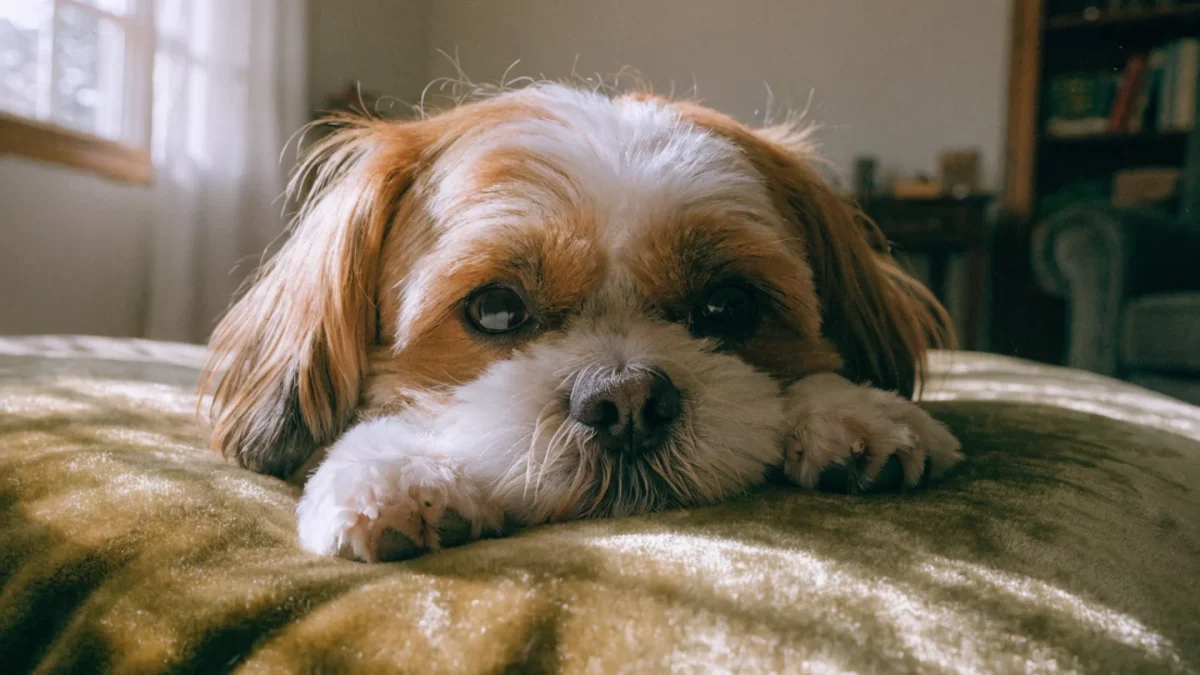
The Shih Tzu is the only dog I know that regards every human as roughly equally obligated to provide attention. Not in the frantic, indiscriminate way of a Labrador — more like a senior court official who expects a certain standard of engagement from whoever happens to be present. Doesn't matter if you're the person who feeds them daily or a houseguest they've met twice. If you are here and you are sitting still, you are available, and they will let you know it.
I've met this quality in Shih Tzus at every show I've attended where they're competing. They work the crowd between rings with the practiced ease of people who've always known they're worth looking at. It's disarming. And it's completely consistent across the breed in a way that tells you exactly how effectively those centuries of palace selection worked — the shih tzu temperament was shaped by breeders who wanted a companion that excelled at being compelling company for powerful, discerning people. Nearly 1,500 years of that selection pressure, and it shows.
Affection Without Desperation
The defining trait of the shih tzu temperament is a warm, steady attachment to its people that never tips into frantic neediness. Where some companion breeds follow their owners with anxious intensity — whining at closed doors, panicking at brief separations — the shih tzu follows with the calm expectation that of course it belongs wherever you are. It's the difference between a dog that needs you and a dog that has chosen you.
This doesn't mean they're aloof. Shih tzus seek physical contact readily. They'll settle on laps, lean against legs, and position themselves within arm's reach whenever possible. But if you're busy, most well-adjusted shih tzus will simply find a comfortable spot nearby and wait. There's a patience in the breed that reflects its palace heritage — these dogs were selected to be present without being intrusive.
That said, they do have limits. Extended isolation — being left alone for eight or more hours regularly — is poorly tolerated. Separation anxiety develops in shih tzus that are consistently left longer than their temperament can handle, and it manifests as destructive chewing, house soiling, or repetitive barking.
The Stubbornness Question
Every honest shih tzu breed guide addresses the stubbornness, and here's the truth: shih tzus are selectively cooperative. They understand what you're asking. They simply reserve the right to decide whether compliance serves their interests at that particular moment.
This is not a deficiency. It's a reflection of the breed's purpose. Dogs bred for obedience-dependent work — retrieving, herding, protection — were selected for responsiveness to commands. Dogs bred to be companions in a royal court were selected for composure, self-possession, and independent judgment. A shih tzu that blindly obeyed every command would have been, by imperial standards, a less interesting companion.
In practical terms, this means shih tzus respond best to training that offers something in return. Positive reinforcement works. Repetitive drill-style obedience does not. They'll learn "sit" quickly, perform it when motivated, and stare at you with polite disinterest when they'd rather not. Harsh corrections produce not compliance but resentment — a shih tzu that has been scolded too sharply may simply stop engaging with training altogether.
Social Behavior
With Strangers
Most shih tzus warm up to new people within minutes. Their initial response to strangers is typically a brief assessment — a pause, a look — followed by friendly engagement once they've determined the newcomer isn't a threat. They lack the suspicion of guardian breeds and the reflexive enthusiasm of sporting breeds. It's a measured warmth that most visitors find charming. For more, see History of the Shih Tzu: Lion Dogs of the Chinese Imperial Palace.
Some shih tzus are outgoing from the first moment. Others maintain a dignified reserve that melts gradually. Individual variation is significant, and early socialization during the critical period between 3 and 14 weeks of age has an outsized impact on adult social confidence.
With Children
Shih tzus can be good family dogs, with important caveats. Their sturdiness compared to other toy breeds is an advantage — they're less likely than a Chihuahua or Maltese to be injured by a clumsy child's handling. But they're still small dogs, and rough play, being picked up incorrectly, or being chased by excited toddlers can cause both physical injury and temperamental damage.
Older children who understand gentle interaction tend to develop wonderful bonds with shih tzus. The breed's playful side — which is more pronounced than many people expect — matches well with children who want a companion for games, dress-up (the shih tzu is remarkably tolerant of being costumed), and general togetherness.
With Other Animals
The shih tzu's near-zero prey drive makes multi-pet households straightforward. They coexist well with cats, other dogs, and small animals. Same-sex aggression is uncommon. The breed's social confidence means they're rarely intimidated by larger dogs, which can occasionally be a concern — a shih tzu that approaches a large, reactive dog with cheerful obliviousness doesn't always appreciate the size differential working against it.
Energy and Activity Profile
Shih tzus are moderate-energy dogs that experience distinct bursts of playful activity punctuated by long stretches of relaxation. The "zoomies" — sudden episodes of racing through the house — are a real phenomenon in the breed and often catch new owners off guard. A dog that was sleeping soundly five minutes ago may suddenly sprint through the living room at full speed, skid around a corner, and collapse back into sleep just as abruptly.
Between these bursts, the breed is content with relatively little physical activity. Twenty to forty minutes of moderate exercise daily — walks, play sessions, pottering in a garden — meets the physical needs of most adults. They don't need or want the intense exercise that sporting and working breeds demand.
This energy profile is one reason the breed suits apartment living, older owners, and people with limited mobility. The shih tzu adjusts its activity level to match its household, which is a genuinely useful trait that not all breeds possess.
Emotional Intelligence
Something that rarely appears in temperament descriptions but deserves mention: shih tzus are perceptive. They read human emotional states with surprising accuracy and often respond to distress in their owners by seeking physical contact — settling closer, resting a chin on a leg, making quiet eye contact. This isn't anthropomorphism; it's a behavior pattern consistent across the breed that likely reflects centuries of selection for companionship attunement.
They also pick up on household tension. A shih tzu in a home with frequent conflict may become withdrawn, anxious, or develop stress-related behaviors. The breed's sensitivity to emotional atmosphere is both a strength and a vulnerability — they thrive in calm, stable environments and struggle in chaotic ones.
The Right Temperament Match
The shih tzu temperament works beautifully for people who want a dog that is affectionate without being overwhelming, present without being demanding, and intelligent without being driven by the restless energy that comes with working-dog intelligence. It does not work for people who want instant obedience, athletic performance, or a dog whose personality revolves around its owner's approval.
Understanding whether this temperament fits your life is worth more than admiring the coat. The shih tzu's personality is its greatest feature — but only if you appreciate what it actually is, rather than what you assumed a small dog would be.