
The shih tzu was bred to walk from one end of a palace chamber to the other, not to run a marathon. That origin matters when setting exercise expectations. This is a companion breed with moderate energy, a brachycephalic airway that limits sustained exertion, and a temperament that values proximity to its person over athletic achievement.
But "moderate exercise needs" does not mean "no exercise needs." A sedentary shih tzu is a shih tzu headed toward obesity, joint stress, and behavioral dullness. Here's what reasonable, safe activity looks like for this breed.
Daily Exercise Guidelines
An adult shih tzu in good health needs approximately 20 to 40 minutes of moderate exercise daily. "Moderate" is the operative word — this is walking pace, gentle play, and engaged interaction, not running, jumping, or sustained high-effort activity.
Most shih tzus do best with two shorter sessions rather than one longer outing. A 15-minute morning walk and a 15-minute evening walk, with a brief indoor play session during the day, is a practical structure that fits the breed's energy pattern. They tend to be active in bursts rather than steady movers — enthusiastic for ten minutes, then content to rest for an hour.
Puppies need less structured exercise but more frequent play. The general guideline of five minutes per month of age, twice daily, is a reasonable starting point. A four-month-old puppy benefits from two 20-minute sessions of gentle, self-directed play rather than a forced walk. Over-exercising a puppy — particularly on hard surfaces — risks damage to developing joints and growth plates.
Senior shih tzus typically slow down noticeably after age 10 and may need their exercise reduced to shorter, gentler outings. Watch for reluctance to walk, stiffness after activity, or panting that takes longer to resolve. These signal that the current exercise level needs adjustment.
Safe Activities
Walks
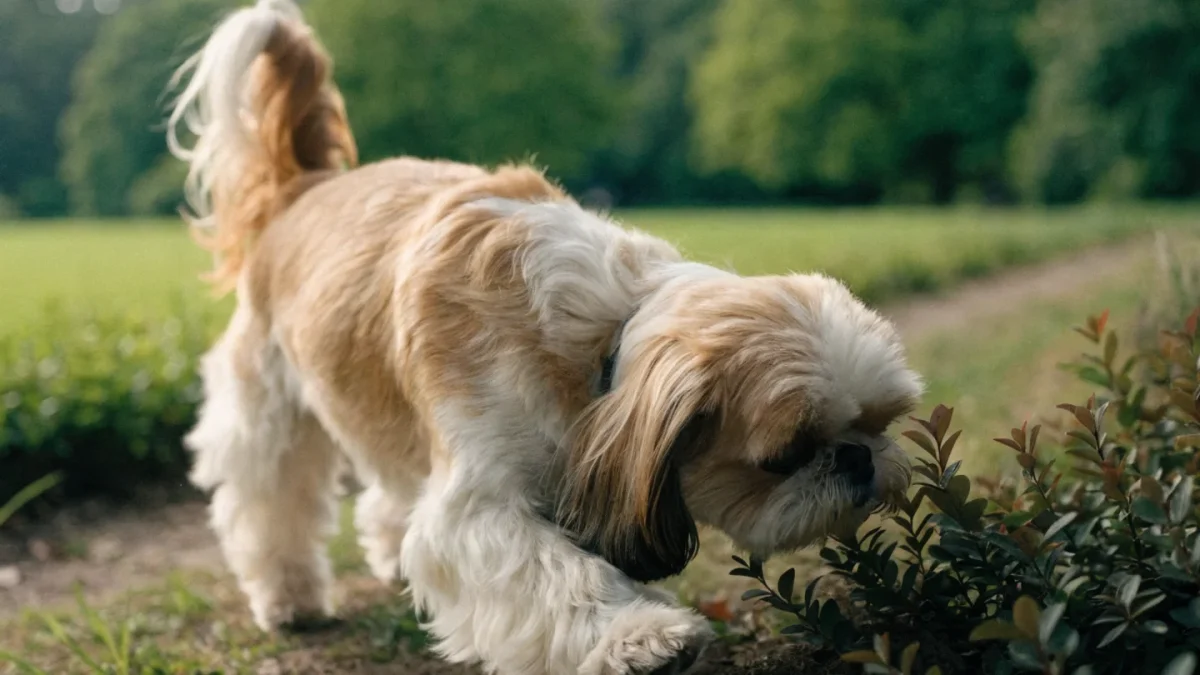
Short, unhurried walks are the foundation. Shih tzus are not power walkers — they prefer to sniff, explore, and move at their own pace. Allowing sniffing time is important. Scent investigation provides mental stimulation that's as valuable as the physical movement. A 15-minute walk where the dog gets to examine every lamppost and garden edge is more satisfying than a 30-minute forced march.
Use a harness rather than a collar. The brachycephalic airway is already compromised; a collar that pulls against the throat during walks adds unnecessary respiratory pressure.
Indoor Games
Indoor play is practical, climate-controlled, and perfectly suited to a breed that was developed for indoor living. Short games of fetch down a hallway, hide-and-seek with treats or toys, and puzzle feeders all engage a shih tzu's brain without overtaxing its body. Many shih tzus enjoy "find it" games — hiding a treat in one of several overturned cups and letting the dog work out which one hides the reward.
Socialization Outings
Dog-friendly outings to parks, outdoor seating areas, or friends' homes provide environmental stimulation and social exposure. The shih tzu's sociable temperament makes these outings generally positive experiences. The exercise component is secondary — the value is mental engagement with new environments, people, and animals.
Heat and Weather Precautions
This is the non-negotiable section. Brachycephalic breeds regulate body temperature poorly because panting — the primary canine cooling mechanism — is less efficient through a shortened airway. Shih tzus are at genuine risk of heatstroke during exercise in warm, humid conditions.
Specific precautions:
- Avoid outdoor exercise when temperatures exceed 26 degrees Celsius, particularly with high humidity
- Walk during early morning or evening when temperatures are lower
- Carry water on every outing, regardless of planned duration
- Watch for early signs of overheating: excessive panting, drooling, bright red tongue, glazed eyes, stumbling
- If overheating occurs, move the dog to shade immediately, apply cool (not cold) water to the belly and paw pads, and seek veterinary attention without delay
Cold weather is less dangerous but still warrants attention. The shih tzu's long coat provides some insulation, but their small body mass means they lose heat quickly. Short-legged dogs also contact cold ground surfaces directly, and ice-melting chemicals can irritate paw pads.
Signs of Too Much or Too Little
Over-exercised: Labored breathing that persists more than a few minutes after stopping, reluctance to continue walking, lying down during a walk, excessive panting, limping, or stiffness the following day. If any of these occur regularly, reduce the intensity or duration.
Under-exercised: Weight gain despite appropriate feeding, restlessness in the evenings, attention-seeking behaviors, excessive licking or chewing, and a general flatness of mood. A bored, sedentary shih tzu often becomes a lethargic shih tzu — the lack of stimulation depresses their natural engagement.
The sweet spot varies by individual. Some shih tzus are content with 20 minutes of total daily activity. Others — particularly younger adults from higher-energy lines — may genuinely want and benefit from 40 to 45 minutes. Observe your dog, adjust accordingly, and don't assume that a companion breed needs companion-breed-minimum exercise. Many shih tzus are more active than their reputation suggests.