

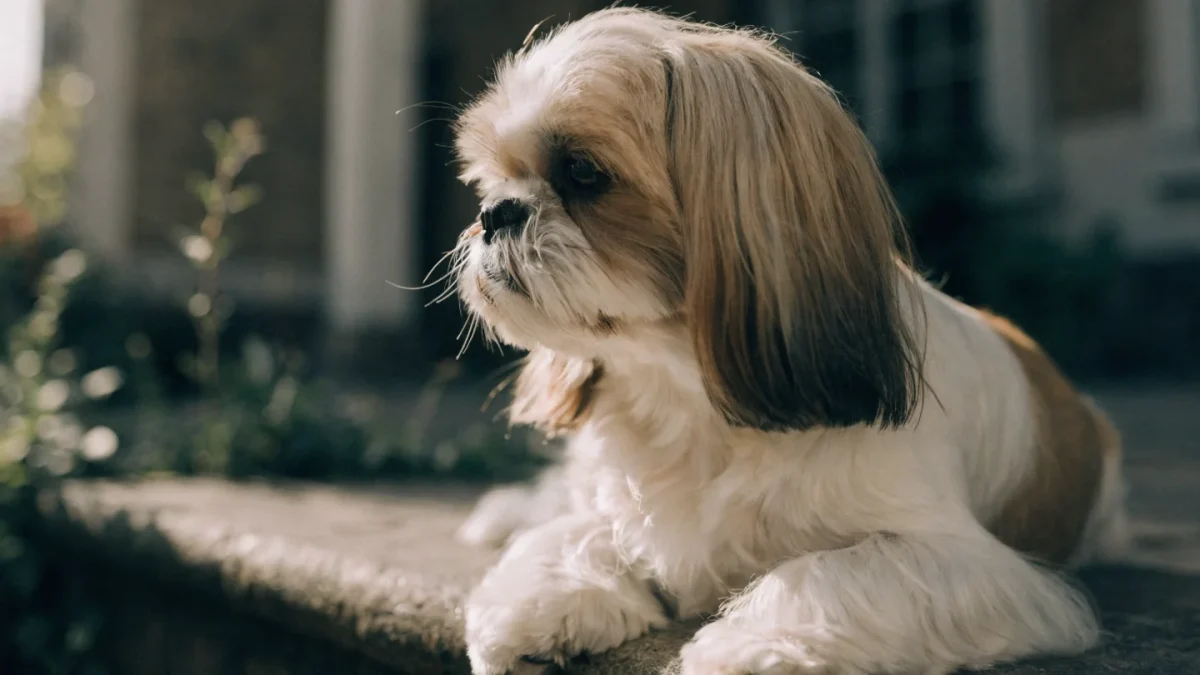
The shih tzu was never supposed to leave China. For roughly three centuries, these dogs lived exclusively inside the walls of the Chinese imperial palace, bred and guarded by court eunuchs who treated them as living treasures. The penalty for smuggling one out of the Forbidden City was, depending on the era, potentially death. Every shih tzu alive today descends from just fourteen dogs — seven males and seven females — that were imported to England and Scandinavia between the late 1920s and 1950s. That genetic bottleneck, narrow enough to give any population geneticist pause, defines the breed to this day.
Shih tzus are small companion dogs, typically weighing between 4 and 7.25 kg and standing 20 to 28 cm at the shoulder. They were developed specifically for companionship — not hunting, not herding, not guarding. This is a breed whose entire purpose, for centuries, was to sit near powerful people and be pleasant company. That job description has aged remarkably well.
If you're looking for a shih tzu breed guide that goes beyond the cute face and addresses grooming realities, health concerns, and honest lifestyle compatibility, keep reading. There's more to these dogs than most people expect.
Origins and History
The exact origin date of the shih tzu is impossible to pin down with certainty, which is unusual for a breed so closely tied to documentation-obsessed imperial courts. The most widely accepted theory places the breed's development during the late Ming dynasty (1368-1644) or early Qing dynasty (1644-1912), when Tibetan Lhasa Apsos were crossed with Chinese Pekingese within the imperial palace. A 2004 genetic study by Parker et al. using 96 microsatellite markers across 85 breeds placed the shih tzu among fourteen breeds showing the least genetic divergence from ancestral wolf populations, confirming its ancient lineage.
The name itself translates roughly to "lion dog," a reference that carries religious significance in Chinese Buddhist tradition. Lions are sacred protectors in Buddhist iconography, and small dogs resembling stylized lions held spiritual as well as ornamental value in the imperial court. The Dowager Empress Cixi, who ruled China from 1861 to 1908, maintained elaborate breeding programs for the palace dogs, reportedly keeping hundreds of shih tzus, Pekingese, and pugs under the care of dedicated palace eunuchs.
When the imperial dynasty collapsed in 1912, the palace breeding programs disintegrated. Dogs were scattered, sold, given away, or simply lost. By the 1930s, the breed's survival outside China depended entirely on a handful of individuals exported to Europe. Lady Brownrigg, wife of a British military officer stationed in China, brought several shih tzus to England in 1930. The Scandinavian imports, including dogs brought to Norway and Sweden, added crucial genetic diversity to the small European population.
The fourteen dogs that comprise the foundation of the modern breed were a perilously small gene pool. A single Pekingese cross was introduced in England in 1952 to broaden the genetic base — a controversial but likely necessary decision that has been both criticized and credited by breed historians ever since.
The breed gained recognition by the Kennel Club in Britain in 1946. It took another two decades to reach widespread recognition elsewhere, with formal recognition in other major registries following through the 1960s and 1970s. By the 1990s, the shih tzu had become one of the most popular companion breeds worldwide.
Physical Characteristics
Size and Build
The shih tzu is a small, solid dog — surprisingly sturdy for its size. Adults weigh between 4 and 7.25 kg, with most individuals settling between 4.5 and 7 kg. Height at the shoulder ranges from 20 to 28 cm. The body is slightly longer than it is tall, carried on short, muscular legs with substantial bone for a toy breed.
What most people get wrong about shih tzu size is expecting fragility. These are not delicate dogs. The chest is broad, the ribcage well-sprung, and the overall build is compact and robust. A shih tzu in good condition feels heavier than it looks.
Head and Face
The head is round and broad, with a pronounced stop (the angle between forehead and muzzle). The muzzle is short, square, and flat — unmistakably brachycephalic, though typically less extreme than breeds like the Pekingese or English Bulldog. Eyes are large, round, dark, and set wide, creating the characteristic warm expression. The underbite is standard for the breed, with the lower jaw slightly wider than the upper.
The ears are large, set slightly below the crown, and heavily feathered. In a full coat, they blend seamlessly into the overall mane-like appearance of the head.
Coat
The coat is the shih tzu's defining physical feature and its most demanding characteristic. It is a long, dense, flowing double coat that grows continuously, much like human hair. The outer coat is silky and straight (slight wave is tolerated), while the undercoat is softer and denser. Coat texture varies — some lines produce silk-fine hair that mats at the slightest provocation, while others produce a slightly coarser, more manageable texture.
Color variety in the shih tzu is extraordinary. The breed appears in virtually every color and combination: gold and white, black and white, solid black, solid red, liver, blue, brindle, silver, and various parti-color patterns. A white blaze on the forehead and a white-tipped tail have been historically prized in the breed and are referenced in Chinese breed descriptions as the "star of Buddha" and "Buddha's blessing."
The Tail
The tail is set high and carried curved over the back in a plume. It's heavily feathered and, in a full coat, creates a dramatic arc that contributes significantly to the breed's silhouette. The tail carriage is confident — a shih tzu in motion carries its tail like a flag.
Temperament and Behavior
If the golden retriever is the valedictorian who volunteers everywhere and the bulldog is the quietly stubborn philosopher, the shih tzu is the retired diplomat who still expects to be seated at the head of the table. There's an unmistakable self-assurance in these dogs that traces directly back to centuries of palace privilege.
Core Personality
Shih tzus are fundamentally companion dogs, and they behave accordingly. Their orientation is toward people — sitting near you, following you room to room, settling on your lap whenever the opportunity presents itself. They're affectionate without being frantic about it. Where a Labrador demands attention through sheer exuberance, a shih tzu simply positions itself in your line of sight and waits for you to acknowledge it. There's a quiet dignity in the approach.
They're not typically one-person dogs. Most shih tzus distribute their affection relatively evenly across household members and are generally friendly with visitors, though they may initially observe newcomers from a distance before engaging. They rarely meet a person they can't warm up to, given a few minutes.
What Most People Get Wrong About This Breed
The biggest misconception is that shih tzus are ornamental — pretty but empty-headed. This is wrong. They are observant, opinionated dogs with a stubborn streak that can catch inexperienced owners off guard. The breed ranks lower on obedience-based intelligence tests, but that metric measures willingness to comply, not cognitive ability. A shih tzu that ignores your "sit" command for the fourth time is not confused. It has made a decision.
This independent thinking is a feature of the breed's purpose. Palace dogs weren't trained to retrieve, herd, or guard. They were valued for being pleasant, self-possessed companions. Centuries of selection for that temperament produced a dog that is confident, unhurried, and entirely comfortable making its own choices about when cooperation is warranted.
Barking Tendencies
Shih tzus are moderate barkers. They'll alert to doorbells, unusual sounds, and approaching strangers, but they're generally not the nuisance barkers that some toy breeds become. Individual variation exists — some shih tzus are vocal communicators, others are surprisingly quiet. Early socialization and exposure to varied environments helps keep alert barking from escalating into anxiety-driven vocalizing.
With Children and Other Animals
Shih tzus can do well with children, particularly older children who understand gentle handling. Their sturdiness makes them less fragile than many toy breeds, but their small size still puts them at risk of injury from being dropped, stepped on, or handled roughly by very young children. Supervised interaction is always necessary.
With other dogs, shih tzus are generally sociable. They rarely display the same-sex aggression some breeds carry, and they tend to be tolerant of unfamiliar dogs when properly socialized. They can coexist well with cats and other household pets, largely because their prey drive is negligible. This was never a breed that needed to chase anything.
Health Profile
The shih tzu's health picture is shaped by two dominant factors: brachycephaly and the breed's narrow genetic foundation. Both deserve honest discussion.
Brachycephalic Airway Concerns
The shortened skull creates structural changes in the airway. Brachycephalic obstructive airway syndrome (BOAS) encompasses several conditions — stenotic nares (narrowed nostrils), elongated soft palate, hypoplastic trachea, and everted laryngeal saccules — that can compromise breathing to varying degrees. Not every shih tzu is severely affected, but the predisposition is universal in the breed.
Signs range from the characteristic snoring and snorting (which many owners mistakenly consider normal or endearing) to genuine respiratory distress during exercise or in warm weather. Moderate to severe cases may require surgical correction. Heat tolerance is reduced across the breed — shih tzus are more vulnerable to heatstroke than long-muzzled breeds and should never be exercised vigorously in hot, humid conditions.
Eye Conditions
Those large, prominent eyes are vulnerable. Proptosis (displacement of the eye from the socket), corneal ulcers, keratoconjunctivitis sicca (dry eye), and progressive retinal atrophy all occur in the breed at elevated rates compared to non-brachycephalic breeds. The shallow eye sockets characteristic of the flat face provide less protection than deeper-set eyes, making trauma-related eye injuries more common.
Regular veterinary eye examinations are important. Any sign of squinting, excessive tearing, cloudiness, or rubbing at the eyes warrants prompt attention.
Orthopedic Issues
Patellar luxation — the kneecap sliding out of its normal groove — is one of the most common orthopedic conditions in shih tzus. Severity ranges from grade 1 (occasional slipping that self-corrects) to grade 4 (permanently displaced). Higher grades typically require surgical correction. Intervertebral disc disease (IVDD) also occurs, particularly given the breed's long back relative to leg length.
Other Health Concerns
- Dental disease: The small jaw creates crowding, misalignment, and accelerated tartar buildup. Dental problems are nearly universal in the breed and require proactive management.
- Ear infections: Heavy ear feathering traps moisture. Routine cleaning and airflow management help prevent chronic otitis.
- Renal dysplasia: A hereditary kidney condition that can range from mild to life-threatening. A DNA marker test is offered through DOGenes, though its reliability is debated. A urine-based E.R.D.-Screen test can detect early protein leakage, and definitive diagnosis requires surgical biopsy.
- Portosystemic liver shunt: A congenital condition where blood bypasses the liver. More common in small breeds generally, but noted in shih tzus specifically.
- Allergies: Skin allergies and food sensitivities occur with moderate frequency.
Lifespan
The shih tzu's average lifespan is approximately 10 to 16 years, with most individuals living to 12 to 14 years when properly cared for. This is a long-lived breed compared to most dogs of any size, and well-bred shih tzus from health-tested lines often reach the upper range.
Grooming Requirements
There is no way to soften this: shih tzu grooming is a serious commitment. If the phrase "daily coat maintenance" makes you flinch, recalibrate your expectations before choosing this breed.
Full Coat Maintenance
A shih tzu kept in full show coat requires daily brushing and combing. Every day. Not most days. The long, silky coat mats rapidly, and mats that reach the skin become painful, restrict airflow, and can cause skin infections. A pin brush and a metal greyhound comb are the essential tools. Mist the coat lightly with a conditioning spray before brushing — brushing a bone-dry coat snaps hairs and creates static that accelerates tangling.
Section the coat methodically: legs first, then body sides, chest, belly, under the ears, and finally the topknot. Each section should be brushed through to the skin. Skimming the surface while leaving mats underneath is the most common grooming mistake and the one that causes the most suffering.
The Puppy Cut Alternative
Most pet shih tzus are kept in a shorter "puppy cut" — the entire coat trimmed to 2.5 to 5 cm — which reduces daily grooming to a manageable few minutes but still requires professional grooming every four to six weeks. This is a practical, humane choice for owners who cannot commit to full coat maintenance. There is no shame in it, and the dog is none the worse.
Face and Eye Care
The facial folds and prominent eyes need daily attention. Wipe the face with a damp cloth to remove food debris, tear staining, and moisture from skin folds. The area around the eyes is especially vulnerable to irritation and infection if not kept clean and dry. Tear staining — the reddish-brown discoloration below the eyes — is common and primarily cosmetic, caused by porphyrins in the tears oxidizing on the fur.
Bathing, Nails, Ears, and Teeth
Bathe every three to four weeks with a mild shampoo. Dry the coat thoroughly — a damp coat mats faster than a dry one, and moisture in skin folds invites bacterial growth. Nail trimming every two to three weeks is standard. Ear cleaning weekly prevents the infections that heavy ear feathering promotes. Dental care is especially critical in this breed given the predisposition to crowding and periodontal disease — brushing several times weekly is recommended.
Exercise and Activity Needs
Shih tzus need less exercise than sporting or herding breeds, but "less" does not mean "none." The breed requires 20 to 40 minutes of daily activity, which can be divided into two or three shorter sessions. A moderate walk, indoor play, or a brief romp in a secure yard satisfies the physical requirements for most adults.
What matters more than intensity is consistency and engagement. Shih tzus enjoy interactive play with their owners — they were bred for human interaction, and exercise that involves their person is always more enthusiastically received than solo activities. Many shih tzus enjoy short games of fetch, though the breed's retrieving instinct is essentially nonexistent and the "fetch" often becomes "chase the toy, pick it up, bring it halfway back, then sit down with it."
Heat Sensitivity
Brachycephaly limits the breed's ability to regulate body temperature through panting. Exercise in temperatures above 26 degrees Celsius should be approached with caution, with walks moved to early morning or evening. Signs of overheating — excessive panting, drooling, glazed eyes, unsteadiness — demand immediate cooling and veterinary attention. This is a genuine safety concern, not a suggestion.
Mental Stimulation
Despite their reputation as lap dogs, shih tzus are mentally engaged animals that benefit from puzzle toys, scent games, and short training sessions. A bored shih tzu may not destroy your furniture the way a bored retriever will, but it may become withdrawn, snippy, or develop compulsive behaviors like excessive licking.
Nutrition Fundamentals
Shih tzus do well on two measured meals per day as adults, with puppies needing three to four meals daily until approximately six months of age. The flat face and underbite can make eating from standard bowls difficult — shallow, wide bowls or flat plates allow the dog to access food without pressing its face into a deep dish.
Weight management is critical. A healthy adult shows a discernible waist from above and ribs that can be felt without pressing through padding. At 4 to 7.25 kg, even half a kilogram of excess weight represents a meaningful percentage of body mass and worsens every brachycephalic symptom.
Living Situation Compatibility
The shih tzu is one of the most adaptable breeds for varied living situations — apartments, condominiums, and houses with or without yards. Their exercise needs are modest, their barking moderate, and their size practical for smaller spaces. They are not outdoor dogs by any definition. A shih tzu wants to be where its people are, indoors, preferably on a comfortable surface.
This adaptability extends to owner demographics. Shih tzus work well for singles, couples, families with older children, and seniors. Their affectionate, relatively calm temperament suits people who want genuine companionship without the intensity of a working dog.
Choosing a Shih Tzu
Parent dogs should have evaluations for patellar luxation, eye conditions, and hip dysplasia at minimum. A healthy puppy should breathe quietly at rest — audible snoring or labored breathing suggests airway compromise that will likely worsen. The nostrils should be open, not pinched. Eyes should be clear without excessive discharge.
Breed-specific rescue organizations regularly have shih tzus available, including adults whose grooming needs exceeded their previous owner's commitment. Avoid anyone advertising "imperial" or "teacup" shih tzus — these are undersized dogs bred for novelty, not a recognized variety, and the small size increases health risks.
The Right Owner for This Breed
A shih tzu is the right dog for you if:
- You want a genuine companion that thrives on proximity and human connection
- You can commit to daily grooming or regular professional grooming appointments every four to six weeks
- You understand brachycephalic health realities and are prepared for related veterinary costs
- You live in any size home — apartment to estate — and can provide climate-controlled indoor living
- You want a dog with moderate exercise needs that still engages with you actively
- You appreciate a dog with its own opinions and a touch of aristocratic stubbornness
A shih tzu is the wrong dog for you if:
- You want a dog that comes when called every time, immediately, without negotiation
- You can't or won't maintain the grooming schedule this coat demands
- You want a jogging partner, hiking companion, or high-energy playmate
- Your home regularly exceeds comfortable temperatures without air conditioning
- You're looking for a guard dog or a breed with strong working drive
- You expect a toy breed to be fragile and passive — this one has opinions
The shih tzu has spent centuries perfecting the art of being excellent company. It asks for grooming, moderate attention, and a comfortable seat with a view of its people. In return, it offers a loyalty that's quiet, steady, and surprisingly deep for a dog that looks like it should be sitting on a silk cushion in a palace — which, historically speaking, it was.
Frequently Asked Questions
Do shih tzus shed?
Shih tzus are often described as "low-shedding," which is accurate but misleading. Their long coat sheds minimally compared to double-coated breeds like golden retrievers or huskies, but the hair that does release tends to get caught in the surrounding coat rather than falling onto furniture. This is why mats form so readily — loose hairs tangle with attached hairs instead of dropping away. You'll find less hair on your clothes, but the tradeoff is a coat that demands daily attention to prevent matting.
Are shih tzus hard to house train?
Shih tzus have a reputation for being slower to house train than many breeds, and the reputation is largely deserved. The breed's independent temperament means they don't feel the same urgency to please that makes retrievers and shepherds quick studies. Consistency, patience, and a strict schedule produce results, but expect the process to take longer than with more biddable breeds — sometimes six months or more for full reliability.
Can shih tzus be left alone during a work day?
Adult shih tzus can tolerate four to six hours alone, though they don't prefer it. Extended isolation runs contrary to the breed's fundamental nature. Puppies should not be left alone for more than two to three hours. If your schedule requires full-day absences, a dog walker, daycare, or a companion animal helps bridge the gap. Shih tzus left alone too long may develop separation anxiety — destructive behavior, house soiling, or excessive barking.
What's the difference between a shih tzu and a Lhasa Apso?
The two breeds share Tibetan ancestry and look similar enough to confuse even experienced dog owners, but they're distinct in purpose and temperament. The Lhasa Apso was developed as a sentinel dog in Tibetan monasteries — watchful, reserved with strangers, and more independent. The shih tzu was developed as a palace companion — generally more outgoing, more affectionate with strangers, and less suspicious. Physically, Lhasa Apsos tend to have a longer muzzle, a narrower skull, and a slightly longer body relative to height. The shih tzu has a rounder head, a shorter muzzle, and a more compact build. Both have demanding coats, but the Lhasa's coat texture tends to be heavier and parted along the spine.