

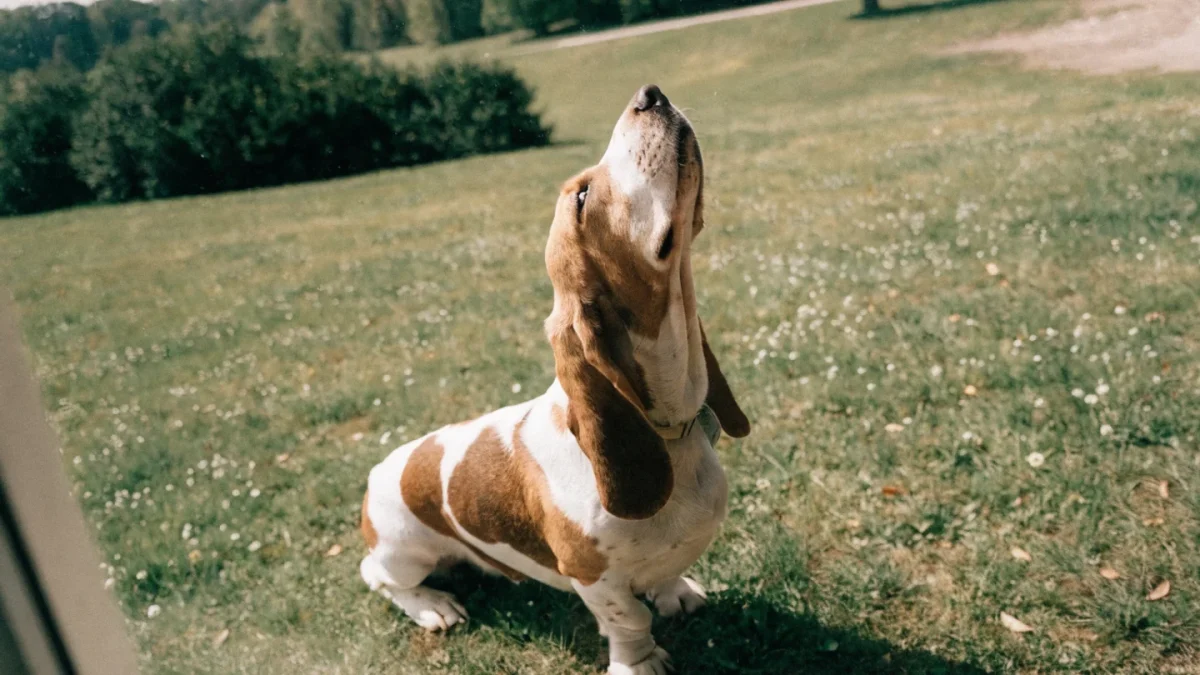
I've been in dog training long enough to hear "stubborn" used to describe Basset Hounds following a scent, Huskies deciding to run rather than return, Bulldogs going slowly, Beagles ignoring recalls, and Dachshunds refusing to come inside.
The word "stubborn" explains nothing and implies the dog is consciously choosing defiance. Neither is helpful.
Let me offer some reframes.
What "Stubborn" Usually Means
When someone says their dog is stubborn, they typically mean one of a few things:
The competing drive is louder than the cue. A Beagle following a scent trail isn't choosing not to come. They're responding to olfactory information that's genuinely more compelling in that moment than the recall cue. The instinct wins. That's not stubbornness — it's the behavioral hierarchy working as designed.
The reward isn't worth the behavior. In low-distraction environments, a piece of kibble is plenty to reward a sit. In a distraction-rich environment, kibble competes poorly against everything the dog wants to investigate. The dog makes a value judgment. "Sit" doesn't pay enough here.
The behavior was never trained in that context. Training in your living room trains in your living room. The behavior may not generalize to the park automatically. What looks like "he knows sit and is refusing" is often "he's never actually been trained to sit reliably with three kids running nearby."
The relationship is working against you. A dog that doesn't find you particularly rewarding or interesting won't work hard to get your approval. Building value in the handler-dog relationship is foundational for training "difficult" breeds.
The dog is in physical or emotional distress. A sick dog appears stubborn. An anxious dog appears stubborn. A dog in pain appears stubborn. Never accept stubbornness as a diagnosis without ruling out physical or emotional causes.
The Breeds That Get Called Stubborn Most
There's a loose correlation between "stubborn" reputation and independent working history. Breeds developed to work without constant human direction — scent hounds, Spitz breeds, terriers, some guardian breeds — got labeled stubborn because they don't defer to human direction automatically.
They're not less intelligent. Often they're more intelligent. They're just using that intelligence to evaluate whether compliance is worth it, rather than assuming it is.
How dogs actually learn explains the mechanism: behavior that produces reward gets repeated; behavior that doesn't, doesn't. A dog that ignores a cue has learned that ignoring that cue in that context has no consequence that matters to them. That's a training gap, not a character flaw.
What Actually Fixes "Stubbornness"
Upgrade the reward. Match reward value to distraction level. Using kibble in a crowded dog park is low-value against high-distraction. Real meat, toy play, chase games — bring the reward up to the level the competition requires.
Proof the behavior in the real context. Train the specific behavior at the specific level of distraction where it's failing. Long-line recall training in increasingly distracting environments. Building the behavior to work where you actually need it.
Manage the environment during training. If the dog consistently blows off recall in the park, stop doing off-leash in the park for now. Practice recall on a 30-foot long line instead. This allows you to reinforce the recall consistently while keeping safety.
Build the relationship. Practical tips for difficult dogs covers this in detail — making yourself more interesting, unpredictable, and rewarding is a systematic process, not magic. But it's the foundation everything else sits on.
Be honest about your timing and consistency. Training failures that get blamed on the dog are sometimes handler failures. Are you rewarding every recall every time? Is your timing precise? Are your cues consistent?
The Reframe That Changes Everything
Stop asking "why is my dog so stubborn?" and start asking "what does my dog find more rewarding than my cue in this context, and what can I do about it?"
That question has answers. "Stubbornness" doesn't.