

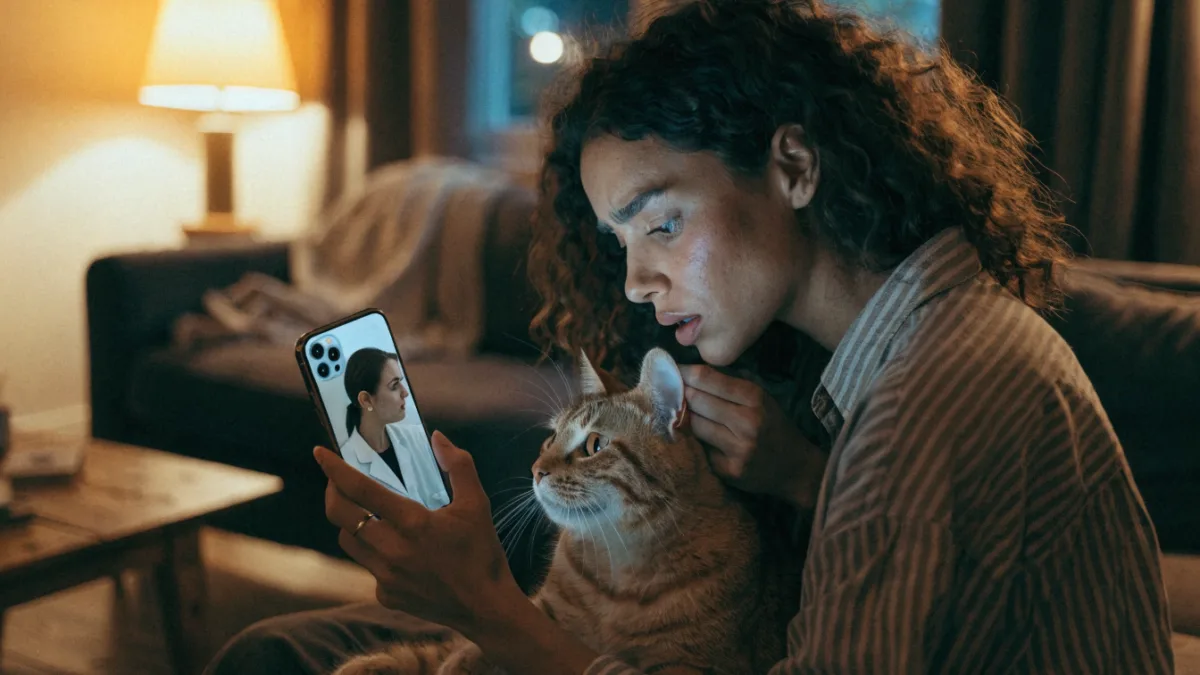
Picture a Tuesday night, around 10 PM. An owner named Maria is panicking — her six-year-old Golden Retriever, Biscuit, has been licking at a small red bump on his paw for an hour, and Maria isn’t sure if it’s a bug bite, an infection, or something worse. Her regular vet is closed. The nearest emergency clinic is a 45-minute drive. She doesn’t want to spend $300 to be told it’s nothing, but she also doesn’t want to sleep on it if it’s something. This is exactly the gap a virtual visit fills. Within twenty minutes, a veterinarian was on a video call with her, looking at the bump, asking the right questions, and reassuring her it was likely a mild contact irritation. They recommended a gentle Epsom salt soak and told her exactly what symptoms would warrant an in-person follow-up. The next morning: Biscuit was fine, and she’d actually slept through the night.
That’s the promise of veterinary telehealth in a nutshell. It’s not replacing clinics — it’s filling the enormous gap between “I’m worried” and “I need to rush in.” And that gap is where most pet owners live, especially at 10 PM on a Tuesday.
What Telehealth Actually Does Well
I’ll be honest — when telehealth apps first started appearing, I was skeptical. Medicine is hands-on. I use my hands to feel a spleen, to detect pain when I press on a belly, to assess dehydration by lifting skin. How could a screen replace that?
What I’ve come to realize is that telehealth doesn’t try to replace the physical exam. It addresses a completely different set of needs. Think of it this way: if you call your own doctor about a weird rash, you don’t expect them to leap through the phone with a stethoscope. You expect guidance — is this concerning enough to come in, or can I manage this at home? Pets deserve that same triage.
Ideal scenarios for virtual visits
- Minor skin issues: Mild hot spots, suspicious but not dramatic lumps, seasonal itching, or questions about whether a rash warrants medication.
- Behavioral concerns: This is one of telehealth’s sweet spots. A video consultation is often ideal for discussing separation anxiety, noise phobias, litter box avoidance in cats, or leash reactivity. The vet can actually see the pet’s environment and body language in real time.
- Post-operative follow-ups: After a spay, dental cleaning, or mass removal, a quick video check of the incision site can save a stressed pet an unnecessary car ride and save the owner an office visit fee.
- Nutrition and wellness questions: “Is this food appropriate?” “How much should my senior cat be eating?” “What vaccines does my puppy need and when?” These are perfect for virtual care.
- Second opinions: If you’ve received a diagnosis or treatment plan and want another perspective before committing to surgery or long-term medication, a telehealth consultation can help you think it through.
- Late-night “is this normal?” questions: The 10 PM scenario. Mild vomiting once, a slightly loose stool, or a dog who’s just acting a little off. A virtual vet can help you decide if it’s watch-and-wait or go-in-now.
The cost savings are real and meaningful. While in-person visits vary widely by region, telehealth consultations typically run significantly lower, which matters enormously for families stretching to afford care. The ASPCA has highlighted,[1] precisely because it removes barriers — geographic isolation, limited mobility, financial constraints, and the simple fact that many pets become so stressed at the clinic that examinations become difficult or even dangerous.
When You Must Go In Person
Here’s where I want to be crystal clear, because I’ve seen the cost of getting this wrong. A virtual veterinarian cannot save your pet’s life in an acute emergency. They cannot place an IV catheter, administer oxygen, perform surgery, or stop catastrophic bleeding through a screen. Telehealth apps are available around the clock — but availability is not the same as capability.
Always go to a physical clinic or emergency hospital for:
- Difficulty breathing: If your pet is open-mouth breathing (in a cat, this is always an emergency), panting frantically, or their gums look pale, blue, or dark red.
- Trauma: Hit by a car, attacked by another animal, fallen from height, or any significant wound with active bleeding that won’t stop with gentle pressure after a few minutes.
- Suspected toxin ingestion: If your dog ate your medication, raided the chocolate stash, licked antifreeze, or snacked on xylitol-containing gum. Time is critical, and treatment often requires immediate decontamination — inducing vomiting, administering activated charcoal, or starting IV fluids. Call ahead, but go.
- Severe vomiting or diarrhea: Especially with blood, especially if your pet is lethargic, and especially in small dogs and puppies where dehydration happens frighteningly fast.
- Bloated or distended abdomen: Particularly in deep-chested breeds like Great Danes, German Shepherds, and Standard Poodles. Gastric dilatation-volvulus — “bloat” — can kill within hours. This is not a video call situation.
- Straining to urinate with nothing coming out: Especially in male cats. A urinary blockage is a life-threatening emergency that requires immediate physical intervention.
- Seizures lasting more than a couple minutes, or multiple seizures in a row.
Anything requiring diagnostics — X-rays, bloodwork, ultrasounds, cytology, culture and sensitivity testing — also requires a physical clinic. Modern telehealth platforms can be impressively sophisticated, and some can provide diagnoses and treatment plans for appropriate cases, but they can’t see inside your pet. They can’t feel an abdominal mass, hear a heart murmur, or run a complete blood count. As [2] the hands-on physical exam remains irreplaceable for many conditions.
The Prescription Question
This is where things get genuinely complicated, and I want to address it honestly rather than giving you a tidy answer that doesn’t reflect reality.
In many jurisdictions, a veterinarian must have an established Veterinary-Client-Patient Relationship — the VCPR — before legally prescribing medication. Traditionally, that relationship required a physical examination. The VCPR exists for a good reason: prescribing antibiotics, pain medications, or behavior-modifying drugs without examining the animal can mask serious problems or create new ones. I’ve seen well-meaning telehealth prescriptions delay the diagnosis of conditions that needed entirely different treatment.
That said, the pandemic forced a reevaluation. Temporary policies allowed broader telemedicine prescribing, and in many places, some of those changes have become permanent or are actively being debated. The landscape is shifting, and it varies by region — what’s legal in one state or country may not be in another.
My practical advice: use telehealth for triage, guidance, and non-prescription recommendations without hesitation. If you need a prescription — especially for a new condition, not a refill of something already established — expect that you may be referred for an in-person visit first. That’s not the app being difficult. That’s responsible medicine.
And please, please don’t use a virtual visit as a way to pressure a veterinarian into prescribing antibiotics for a pet they haven’t examined. I’ve seen online discussions where,[3] and I understand the financial strain — veterinary care is expensive, and that reality keeps me up at night. But antibiotic resistance is a genuine public health crisis, and prescribing without appropriate justification harms all of us, pets included.
How I Recommend Using Both
Think of telehealth and physical clinics as complementary tools, not competitors. Here’s the framework worth using:
Start with telehealth when you’re unsure. That’s its superpower — helping you figure out if you need to go in. The best virtual visits don’t necessarily end with a diagnosis and prescription. They end with a clear plan: “Monitor these three things. Come in if X happens within Y hours. You’re probably fine if Z resolves.”
Go directly to a clinic for anything on the emergency list above, without passing Go. Don’t spend fifteen minutes on hold with an app while your cat is struggling to breathe.
Use telehealth for the grey zone — the “I don’t know if this is urgent” moments. A good virtual veterinarian will tell you honestly: “This needs hands-on care today,” or “This is likely manageable at home with these steps.”
And maintain a relationship with a physical clinic regardless. Your pet should have a veterinarian who knows them — their history, their quirks, their baseline bloodwork, their vaccine status. Telehealth works best as an extension of that relationship, not a replacement for it.
A Final Thought
What I love most about telehealth is what it represents: a recognition that the old model — where the only way to access veterinary expertise was to load a stressed animal into a car, drive across town, and sit in a waiting room — left too many pets behind. The family in a rural community with no specialty hospital within three hours. The elderly person who can’t easily transport a large dog. The college student trying to do right by a rescue cat on a tight budget. The anxious Greyhound who shuts down completely in clinical settings.
For those animals and those people, a video visit isn’t a convenience. It’s a lifeline. It’s the difference between getting advice and getting nothing. And in a world where,[1] that matters enormously.
Use telehealth wisely — for what it does well, not for what it can’t do — and it becomes one of the most valuable tools in your pet-care toolkit. Combine it with regular physical exams, build a relationship with a clinic you trust, and you’ve given your animal companion the best of both worlds. That’s not just good medicine. It’s love in action.
Sources
- telemedicine as a genuine advancement in animal welfare — aspca.org
- Red Bank Veterinary Hospital notes — redbankvet.com
- pet owners are searching for the cheapest prescription option — reddit.com