
"You can't teach an old dog new tricks" is one of the most persistent false beliefs in dog training. I've trained dogs that came to me at 10 years old who learned their first sit in three sessions. I've worked with rescue dogs that had zero training history at 5 years and became solid, reliable companions within a few months.
Adult dogs are not harder to train than puppies in most respects. They're different.
Why Adult Dogs Are Actually Easier to Train
Longer attention spans. A puppy can focus for 3-5 minutes maximum. An adult dog can focus for 10-15 minutes or more, which means you get more learning per session.
Less impulsivity. Puppies are chaos. Adult dogs, even undertrained ones, tend to be somewhat calmer and more responsive to communication.
No teething, no zoomies (usually), no developmental phases. The chaos of the first year is behind you.
What you teach is what sticks. Adult dogs aren't in a developmental window where everything is changing. A behavior built at 3 years is a behavior built.
What's Different With Adult Dogs
Existing habits. An adult dog that has spent years pulling on leash has a deeply reinforced pulling habit. Training still works — it just takes longer because you're overwriting a well-established pattern rather than building from scratch.
Background history. Rescue dogs especially may have histories that you don't know about, which can affect how they respond to training. Some may be fearful, some may have specific triggers, some may need a period of decompression before they're ready to engage with training.
May need relationship-building first. Some adult dogs, especially rescues, need a few weeks to settle in and build trust before training lands well. Don't start with formal training on day one for a newly adopted dog.
Teaching the Basics
The method is identical to what you'd use with a puppy:
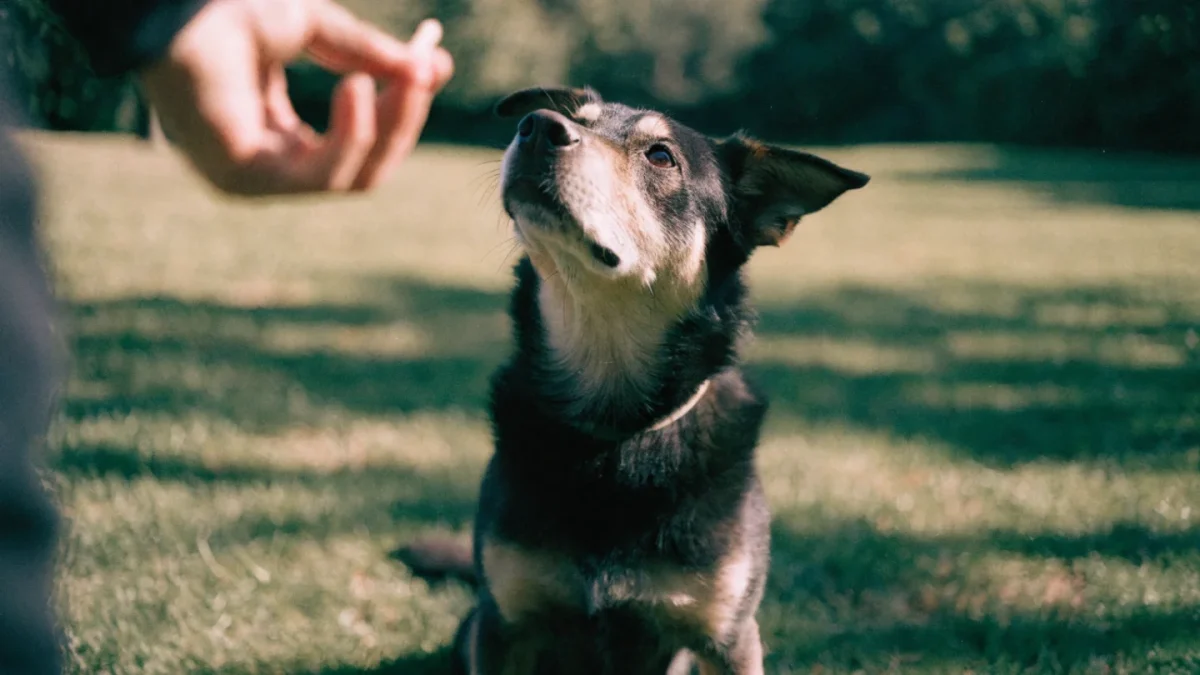
Sit: Treat at nose, move backward over head, rear goes down, mark, reward. Add verbal cue once behavior is happening reliably.
Down: From sit, treat at nose, move straight down to floor, elbows go down, mark, reward.
Come: Name + "come," enthusiastic tone, crouch, make yourself interesting, huge reward on arrival. (See also: first commands to teach your puppy.)
Stay: Duration first, then distance. Reward in position. Use a release word.
Leave it: Treat in closed fist, wait for backing off, reward from other hand.
The same steps, the same timeline. Adult dogs may actually move through these faster than puppies.
For Rescue Dogs Specifically
Give them a few weeks to decompress before formal training. Let them explore the house, establish a routine, learn that your home is safe. Then begin.
Early in the relationship, keep training sessions very positive and very easy. You're building trust as much as teaching behaviors. No corrections, no pressure. Every interaction is data about whether you're someone worth listening to. (See also: training a stubborn dog.)
If you just adopted an adult dog, or have an undertrained adult dog at home: start with sit this week. Five minutes, ten repetitions, a treat they actually want. That's the beginning of everything else.