

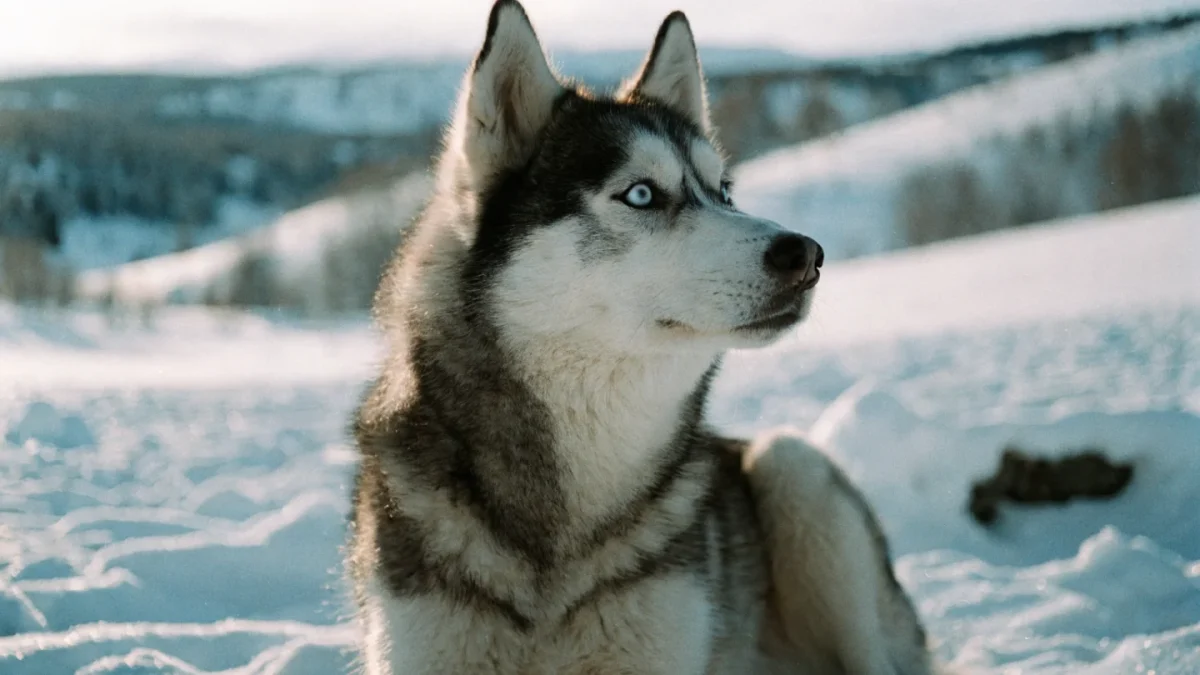
The Spitz family is large — Siberian Huskies, Alaskan Malamutes, Akitas, Samoyeds, Chow Chows, Shiba Inus, Finnish Spitz, Norwegian Elkhound, and others. What they share is a history of working in environments where human direction was limited, delayed, or simply not present.
Huskies ran across frozen tundra in teams. The lead dog had to make route decisions without the musher micromanaging from behind. Akitas hunted large, dangerous game. Waiting for a human to decide what to do next wasn't an option.
That history produced dogs that are capable, athletic, and self-directed — and challenging for owners who expect the responsiveness of a retriever.
The Independent-Thinking Drive
Spitz breeds have lower "biddability" — they don't value human approval as intrinsically as some other breeds. This isn't defiance. It's how they were designed.
A Husky off-leash that ignores a recall cue and continues running isn't being obstinate — they're doing what they were bred to do: run, cover distance, and make their own route decisions. The human calling from behind is not their navigation system.
An Akita that decides a stranger is suspicious and stands their ground isn't being aggressive — they're exercising the guardian judgment that made the breed valuable.
Neither of these behaviors is a training failure. Both require management and realistic expectations.
What Makes Training Work
Find what motivates the individual dog. Spitz breeds are often less food-motivated and less play-motivated than retrievers or herding dogs. The handler has to discover what this particular dog finds valuable and use it as training currency. Some Huskies work hard for specific toys. Some Akitas respond strongly to certain foods that other dogs don't care about. Training independent dogs covers this motivational challenge.
Make yourself the most interesting thing in the environment. This is genuinely harder with Spitz breeds than with more handler-focused breeds. It requires being genuinely fun and unpredictable in training — not boring drills. Quick, varied, enthusiastic sessions beat long repetitive ones.
Set up for management, not just training. Secure fencing is mandatory for Huskies and Malamutes, who are known escape artists and who cannot be trusted off-leash in open areas for most of their lives. Building reliable recall for these breeds requires more investment than with most, and many experienced Husky trainers are honest that reliable open-area recall isn't achievable for many individuals.
Build consistency slowly. Spitz breeds can learn complex behaviors. They often learn quickly when motivated. The issue is that motivation is not unconditional — they're evaluating whether compliance is worth it constantly. Keep the reward high. Make training pay off predictably.
Husky-Specific Notes
- Huskies need extensive physical exercise — running, not just walks. A Husky without adequate exercise will howl, destroy things, and escape looking for something to do.
- They're famously vocal — howling, "talking," and vocalizing during training is normal.
- They have a strong prey drive and should not be off-leash around small animals.
- They can be dramatic in training — if something is frustrating or not worth their while, they may lie down, roll over, or perform what Husky owners call the "Husky flop."
Akita-Specific Notes
- Akitas are generally reserved and may not be demonstrative in the way Labs or Goldens are. This is personality, not disengagement.
- Same-sex aggression is common. Multi-dog households with Akitas require careful management.
- Early socialization is critical — Akitas can become dangerously territorial without extensive positive exposure to diverse people and situations from puppyhood.
The Realistic Picture
Spitz breeds are not going to be off-leash park dogs that come every time called. They're not going to defer constantly and look to you for direction. That's not what they are.
What they are, for the right handler, is fiercely loyal within their bond, athletic and capable, fascinating to train because the challenge is real, and often deeply amusing. A Husky that finally decides you're worth listening to is a different relationship than a Golden Retriever that wanted to please you from day one.
Adjust your expectations. Work with what the breed is. The result — though harder won — is genuinely rewarding.