

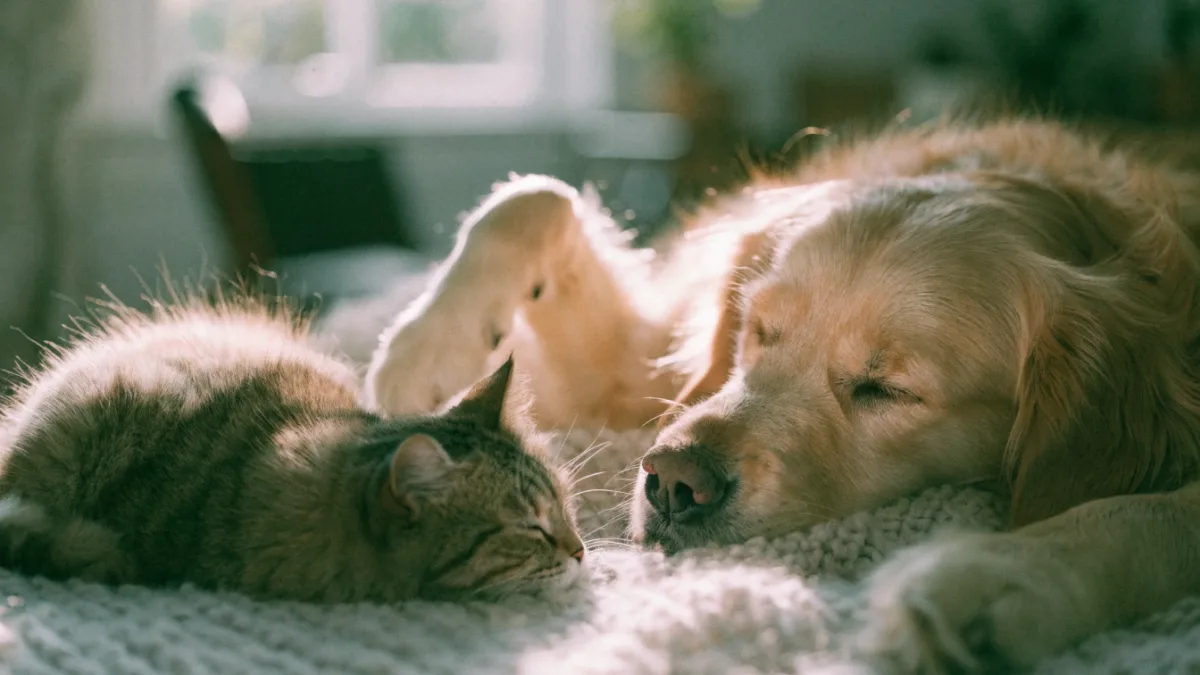
Picture this: a worried owner named Karen rushes her Golden Retriever, Biscuit, into the clinic. She’d been sitting on the couch when she noticed the seven-year-old dog’s paws start paddling furiously against his bed. His lips were twitching, and soft yips escaped his throat. “I thought he was having a seizure,” Karen said, still shaky. “I almost called the emergency line.” The panic is completely understandable. But a quick examination and a few questions settled it: Biscuit was simply dreaming, likely chasing something wonderful across an open field. It’s one of the most common concerns pet parents raise, and honestly, it’s easy to see why those twitching paws and muffled barks can look alarming if you don’t know what’s happening beneath the surface.
What’s Really Happening When Those Paws Start Moving
To understand why your dog or cat twitches in their sleep, it helps to walk through what happens inside the brain during a typical sleep cycle. Mammalian sleep isn’t just one uniform state of unconsciousness. It cycles through distinct stages, and the one that produces all those charming movements is called REM sleep, which stands for Rapid Eye Movement.
During the earlier phases of sleep, your pet enters what’s called Slow-Wave Sleep, or SWS. This is the shallow stage where the body begins to relax, breathing slows, and they can still be woken fairly easily by a sound or a touch. You’ll often see a cat in SWS sitting upright with eyes half-closed, still vaguely aware of the room. But then the cycle deepens, and the brain transitions into REM.
Here’s where things get fascinating. During REM, the brain becomes nearly as active as it is when awake. Blood flow increases, neural firing patterns resemble those of a conscious animal, and dreaming begins. But the body has a built-in safety mechanism to prevent your pet from physically acting out whatever they’re experiencing in that dream. A temporary paralysis called atonia sets in, essentially switching off the major voluntary muscles. The twitching you see is actually small breakthrough movement, tiny signals that slip past that paralysis. It’s completely normal and, in most cases, completely harmless.
The Surprising Science of What Dogs and Cats Dream About
One of the questions I get asked more than almost any other is whether pets actually dream the way we do. The short answer is yes, and we have some remarkably good research backing that up.
The pioneering work in this area came from researchers like Matthew Wilson at MIT, who studied brain activity in sleeping rats. By mapping the patterns of neurons firing in the hippocampus, the brain region involved in memory, Wilson discovered that animals essentially replay their waking experiences during sleep. A rat that spent the day running a maze would show the same neural firing sequence that night, as if running it again in its mind.
If the brain lights up the same way during sleep as it does during waking activities, the most logical conclusion is that the animal is reliving those experiences in dream form.
So when Biscuit’s paws start paddling, there’s a good chance he’s back at the dog park, sprinting after his favorite ball. When your cat’s whiskers quiver and her paws flex, she may be stalking that house finch she watched through the window all afternoon. Their dreams, it seems, are built from the same raw material as ours: memories, desires, and the events of daily life.
Size Actually Affects How Dogs Dream
Here’s a detail that surprises most owners. Research has shown that a dog’s breed size influences their dream patterns. Small breed dogs, like Chihuahuas and Toy Poodles, tend to have frequent, short dreams. Large breed dogs, like Great Danes and Mastiffs, have fewer dreams, but each one lasts longer. Think of a tiny Yorkshire Terrier who seems to have a new dramatic dream every ten minutes during her afternoon naps, set against a Mastiff who will have one extended dream episode lasting several minutes. Same mechanism, different pacing.
Dogs Versus Cats: How Their Sleep Cycles Compare
While the basic architecture of sleep is similar across mammalian species, dogs and cats have some distinctly different sleep habits that reflect their evolutionary histories.
Total Sleep Hours
Dogs sleep an average of 12 to 14 hours per day, with puppies and senior dogs catching up to 18 or even 20 hours of shut-eye. Cats typically clock even more, averaging 13 to 16 hours daily, and kittens or older cats can sleep up to 20 hours. I often joke with my cat-owning clients that felines have essentially perfected the art of napping as a lifestyle.
REM Percentages and Why They Matter
Here’s where it gets interesting. Despite all those hours asleep, dogs only spend about 10 to 12 percent of their total sleep time in the REM stage. Cats do slightly better at roughly 15 to 20 percent. For comparison, humans spend about 20 to 25 percent of our sleep in REM.
Because dogs and cats have shorter sleep cycles overall, they need more total hours of sleep to accumulate the same restorative REM benefits that humans get in a single eight-hour stretch. Their bodies are working harder, in a sense, to get the rest they need.
Polyphasic Sleepers
Humans are what sleep researchers call monophasic sleepers. We do most of our sleeping in one long block at night. Dogs and cats are polyphasic, meaning they cycle through multiple sleep and wake periods throughout a 24-hour day. Your cat might nap intensely for an hour, wake to patrol the kitchen, groom herself, and then settle right back down for another round. This pattern mirrors their wild ancestors, who needed to hunt, rest, hunt again, and stay alert to predators throughout the day.
When Twitching Isn’t Normal: Recognizing Sleep Disorders
Now I need to shift gears, because while most sleep twitching is perfectly healthy, there are cases where it signals something more serious. Differentiating between normal REM activity and a genuine sleep disorder can be tricky, and it’s a diagnostic challenge that even experienced veterinarians sometimes face.
Normal dreaming looks like what I described with Biscuit: gentle, intermittent paw movements, soft vocalizations, maybe some lip-smacking or tail wagging. The movements are relatively brief, the muscles stay mostly relaxed between twitches, and your pet wakes up groggy but normal.
There is a recognized condition called REM Sleep Behavior Disorder, where the brain fails to trigger that protective muscle paralysis. Animals with this disorder physically act out their dreams, sometimes violently. I once worked with a client whose young Labrador, Cooper, would throw himself against walls during sleep, thrashing with stiff, rigid limbs and letting out prolonged, distressed vocalizations. That’s not normal dreaming. That warrants a veterinary evaluation, ideally with someone who specializes in neurology.
The key differences to watch for are intensity, duration, and muscle rigidity. Gentle twitches that come and go are reassuring. Violent, prolonged movements with stiff limbs and a pet who seems exhausted or disoriented upon waking are red flags. If you’re ever unsure, record a video of the episode. I cannot tell you how valuable those videos are when I’m trying to determine whether a pet needs further workup.
Should You Wake a Dreaming Pet?
This is where I have to admit I’ve changed my mind over the years. Early in my career, I told clients to gently wake their pets if they seemed to be having an intense dream, especially if there were distressed vocalizations. The thinking was that you wanted to comfort them.
But the more I’ve studied sleep architecture, the more I’ve come to appreciate why the old saying exists: let sleeping dogs lie. When a mammal is in REM sleep, they lack normal muscle tone. Being suddenly jolted awake can trigger what we call a startle reflex. The pet wakes disoriented, possibly frightened, and may lash out instinctively before they fully register where they are. I’ve seen otherwise gentle dogs snap and cats scratch during these moments, and it’s not aggression. It’s pure confusion.
My current advice is this: if your pet is dreaming peacefully, leave them be. If they seem distressed and you genuinely feel you need to intervene, don’t touch them. Instead, call their name softly from across the room. Let the sound of your voice pull them gradually out of the dream rather than physically startling them awake.
How Age Changes the Picture
Puppies and kittens need extraordinary amounts of sleep, and there’s a biological reason for that. Their central nervous systems are still developing, and they’re processing enormous quantities of new sensory information every waking hour. Sleep, particularly REM sleep, is when the brain consolidates learning and forms neural connections. A twelve-week-old puppy sleeping eighteen hours a day isn’t being lazy. They’re quite literally building their brain.
On the other end of the age spectrum, senior pets face different challenges. One of the most significant recent developments in veterinary medicine is the recognition of Canine Cognitive Dysfunction, or CCD, a condition similar to Alzheimer’s disease in humans. Researchers are finding strong connections between disrupted sleep-wake cycles and the onset of CCD. Senior dogs who begin pacing at night, sleeping fitlessly, or reversing their day-night schedule may be showing early cognitive changes rather than simple aging. If you notice these shifts in an older pet, mention them to your veterinarian. There are interventions that can help.
Veterinary neurology has also embraced polysomnography, the same sleep study technology used in human medicine, to map brainwave activity in pets with unprecedented precision. We’re learning more every year about how companion animals sleep and what happens when that sleep goes wrong. Even consumer technology, like accelerometer-based smart collars, now allows owners to track their pet’s rest patterns at home. While I always review these data with some caution, they can provide useful baselines and help spot concerning changes over time.
The Takeaway
The next time you catch your dog’s paws paddling softly against the air or your cat’s whiskers trembling in her afternoon nap, take a moment to appreciate what you’re witnessing. Those small movements are evidence of a deeply ancient biological process, one shared across the mammalian family tree. Wolves dream. Lions dream. Elephants dream. Your sleeping pet is connected to something wild and fundamental, a nightly ritual of memory processing and neural restoration that has helped mammals survive and adapt for millions of years.
Watch them, smile, and let them dream. And if something ever feels off, whether the movements seem too intense or your senior pet’s sleep patterns are shifting in worrying ways, don’t hesitate to reach out to your veterinarian. That’s what we’re here for.