
Some dogs are weather snobs. They look at rain, take one step outside, and sit down with the conviction of someone who has just done an extensive cost-benefit analysis.
Others will run into a blizzard like it's the best day of their life.
Regardless of where your dog lands on that spectrum, most dogs need regular outdoor time regardless of conditions. Here's how to handle the main weather scenarios.
Rain
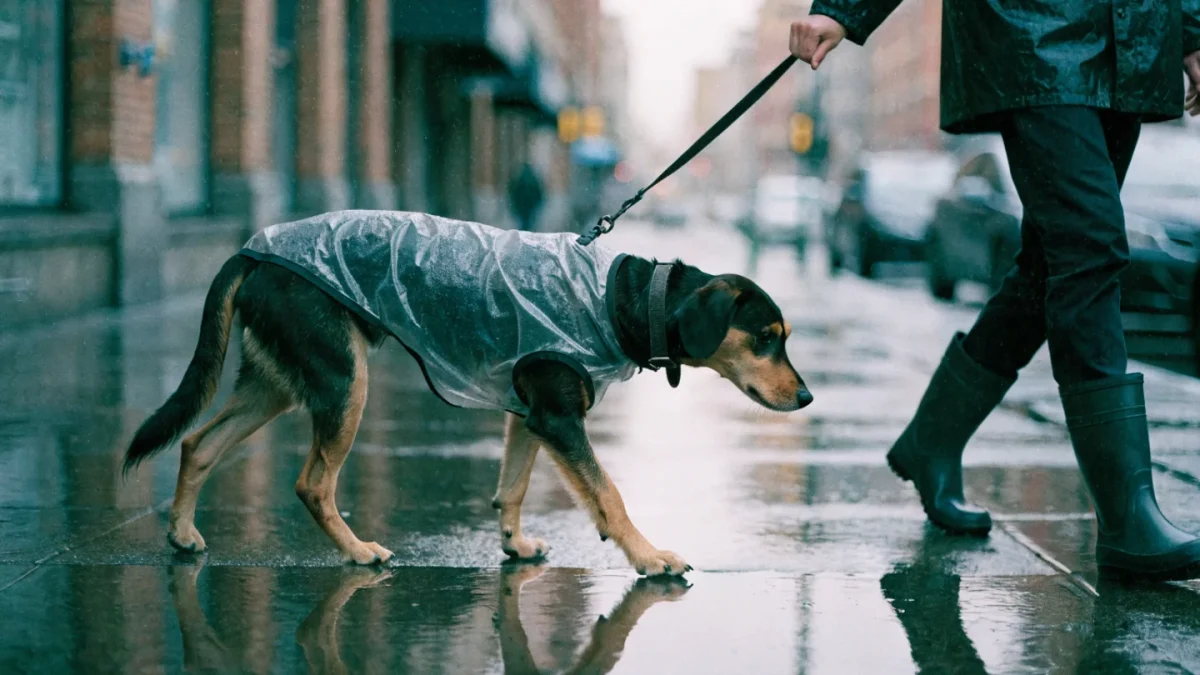
Most dogs don't need rain gear. They'll get wet and be fine. Drying them off when you get back is all that's usually required — especially important for dogs with thick, slow-drying double coats that can hold moisture against the skin.
Dogs that do better with coverage: Lean, short-coated breeds (Greyhounds, Whippets, Dobermans) chill faster when wet. Small dogs with low body mass lose heat quickly. For these dogs, a simple rain jacket helps significantly.
Paws in rain: Puddles on treated roads can contain runoff from road chemicals. Rinse paws when you get home.
Thunder-anxious dogs: Rain often comes with storms. If your dog is fine with rain but falls apart with thunder, work on desensitizing to recorded thunder sounds separately. Walk in rain without thunder first.
Snow and Cold
Temperature tolerance is breed-dependent. Arctic breeds (Huskies, Malamutes, Samoyeds) love snow and can handle significant cold. Short-coated, lean, or small breeds feel cold much faster. Know your dog's limit.
Paw protection is the bigger issue. Walking on snow isn't usually the problem — it's ice and on surfaces treated with deicing chemicals. These can cause chemical burns on paw pads and are toxic if licked. Options: boots (take time to introduce properly, as dogs need to get used to them), paw wax applied before walks, or rinsing paws immediately after.
Signs a dog is too cold: picking up feet, shivering, hunching posture, reluctance to move forward. Don't push past these signals.
Keep winter walks shorter for cold-sensitive dogs. Multiple short walks may serve a cold-sensitive dog better than one long one.
Heat
High temperatures are harder on dogs than cold. Dogs cool primarily through panting, which is less efficient than sweating.
Hot pavement burns paws. If pavement is too hot to hold your hand on for 5 seconds, it's too hot for your dog's paws. Walk in early morning or evening. Grass and dirt surfaces absorb less heat.
Humidity matters. Very humid conditions reduce a dog's ability to cool through panting. A 30°C day in high humidity is more dangerous than 30°C in dry heat.
Signs of heat distress: excessive panting, drooling, slowing down significantly, seeking shade, vomiting, or collapse. This is an emergency — cool the dog down immediately and contact a vet.
Short-nosed (brachycephalic) breeds — Bulldogs, Pugs, Boxers, French Bulldogs — are especially vulnerable to heat. They have structurally impaired cooling ability. Limit their exercise significantly in warm weather. (See also: dog won't walk on leash.)
When to Skip the Walk
Some conditions genuinely warrant staying inside:
- Electrical storms (not just rain)
- Extreme cold or heat beyond your dog's tolerance
- Ice so slick that falls are likely (risk of injury to both of you)
- Active weather warnings
On skip days, indoor enrichment — training sessions, puzzle toys, indoor fetch — can substitute for part of the walk's mental stimulation.
Adjust expectations with weather. Your dog doesn't need a 45-minute hike in a hailstorm. A 10-minute functional walk that meets their basic needs plus good indoor enrichment is a reasonable cold/rainy day plan.