

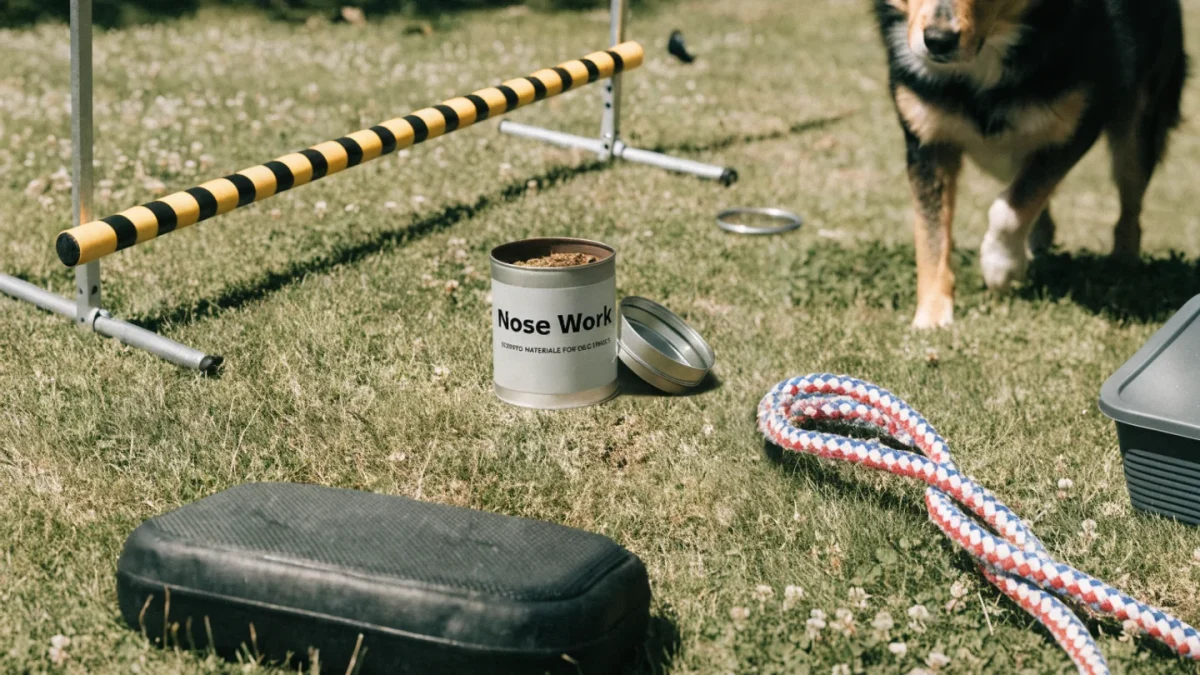
I've watched handlers push a mellow Basset Hound through agility courses and drag an over-excited Malinois through nose work boxes. Neither dog was having fun. The handlers were frustrated. The sports themselves weren't the problem — the match was.
Dog sports work best when the activity aligns with what the dog already wants to do. Here's how to think through the match.
The Fundamental Question: What Does Your Dog Want?
Before looking at sports, look at your dog. When they're loose in the backyard or on a walk, what are they doing?
- Following their nose constantly, checking every scent trail: Nose work, tracking, barn hunt
- Chasing anything that moves: Lure coursing, flyball, flirt pole-based sports, fetch sports
- Staring at you and wanting constant interaction: Agility, rally, canine freestyle, trick sports
- Trying to herd children or other dogs: Herding, treibball
- Digging into everything: Earthdog, barn hunt
- Carrying things in their mouth: Dock diving, hunt tests, field sports
- Jumping and climbing everything in sight: Agility, parkour
That behavior — the unrequested behavior you see all the time — is the drive you want to channel.
By Breed Group
Herding breeds (Border Collies, Australian Shepherds, Shelties, Corgis, etc.)
These dogs think in patterns and movement. They're wired to problem-solve, work at a distance, and respond to subtle directional cues. Agility is a natural fit — it uses their directional sensitivity and drive for precision. Herding trials for breeds with herding instinct. Canine freestyle for dogs that want a creative outlet. Treibball (herding exercise balls into a goal) is a great outlet for dogs without access to livestock.
Sporting dogs (Labs, Goldens, Setters, Spaniels, Pointers)
Built to work with hunters — finding game, flushing, and retrieving. Hunt tests, field trials, and dock diving all draw on this instinct. Nose work is natural for the pointing and flushing breeds. Fetch-based sports and sporting dog clubs are an easy entry.
Terriers (Jack Russells, Cairns, Scotties, West Highland Whites, etc.)
High prey drive, independent, and persistent. Barn hunt and earthdog were made for these dogs. Agility can work for the higher-drive terriers with enough handler relationship built first. Trick training works well as a brain engagement activity.
Hounds (Beagles, Bloodhounds, Basset Hounds, Greyhounds, etc.)
Split into scent hounds and sight hounds. Scent hounds are exceptional nose work dogs — possibly the best out there. Tracking and barn hunt are natural. Sight hounds (Greyhounds, Whippets, Italian Greyhounds) thrive in lure coursing and oval racing sports.
Toy breeds (Chihuahuas, Pugs, Cavaliers, Pomeranians, etc.)
Small doesn't mean low-drive. Trick training and rally are excellent fits for toy breeds. Nose work works for any size dog. Agility with appropriately sized equipment suits many toy breeds. Don't let size be a limiter.
Working breeds (Dobermans, Rotties, Boxers, Giant Schnauzers)
Intelligent, driven, and need a job. Protection sports (Schutzhund/IPO/IGP) are purpose-built for some of these breeds. Advanced obedience, tracking, and mondioring are other competitive outlets. These breeds often need more sport than casual enrichment provides.
Giant breeds (Great Danes, Mastiffs, Bernese Mountain Dogs, Newfoundlands)
Lower intensity suits the joint structure of giant breeds. Nose work, rally, cart pulling, water rescue (Newfoundlands), draft dog events. Avoid high-impact repetitive jumping for large breeds with joint predisposition.
When Breed Doesn't Tell the Whole Story
Individual variation matters. A Golden Retriever that genuinely doesn't care about retrieving exists. A Poodle that's the best agility dog in the building exists. Breed gives you tendencies, not certainties.
If your dog's instincts don't match the breed description, trust the dog in front of you over the breed profile. Try multiple sports and see what makes your dog's eyes light up.
Breed-specific training explains why genetics influences learning style and drive, but the choice of sport is ultimately about the specific dog. (See also: exercise requirements by breed.)
How to Try Before Committing
Most sports have "fun matches" or open training days for first-timers. Go to one. Watch your dog's body language — forward, engaged, loose, and tail up is a good sign. Tense, disengaged, or stressed is a sign to try something else.
A dog that loves the activity is a dog that will work for it. That's where the real training progress lives.