

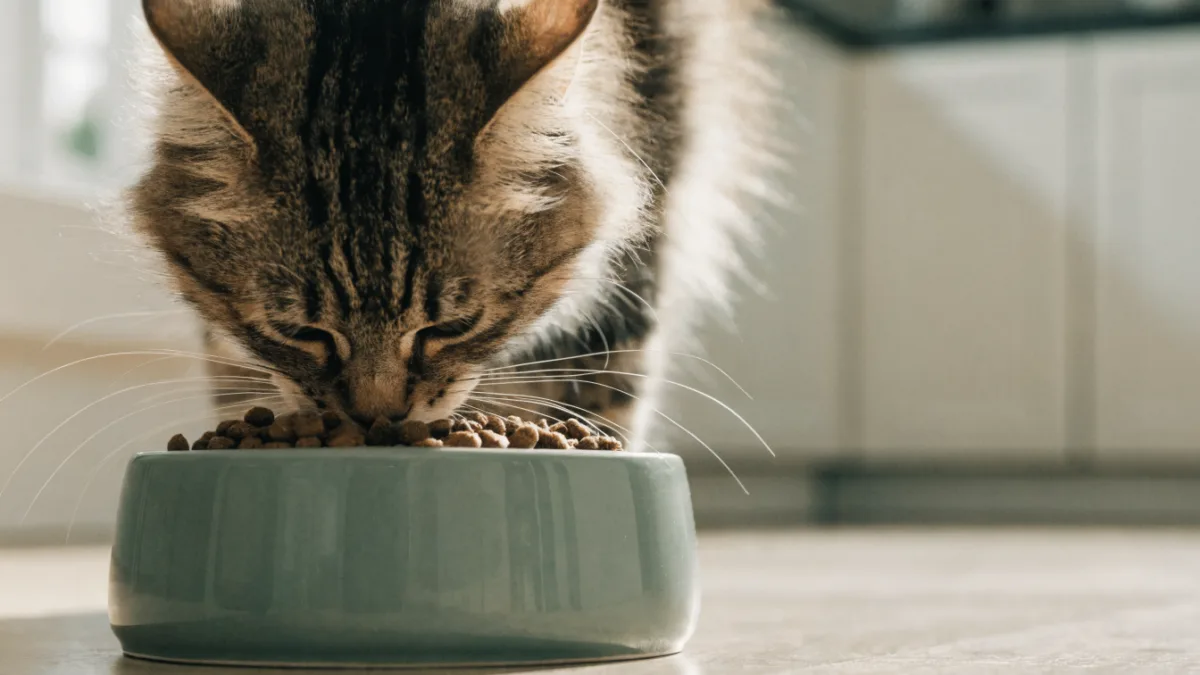
You know that infuriating feeling when you spend half your paycheck on the fancy, grain-free wet food, only for your cat to take two sniffs, paw at the floor around the bowl, and walk away in absolute disgust? Yeah, I lived that exact Tuesday last week. My cat, Mochi—a calico with the personality of a disgruntled middle manager—decided her expensive dinner was suddenly beneath her. She was actively scavenging for literal crumbs on the floor instead of touching the pristine pile of pâté in the center of her bowl. I thought she was just being a diva. I was wrong.
After watching her awkwardly hover over her dish, practically doing cat-planks to reach her food without touching the sides of the bowl, it hit me: the problem wasn’t the food. It was the bowl. Welcome to the weird, wildly debated world of whisker fatigue and scent saturation. It turns out, the cute, deep ceramic bowl I bought because it matched my kitchen was basically a sensory torture device.
The Anatomy of a Whisker (And Why It Matters at Dinner Time)
If you look closely at your cat’s face, those long, elegant hairs aren’t just there for aesthetic cuteness. They are highly specialized sensory organs called vibrissae. Unlike regular fur, whiskers are embedded much deeper into the cat’s body, and the base of each whisker is packed tight with nerve endings. Think of them as highly tuned radar antennas.
These nerves are designed to detect minute changes in air currents and spatial boundaries. If a mouse moves three feet away in pitch black darkness, the tiny shift in the air current hits the whiskers, allowing the cat to pinpoint the exact location. It is also how they map the physical dimensions of the world around them. When they shove their face into a narrow space and their whiskers touch the sides, their brain instantly registers that the gap is too small for their body. This is why they absolutely hate having their whiskers touched—it provides a sudden, overwhelming amount of sensory input to their brain. It’s disorienting, not just annoying.
The Mechanics of the Bowl
When you serve food in a deep, narrow bowl—usually the exact type of bowl sold in most pet stores—you are forcing your cat to shove their entire face into a hole. Every time they take a bite, their whiskers brush against the plastic, ceramic, or metal walls. To us, it feels like a gentle tap on the cheek. To a cat, it’s like standing in front of a massive speaker at a rock concert. That constant, repetitive overstimulation causes genuine environmental stress.
Look, if we were talking about a dog refusing to eat out of a bowl, I’d tell you to call my friend Jake. He handles the dog training side of things, and a dog’s motivation is completely different. But cats don’t do “training” when it comes to their physical comfort. They do demands. And Mochi was demanding a change.
The Smell Trap: What is Scent Saturation?
But wait, the bowl shape doesn’t just annoy their face; it messes with their nose. Cats have an incredibly powerful sense of smell, and their appetite is largely driven by scent, not taste. If they can’t smell it, they won’t eat it. This is exactly why you have to warm up refrigerated wet food to get a picky cat interested.
When food is dropped into a deep, narrow canyon of a bowl, the odors get trapped. Instead of a pleasant whiff of salmon, the scent funnels up and concentrates, blasting the cat’s olfactory system every time they lean in. In a deep bowl, the intense, trapped scent of food can overwhelm their senses. Combine that with the physical sensation of their whiskers being constantly bent back against the walls, and you’ve created a highly unpleasant eating experience.
Your cat is simultaneously getting face overstimulation and nose overstimulation. It’s the equivalent of trying to eat a spicy lasagna in a cramped mailbox while someone blows a foghorn of garlic breath in your face. No wonder they’re pacing.
Signs Your Cat is Over the Bowl
Cats are masters of passive aggression, so they won’t exactly hand you a written complaint about their dinnerware. You have to read the room. If your cat is experiencing whisker stress or scent saturation, they’ll usually show you through some incredibly annoying, highly specific habits:
- The Scavenger: They leave food in the bowl but will gladly scavenge for scraps or kibble you accidentally dropped on the floor.
- The Excavator: They physically knock food out of the bowl with their paws or nose, then eat it off the ground. If they are knocking food out of the bowl to eat it off the ground, they are trying to tell you something.
- The Center-Only Eater: They only eat the food in the exact center of the bowl, leaving a perfect, untouched ring around the edges because reaching it means touching the bowl.
- The Hoverer: They approach the bowl hesitantly, act aggressive, or pace around the food because they are hungry but stressed about the eating process.
Mochi was a textbook Center-Only Eater. She’d meticulously eat the center of her food and then scream at me like I was starving her, all while a perfect, untouched ring of food sat around the edges. I finally realized she was eating only the pieces she could grab without her whiskers touching the sides. (And of course,.[1] started popping up on my feed right after I figured this out. The algorithm knows all).
Is Whisker Fatigue Real or Just Fancy Marketing?
Here is where things get a little spicy in the veterinary and pet-care communities. “Whisker fatigue” is not a medical disease. According to [2] Because of this, there is an active, sometimes heated debate over whether whisker fatigue is a genuine welfare issue or a brilliant marketing strategy invented to sell wider, more expensive pet bowls.
Some veterinarians argue that cats have eaten out of standard bowls for decades without widespread issues. They suggest that feline behavioral issues around food are far more likely related to factors like food freshness, competing pets, or the location of the bowl, rather than a sudden epidemic of whisker pain.
However, there is a growing trend in veterinary behavioral research: taking “internet pet phenomena” and applying rigorous scientific methods to them. A notable [3] actually put whisker stress to the test. Researchers evaluated feline whisker stress by tracking the amount of time cats spent eating from a commercially available “whisker-friendly” dish compared to their standard, everyday food bowl.
The goal was to see if the claimed stressors held up under scientific scrutiny. They found measurable differences in how the cats interacted with the different dishes, proving that the shape of the dish genuinely alters feline eating behavior. The biological reality of whisker sensitivity is an undisputed fact, so even if “whisker fatigue” sounds like a marketing buzzword, the discomfort is real. Of course, if your cat suddenly stops eating entirely, put down the bowl catalog and call your vet. Sudden appetite loss is usually a sign of something medical that needs professional attention, not just a design flaw in your kitchen.
Solving the Dinner Dilemma
You absolutely do not need to buy a $40 “whisker relief” bowl with a fancy brand name slapped on it. The solution to both whisker fatigue and scent saturation is beautifully simple: flatten the eating surface.
Look for shallow, wide dishes. The golden rule is that the bowl should be wider than your cat’s face, whiskers included. A flat saucer or a very shallow, wide dish works perfectly. Honestly, a basic human salad plate or a wide pasta bowl often works better than half the stuff in the pet aisle.
You want materials that are incredibly easy to clean. Ceramic or stainless steel are your best bets. I cannot stress this enough: avoid plastic. Plastic traps bacteria in microscopic scratches and holds onto old smells, which only makes the scent saturation problem ten times worse, and it can cause feline acne. Some modern pet brands design feeding stations with tilted angles specifically to address this growing consumer awareness. These tilted bowls can be fantastic, especially for older cats who might have arthritis and don’t want to bend their stiff necks down as far.
Since switching Mochi to a flat ceramic saucer, the food rings have vanished. She finishes her meals, the pacing has stopped, and I no longer have to sweep up paw-knocked kibble every morning. It turns out, she wasn’t a diva; she was just trying to eat dinner without her face screaming at her.
Taking the time to understand our pets’ quirks—even the microscopic, everyday ones like how their whiskers feel against a bowl—is what elevates us from people who own animals to people who share their lives with them. While domestic cats aren’t facing extinction, their environmental enrichment and daily stress levels are a major focus in the field of domestic animal welfare. Creating a stress-free environment means looking at the world from their perspective—even if that perspective is buried at the bottom of a terribly designed food bowl.
Sources
- viral videos demonstrating how cats get stressed through their whiskers — instagram.com
- PetMD, veterinary professionals emphasize that it is a behavioral and environmental stressor, not an illness — petmd.com
- 2020 study published in PubMed Central by JE Slovak — pmc.ncbi.nlm.nih.gov