

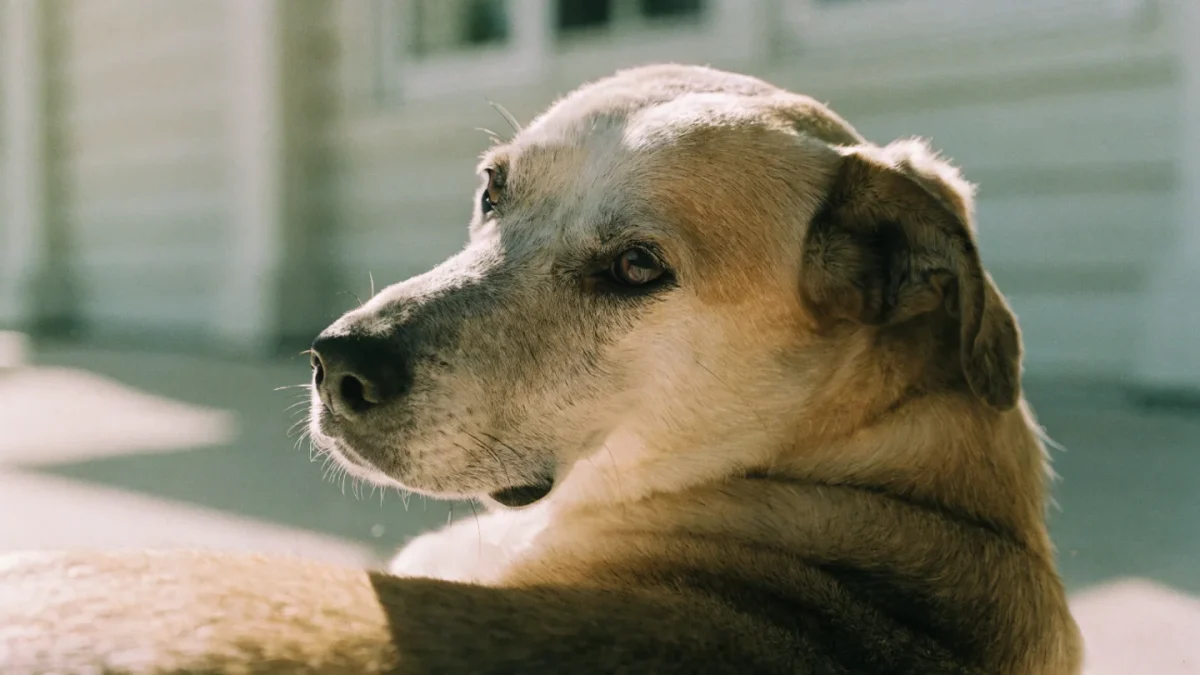
Let me tell you what Benny's mornings look like.
He wakes up slowly. Not because he's not a morning dog — he absolutely is — but because he takes time to assess the situation before committing to it. He stretches each leg individually. He yawns in stages. He looks around the room with the methodical energy of a project manager reviewing his inbox, and then he walks directly to his food bowl.
He does not sprint. He does not bark. He has not once, in two and a half years, destroyed a single object.
He's ten.
The Thing Nobody Tells You About Older Dogs
Senior dogs — I mean dogs seven and up, depending on size — are often the easiest dogs to live with that most people will ever encounter. Not because they're less themselves, but because they've already done the work. The chewing phase is behind them. The "testing every possible rule" phase is behind them. They know how to be a dog who lives with people. They just need the opportunity to do it again.
Benny knew "sit," "stay," "off," and "leave it" from day one. He was house-trained. He understood that the cats were not his to chase (it took maybe three days of gentle correction and then he just… didn't). He could be left alone for hours without incident.
I have friends who spent the first year of their puppy's life in crisis management. I did not.
The Personality Question
Here's the thing about puppies: you don't really know what you're getting. Breed gives you some information. Temperament testing gives you some. But the actual personality of the adult dog — will they be mellow or intense, social or reserved, independent or velcro — is genuinely uncertain until they mature.
With a senior dog, you know. The rescue or foster family has been living with this animal. They can tell you whether he's food-motivated or toy-motivated, whether he loves strangers or takes time to warm up, whether he's comfortable alone or needs more company. The uncertainty that makes young dog adoption genuinely unpredictable is largely gone.
This is, depending on your situation, a significant advantage. If you need a dog that will be okay in an apartment with a specific exercise level, a senior dog is a much safer match than a puppy.
The Energy Level Reality
I say this with full love for young dogs: they are exhausting.
A young high-energy dog in the wrong home, with the wrong exercise level, with insufficient mental stimulation — that dog develops problems. Destructive behavior, anxiety, reactivity. Not because they're bad dogs. Because they have a need that isn't being met.
Senior dogs, in most cases, have lower exercise requirements. Benny gets two walks a day and is satisfied. He's not the dog for someone who wants a running partner for eight-mile trail runs. He is the dog for someone whose life involves regular but moderate activity, who wants a companion that's present and warm without being a perpetual motion machine.
For a lot of households — people with demanding jobs, smaller spaces, physical limitations, other commitments — a senior dog is a more realistic fit than people realize.
The Bond Question
I've heard people worry: will an older dog even bond with me? They had a life before this. They might be waiting for their original family.
What I've observed, including with Benny: animals bond to whoever provides safety and consistency. He doesn't pine for his previous life. He doesn't seem haunted by it. He's fully here, fully attached to this specific household and these specific routines.
If anything, I think older animals who've experienced loss — a family that gave them up, the disorientation of shelter life — recognize stability when they find it. They lean into it. Benny the velcro-dog who follows me to the bathroom is not behaving like an animal who is waiting for something better. He found the good thing and he knows it.
What You're Trading For This
I won't skip the real part: you have less time.
That sentence is shorter to write than it is to sit with. Benny is ten. If I'm lucky, I have five or six more years with him. That is not nothing. But it is not what I would have with a dog I'd adopted at two.
The way most senior dog people I know have made peace with this is some version of: the quality of the time we have is high, the relationship is what I hoped for, and the grief will be proportional to the love. Which means it will be significant. But so was the love.
For the full picture of what senior adoption involves, including health costs and home adjustments, the full senior pet adoption guide covers the practical reality in detail. And when you're ready to think about the hard parts, challenges you might actually encounter doesn't sugarcoat it.
FAQ
How do I find senior dogs available for adoption?
Petfinder and Adopt-a-Pet both allow you to filter by age. Breed-specific rescues often have older dogs, and municipal shelters — which tend to have the highest intake of surrendered older dogs — are worth checking regularly. Setting up alerts for specific ages and breeds speeds things up considerably.
Are senior dogs harder to train?
Old dogs absolutely can learn new things — the "old dogs can't learn new tricks" thing is genuinely false. What's different is that senior dogs often come with existing habits (good and less good) and may take more repetitions to form new ones. Basic manners are usually already established. More complex new behaviors take patience but are achievable.
What are the signs that a senior dog is healthy enough to adopt?
Your best source is the vet who's been seeing them. Ask for a recent wellness exam report. Key things to look for: stable weight, good body condition, no untreated dental disease (which affects overall health significantly), and managed conditions documented with treatment plans. Some health conditions are manageable with medication and don't preclude a good quality of life.
Do senior dogs do well with kids?
Depends entirely on the individual dog and the individual kids. Many senior dogs are genuinely excellent with children — calmer, less likely to accidentally knock them over, more tolerant of noise. Others have history with children that makes them anxious or reactive. The key is being specific: ask the rescue about this dog's history with kids, arrange a meet if possible, and do a slow, supervised introduction.