

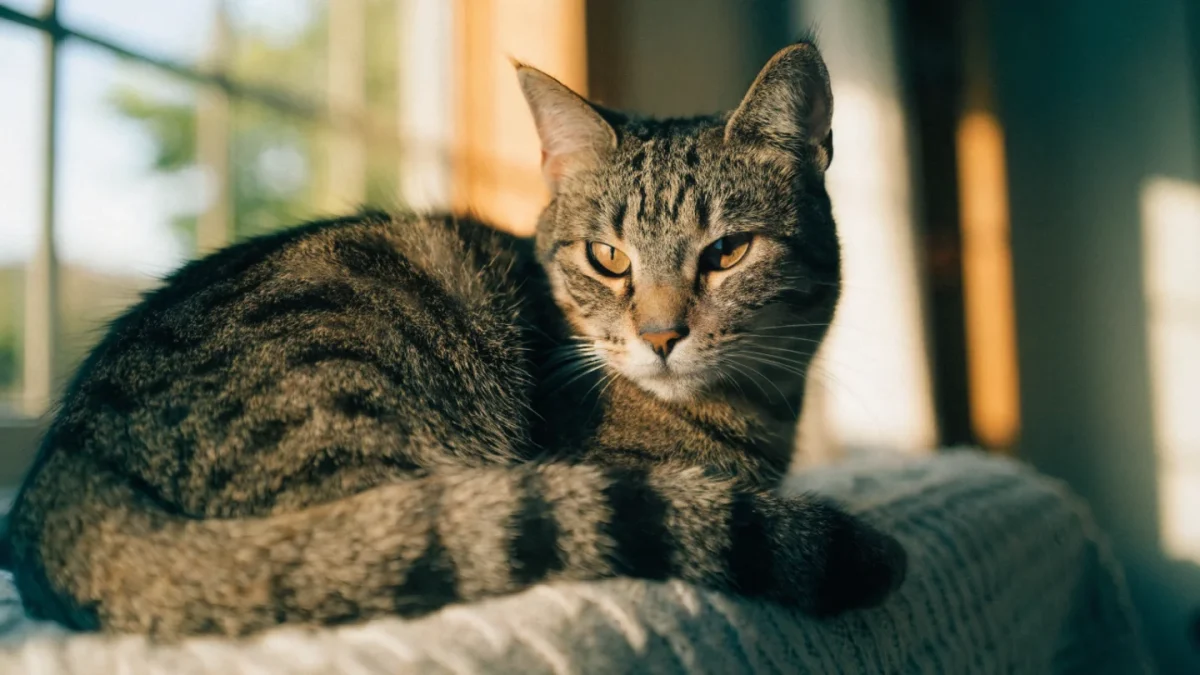
Miso is nine now — technically senior, though she has not received this news gracefully. She is as opinionated and food-obsessed as she was at two. But she's also fundamentally different from the terrified cat who arrived seven years ago. She has opinions about where I sit. She sits close to me on her terms. She makes her preferences known through a vocabulary of very particular stares.
I got Miso when she was young-ish and watched her develop. But I also know people who adopted cats at ten, twelve, fourteen — and what they describe is a particular quality to those relationships that's different from what I have with Miso, not lesser.
Let me tell you what those people tell me.
The Calm You Actually Get To Enjoy
Young cats are a delight. They're also a lot. The midnight zoomies through your bedroom. The carpet-shredding phase. The way they discover counters exist and decide the rules don't apply to them. The 4am breakfast demands. The experimental phase where every object in your home is a toy.
Senior cats are past all of this.
Not because they're boring — they're not. They still play, many of them, with real enthusiasm. They still have personality in spades. But they've moved past the energetic chaos of youth into something more settled. They know what they like. They know how they want to spend their days. They know you're the person who feeds them and they've made a deliberate choice to be near you.
There's something qualitatively different about being chosen by a cat who chooses deliberately.
You Know Who You're Getting
I said this about senior dogs too, and it's equally true for cats. The personality of a senior cat is established and visible. The rescue or shelter can tell you: does she like to be held? Does she do well with other cats? Is she shy initially or immediately friendly? Does she follow people around or prefer independence?
With a kitten, you're making an educated guess. With a senior cat, you're choosing someone whose fundamental self is already formed. If you have specific needs — a calm apartment companion, a cat who tolerates handling, a lap cat, a more independent cat — a senior cat is a much safer match.
Affection on Developed Terms
This is the part I find most compelling when people tell me about their senior cats.
For more on adopting a senior dog, that resource covers this in depth.
A kitten's affection is partly undiscriminating — they're in their socialization window, they bond to whoever's present, they haven't yet learned to be selective. A senior cat who climbs into your lap, or who follows you to every room, or who greets you at the door — that cat has seen some life, has experience with humans, has decided you specifically are worth their proximity.
A friend adopted a 13-year-old calico named Frances from a shelter where she'd been for six months. "She sat in my lap on the drive home," she told me, "and I thought: you've decided. You chose me." She teared up saying it. Frances is now 15 and, by all accounts, still very much Frances.
The Practical Advantages
Beyond the relational: senior cats are often already litter-box reliable. They've outgrown destructive scratching phases (though cats scratch throughout their lives — it's normal; the chaotic unsocialized scratching of youth is different). They're not climbing your curtains or knocking everything off your shelves as sport.
Many have been in homes before and understand the rhythms of domestic life. They adjust to new environments with less of the frantic energy kittens bring.
What You're Exchanging
Less time. Potentially more health costs, especially in the final years. The realistic knowledge, when you adopt a twelve-year-old cat, that the timeline is shorter.
Every senior cat adopter I know has thought about this. And every single one of them — without exception, in my experience — has said the relationship was worth it.
Some of them have gone back and adopted another senior cat after the loss.
There's something about choosing an animal that the world was passing over, giving them a final chapter of warmth and stability, and receiving in return the specific kind of love that older cats give — that proves difficult to replicate with any other kind of adoption.
For all the practical detail on senior adoption — health considerations, home adjustments, costs — the complete senior adoption guide is the place to start. If you're worried about the hard parts, challenges that often aren't as hard as they sound addresses them honestly.
FAQ
Can a senior cat adjust to a new home?
Yes, though it may take longer than a kitten. Senior cats rely heavily on familiar environment and routine, so the first weeks can involve some anxiety and hiding. Most settle within a few weeks to a couple of months. Keeping the environment as stable as possible — consistent feeding times, a quiet adjustment space, low pressure — speeds this considerably.
Are senior cats expensive to care for?
Potentially more than young cats, yes — increased vet visits, possible medications, management of chronic conditions like hyperthyroidism or kidney disease which are common in older cats. This is worth factoring into your budget honestly before you adopt. But many senior cats are perfectly healthy for years after adoption.
Do senior cats get along with other cats?
Depends on the individual, not the age. Some senior cats have lived with other cats and do fine. Others are strongly bonded to solitude and find new animals extremely stressful. The rescue or shelter will know the cat's social history — ask specifically.
Is a senior cat a good first cat?
For many people, actually yes. Senior cats are easier to read than kittens and easier to manage. The main consideration is realistic financial planning for potential veterinary costs. If you're prepared for that and looking for a calmer introduction to cat ownership, a senior cat can be an excellent first.