

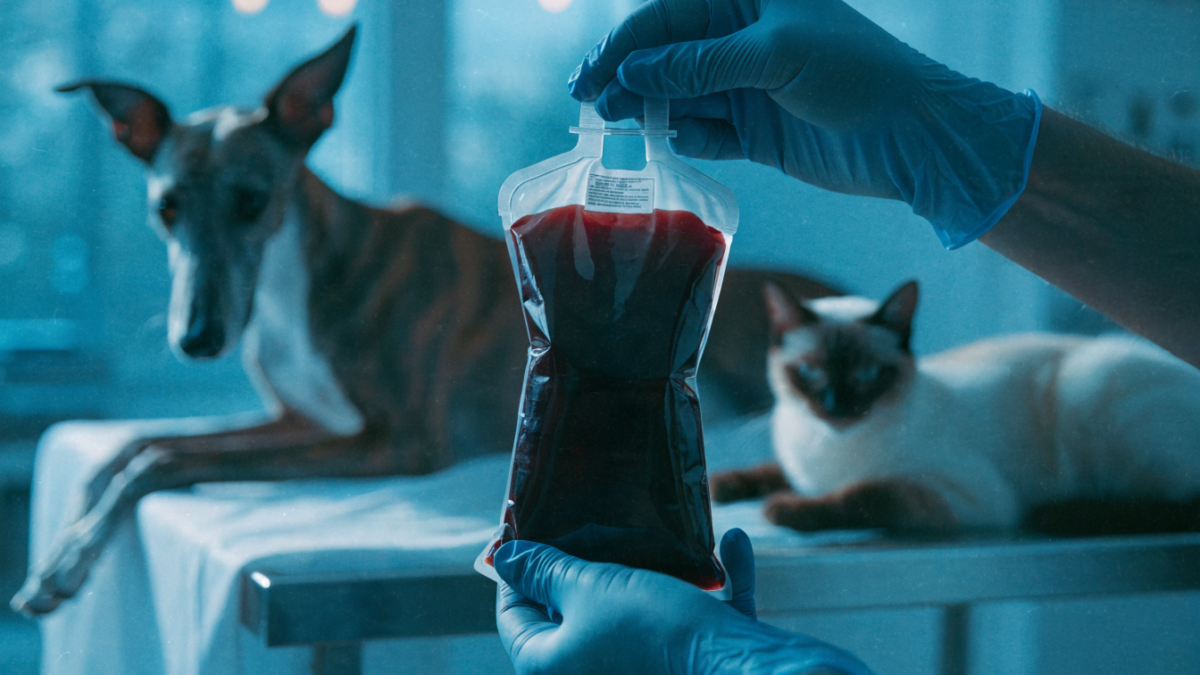
I’ll never forget the night two critical patients came into our emergency clinic within minutes of each other. First was Barnaby, a five-year-old Golden Retriever who had happily swallowed a handful of rat poison his owner had hidden in the garage. His owner, Mark, was frantic, telling me, “He just chewed right through the box.” Within ten minutes, Elena rushed in carrying Cleo, a three-year-old Cornish Rex cat who had been hit by a car. Both animals were bleeding internally and desperately needed blood transfusions to survive.
As my team sprang into action, the stark difference between canine and feline physiology became alarmingly apparent. For Barnaby, grabbing a bag of universal donor blood from the fridge was a safe, immediate lifeline. For Cleo, a quick mismatched transfusion could have killed her faster than her injuries. To understand why, we have to look at one of the most fascinating puzzles in veterinary medicine: why cats only have three blood types, while dogs have at least thirteen.
The Feline AB System: Fewer Options, Bigger Risks
Let’s start with Cleo. Cats operate on a relatively simple blood typing system known as the AB system. They have Type A, Type B, and a very rare Type AB. Unlike humans, there is no universal Type “O” in cats. If I had run a quick test and found out Cleo was Type B, giving her standard Type A blood would have triggered a fatal acute hemolytic reaction.
This happens because cats possess strong, naturally occurring alloantibodies (NOAbs). Think of these as preset attack drones in the immune system. Without ever having had a blood transfusion or been pregnant, a cat’s immune system is already hardwired to violently attack foreign blood cells. If a Type B cat receives Type A blood, their immune system destroys the new cells within minutes, leading to shock and often death.
Because of this, we have to be incredibly careful. The vast majority of domestic shorthair cats are Type A, but genetics play a huge role here. Certain purebred cats, like British Shorthairs, Devon Rexes, and Cornish Rexes—like my patient Cleo—have a much higher prevalence of Type B blood.
The Curious Case of Type AB
Then there is Type AB, which is incredibly rare. These cats are the only true universal recipients in the feline world. If you have a Type AB cat, they can safely receive Type A or Type B blood. However, their blood can only be given to other Type AB cats. They are incredibly valuable donors, but finding one is like finding a needle in a haystack.
The Canine DEA Puzzle: Why Do Dogs Have 13+ Blood Types?
Now let’s look at Barnaby the Golden Retriever. Why was his transfusion so much more straightforward? It all comes down to evolutionary divergence and genetics. Over thousands of years, dogs and cats developed entirely different proteins and carbohydrates on the surface of their red blood cells.
Dogs have a highly complex blood typing system with up to thirteen recognized blood types, collectively known as DEA, or Dog Erythrocyte Antigens. The most prominent ones we look for are DEA 1, DEA 3, DEA 4, DEA 5, and DEA 7. And the science is still evolving—recently, researchers have identified entirely new canine blood groups outside the traditional DEA framework, such as the Dal and Kai systems. As testing becomes more advanced, we are realizing that the “thirteen blood types” number might just be the tip of the iceberg. A [1] highlighted how much we are still learning about companion animal blood groups.
“While human blood types are neatly categorized into A, B, AB, and O, the canine system uses a numerical and alphabetical naming convention. However, there is an ongoing debate in the veterinary field regarding standardizing this terminology as we discover new groups.”
The “Universal Donor” Myth and First-Time Forgiveness
So, why can dogs receive a first-time transfusion more easily than cats? Dogs lack those aggressive, naturally occurring attack drones (NOAbs). If a dog has never had a blood transfusion or been pregnant before, their immune system is generally naive to foreign blood types. This means a mismatched first transfusion is usually forgiving—the blood will survive in the body long enough to save the dog’s life.
Because of this, dogs can be universal donors. A true canine universal donor is typically negative for DEA 1.1, 1.2, and 1.3. When Barnaby came in dying of rodenticide poisoning, we didn’t have time to run a full blood panel. Because he had never had a transfusion, I could safely hang a bag of DEA 1-negative blood. His body accepted it without a fight, buying us the time we needed to administer Vitamin K and stop the internal bleeding.
To Type or To Cross-Match? The Clinical Debate
While Barnaby was saved by a universal donor, relying on them isn’t always best practice. There is a frequent clinical debate in veterinary medicine regarding whether it is more cost-effective and accurate to run rapid in-house blood typing tests, or if rigorous laboratory cross-matching should be the gold standard for every single transfusion.
I’ll admit, I’ve changed my mind on this over the years. Early in my career, when point-of-care testing was slow and expensive, I relied heavily on the “first transfusion is free” rule for dogs. But as the [2] points out, the complexity of the DEA system means that even a first-time transfusion can occasionally trigger a delayed reaction if other minor antigens don’t match.
These days, I advocate for both. Advancements in commercial, rapid-test kits now allow us to test for canine DEA 1 and feline AB blood types in-house within minutes. This is a game-changer for emergency transfusions. However, if a pet has had a transfusion before, or if we are treating a cat, rigorous cross-matching—where we physically mix the donor and patient blood in the lab to look for clumping—is an absolute, non-negotiable necessity.
Conserving the Lifeline: The Blood Bank Crisis
While domestic dogs and cats certainly aren’t endangered, there is a very real conservation crisis happening in veterinary medicine: the struggle to “conserve” and maintain veterinary blood bank supplies.
Because dogs have so many different blood types, and because cats have such strict, no-room-for-error transfusion rules, keeping enough donated blood on hand for emergencies is a constant challenge for emergency hospitals. A single trauma case, like Cleo’s, can wipe out a clinic’s entire supply of Type B feline blood in an hour. Canine blood banks are always searching for healthy, calm dogs to register as donors. If we don’t actively “conserve” these supplies by maintaining a robust roster of volunteer donors, we won’t have the resources we need when the next emergency walks through the door.
Both Barnaby and Cleo went home to their families a few days later. Their recoveries were a beautiful reminder of how far veterinary medicine has come. But understanding the science behind their blood—the complex puzzle of antigens and antibodies—is exactly what gives us the power to save them. If you have a healthy, well-tempered pet, consider talking to your local emergency clinic about registering them as a blood donor. It’s one of the most direct, impactful ways to conserve animal lives in your own community.
Sources
- 2021 editorial in veterinary hematology — pmc.ncbi.nlm.nih.gov
- Merck Veterinary Manual — merckvetmanual.com