
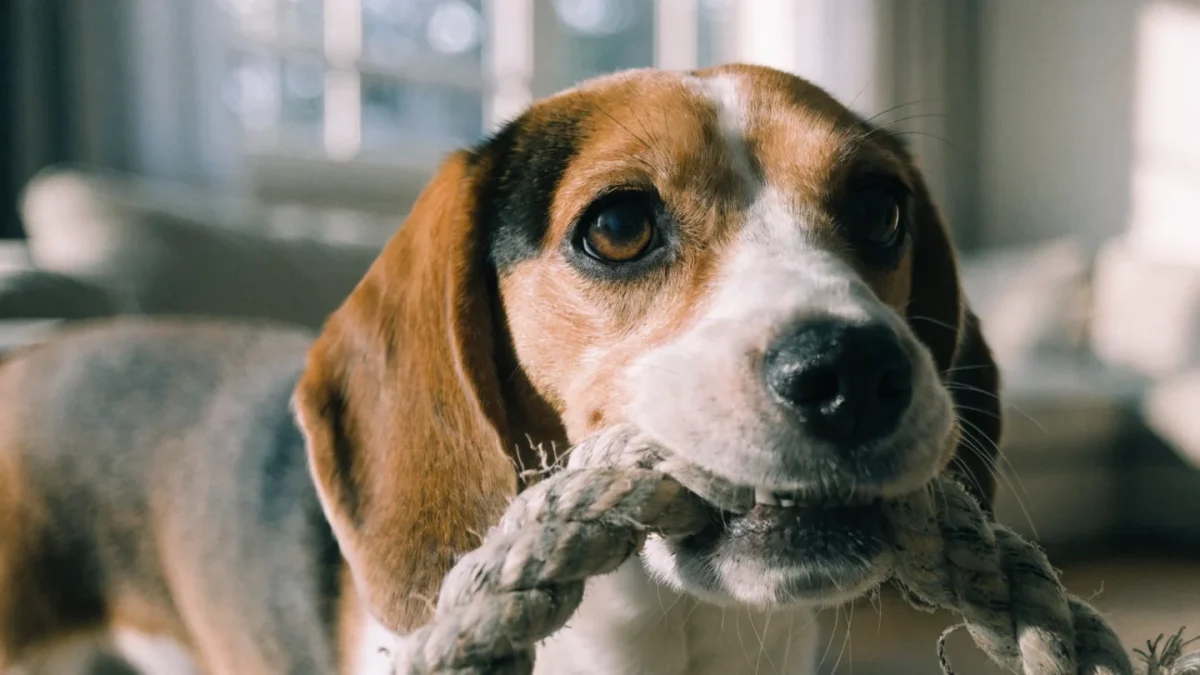
The dog that chews everything isn't doing it to spite you. Chewing is a normal, natural dog behavior — one that serves several functions and is deeply satisfying to the animal. The problem isn't that the dog chews. It's that they're chewing the wrong things.
The Functions of Chewing
Understanding why dogs chew determines the approach.
Oral need. Many dogs simply need to chew the way humans need to fidget. It's physically satisfying. Dogs bred for work that involved carrying, retrieving, or catching tend to have particularly strong oral drives — labs, goldens, spaniels, terriers. These dogs will chew something, period. Your job is to make sure it's something appropriate.
Teething relief. Puppies between 3 and 7 months are in various stages of teething, and the discomfort of adult teeth coming in is genuinely uncomfortable. Chewing provides relief. Cold items (frozen kibble in a toy, frozen wet cloth) are especially soothing.
Stress and anxiety management. Chewing triggers the release of endorphins and is genuinely self-soothing. Dogs that chew more under stress are using the behavior as a coping mechanism. If the dog chews mostly when alone, when there's household tension, or after stressful events, anxiety is probably part of the picture.
Boredom and under-stimulation. A dog with nothing to do and too much energy will find entertainment somewhere. Chewing is engaging, physical, and available whenever the dog wants it.
The Redirection Framework
Redirection works better than punishment because it acknowledges the need and provides an appropriate outlet.
Step 1: Remove access to inappropriate items. Puppy-proof the house. Keep shoes in closets, cables behind furniture or in protective covers, pillows out of reach when unsupervised. You can't redirect a dog who has unlimited access to the wrong things — management creates the conditions for success.
Step 2: Provide compelling appropriate chews. The appropriate chew has to be more appealing than the furniture. Rotate through different types to maintain novelty: bully sticks, food-stuffed toys, appropriate raw bones, nylon chews with flavor. Find what your dog values most.
Step 3: Interrupt and redirect in the moment. When you catch the dog chewing something inappropriate, interrupt with a calm "ah-ah" or similar non-punishment sound, then immediately offer an appropriate alternative. Don't punish — this teaches the dog to chew when you're not around, not to stop chewing.
Step 4: Reward the appropriate chew. When the dog engages with an appropriate chew, praise and occasionally add an extra treat or smear of food to it. The dog learns that the appropriate item produces good things.
Teaching "Leave It" and "Drop It"
These two cues are essential for dogs that chew everything. Teaching leave it and drop it gives you verbal tools to interrupt inappropriate chewing and redirect before the dog commits to the item.
For Teething Puppies
Cold chews reduce teething discomfort. Freeze kibble inside a rubber chew toy, freeze a twisted wet washcloth (supervised only), offer frozen carrots. The temperature provides additional relief beyond the mechanical action of chewing. See puppy teething for the full developmental timeline.
When Chewing Is Excessive
If the dog is chewing through everything despite appropriate outlets, sufficient exercise, and management — or if the chewing behavior seems compulsive, repeated, or is causing the dog distress — consult a veterinary behaviorist. Some dogs have anxiety-driven or compulsive chewing that requires more than management and redirection.