

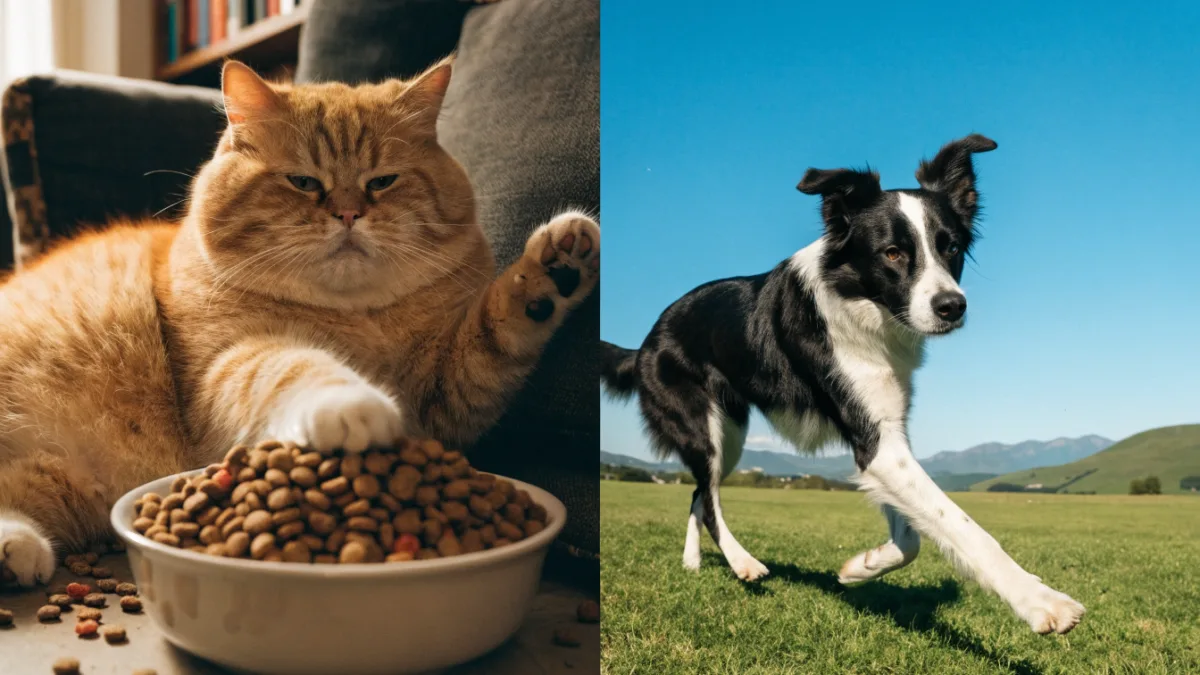
Picture a routine annual checkup: a woman named Karen brings her orange tabby, Marmalade, into the clinic. Marmalade is eight years old, strictly indoors, and absolutely delightful — but on the scale he’d gained nearly three pounds since his last visit. Karen looked mortified. “I don’t understand,” she said. “He barely eats.” But describe a typical day and the picture comes into focus: Marmalade had a full bowl of dry food available at all times, a treat dispenser he’d learned to nudge for extra kibble, and his most vigorous daily activity was walking from the couch to the windowsill. Meanwhile, people who train border collies on sheep farms rarely deal with an overweight dog. The contrast is worth sitting with — why are our indoor cats ballooning while working dogs stay naturally lean, and what can the rest of us learn from that gap?
The Unnatural Life of the Indoor Cat
Let’s be honest about something: everything about how we keep modern housecats is biologically strange. Cats evolved as ambush predators who would hunt, catch, and consume multiple small prey animals throughout the day and night. That hunting behavior wasn’t just about calories — it was mental stimulation, exercise, problem-solving, and territorial patrol all wrapped together. The modern indoor cat gets the calories without any of the work.
I see this constantly in practice. Take Hugo, a six-year-old British Shorthair who belongs to a couple I’ve known for years. Hugo has a lovely life — soft beds, sunny windows, a cat tree. But his food bowl is always full. His owners free-feed because they work long hours and feel guilty, so they want him to “have access” whenever he wants. The problem is that cats aren’t grazers by nature. When food is always available, many cats eat out of boredom, stress, or simply because it’s there — not because they’re hungry.
Then there’s the composition of the food itself. Dry kibble, which is what most indoor cats eat, needs carbohydrates to hold its shape and stay shelf-stable. But cats are obligate carnivores — their bodies are designed to process protein and fat, not the carbohydrate load found in many commercial dry foods. That doesn’t mean kibble is inherently evil, but it does mean we need to be honest about what we’re putting in the bowl and how much of it our cats actually need.
What Working Dogs Do Differently
Now think about a working dog — say, a Belgian Malinois doing protection work, or a stockdog covering miles of rugged pasture daily. These dogs are fed with intention. Their handlers measure portions precisely, often adjusting food intake up or down based on the day’s expected workload. A sheepdog working a long day in cold weather might get significantly more calories than on a rest day. Nobody leaves a full bowl out and hopes for the best.
Think about someone like Daniela, who runs a small herd of dairy goats and works her Australian Kelpie, Pepper, daily. Pepper is lean, muscular, and sharp — and she eats a carefully measured meal morning and night. Daniela doesn’t guess. She adjusts Pepper’s portions seasonally, watches her body condition, and uses part of her daily kibble ration as training rewards rather than adding extra treats on top. It’s not complicated, but it’s deliberate.
That intentionality is the missing piece for so many pet households. Working dogs stay lean not because they have magical metabolisms, but because their humans treat food as fuel calibrated to output — not as a way to express love or alleviate guilt.
Why Extra Weight Actually Matters
I want to be clear about something: this isn’t about aesthetics. When I get concerned about a patient’s weight, it’s because I know what excess fat tissue does to the body over time. And it’s quite a lot.
Fat isn’t just inert storage — it’s metabolically active tissue that produces inflammatory compounds. Research compiled by Waltham and other institutions has shown that obesity creates chronic, low-grade inflammation throughout the body. That inflammation affects nearly every system.
The Life-Limiting Consequences
The health consequences are well documented and significant:
- Joint disease: Osteoarthritis, hip dysplasia progression, and cruciate ligament ruptures are all more common and more severe in overweight animals. Every extra pound puts roughly four pounds of additional pressure on a dog or cat’s joints.
- Endocrine disruption: Diabetes is especially prevalent in overweight cats. I diagnose feline diabetes far more often than I’d like to, and weight is almost always a factor.
- Cardiovascular strain: The heart works harder to pump blood through a larger body, and respiratory capacity decreases.
- Reduced immune function: Obese pets are more susceptible to infection and recover more slowly from illness or surgery.
- Heat intolerance: Fat acts as insulation, making overweight animals dangerously vulnerable to heat stress.
- Anesthetic risk: Higher body fat means anesthetic drugs distribute differently, making procedures riskier.
- Decreased longevity: A landmark 2006 study by AJ German and others demonstrated that obesity directly reduces lifespan in both dogs and cats. Overweight pets live shorter lives — full stop.
When I explain this to clients, I sometimes see them tense up. I understand. Nobody wants to hear that they’ve been unknowingly shortening their pet’s life. That’s why I always frame it as good news: weight is one of the few health factors we can actually control.
The “Fat Pet Gap” and Why We Miss It
One of the biggest challenges I face is something researchers call the “fat pet gap.” Studies consistently show that a significant percentage of pet owners don’t recognize when their animal is overweight. A cat who should weigh ten pounds but weighs thirteen looks “solid” or “sturdy” to many people. A Labrador at fifteen pounds over ideal still looks like a normal Lab — because, honestly, most Labs we see are overweight, so that becomes the new baseline.
I’ve learned to navigate these conversations carefully. I used to be more blunt — I’d walk in, point at the dog, and say “he’s obese.” That approach didn’t work well. Now I show owners body condition score charts and ask them to compare. I talk about what I can feel when I palpate the ribs. I frame it as something we’re figuring out together, not a verdict I’m delivering.
But I also won’t soften the truth so much that people miss the message. If your pet is overweight, it matters. We need to talk about it.
Practical Steps That Actually Work
Stop Free-Feeding
If you take only one thing from this article, let it be this: leaving food out all day is the single biggest driver of pet obesity I see in practice. Cats especially benefit from scheduled, measured meals. Two to four small meals a day works well for most cats. It mimics their natural feeding pattern and lets you actually track what they’re eating.
Use Food as the Treat
This is a trick working dog handlers have known forever. Measure out your pet’s daily food portion, then use part of that portion as treats throughout the day. Anything beyond that ration is extra calories your pet doesn’t need. When clients tell me their dog gets “just a few treats” during training, I ask them to measure those treats and subtract them from the bowl. People are often shocked.
Decode the Begging
Here’s something I tell clients all the time: begging is usually not hunger. When your cat cries at 2 a.m. or your dog stares at you while you eat dinner, they’re typically seeking attention, stimulation, or have simply learned that the behavior gets results. Responding with food teaches them to repeat the behavior. Try responding with play, petting, or — if it’s nighttime attention-seeking — ignoring it entirely. It gets worse before it gets better, but it does get better.
Add Movement That Matches the Species
For dogs, this is usually straightforward: more walks, more fetch, more swimming. For cats, it’s trickier. Short, intense play sessions that mimic hunting behavior work best. A wand toy dragged under a blanket, a laser pointer followed by a treat tossed into a puzzle feeder so the “hunt” ends in a catch — these simulate what cats are wired to do. Even ten minutes twice a day makes a measurable difference.
Consider New Tools
Pet fitness trackers have become genuinely useful. I’ve had clients who were convinced their dog was “active all day” discover through activity data that the dog actually moved very little between morning and evening. Objective data cuts through our optimistic assumptions. If you can’t afford a tracker, a simple phone video of your pet’s “active” hours can be eye-opening.
There’s also growing interest in weight-management medications for pets — drugs similar to human GLP-1 agonists that help regulate appetite. These are still emerging, and I’d caution against viewing them as a replacement for diet and exercise management, but for some severely obese patients they may become a useful tool. Talk to your own veterinarian before considering any pharmaceutical approach.
The Bigger Picture
I’ve changed my mind about a few things over the years. I used to think weight management was mostly about willpower — that if owners just tried harder, pets would slim down. Experience has taught me that it’s more complicated than that. Our living situations, work schedules, and the products available to us all shape what’s easy and what’s difficult. The answer isn’t guilt. It’s structure, knowledge, and realistic planning.
And here’s something worth considering that goes beyond our individual pets: keeping cats at a lean, healthy weight indoors doesn’t just extend their lives. A well-fed, well-exercised indoor cat has less drive to hunt, and when cats do have outdoor access, keeping them at a healthy weight and well-fed reduces their hunting impact on native wildlife. Predation by free-ranging domestic cats is a significant threat to bird and small mammal populations worldwide. A lean, content housecat is a better companion animal — and a lighter footprint on the ecosystem around us.
So measure the food. Schedule the meals. Put away the always-full bowl. Your cat might act outraged for a week, and that’s okay. Marmalade did. But eight months later, he’s down to a healthy weight, he plays more than he has in years, and Karen told me last visit that he’s “acting like a kitten again.” That’s what we’re after — not a number on a chart, but more years of a vibrant, comfortable life together.