

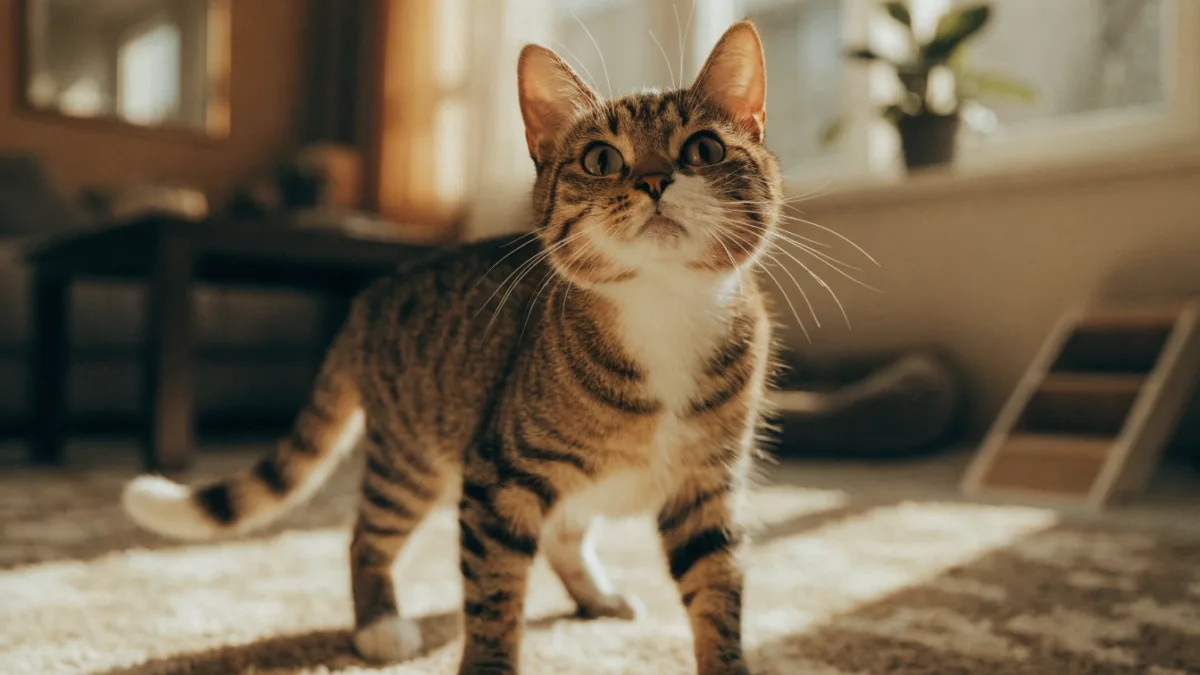
Picture a family bringing an eight-week-old tabby kitten into a clinic last spring, visibly upset. “She can’t walk straight,” the husband says, holding up a tiny ball of fluff who was wobbling like she’d had one too many. “The shelter said she might need to be put down.” Set the kitten on the exam table and watch her take a few steps — wide stance, exaggerated high steps, a slight head bob. Within thirty seconds the answer is clear: a classic case of cerebellar hypoplasia. She’s not sick. She’s just wobbly. The look of relief on a family’s face at that moment is exactly why more people should understand this condition. These animals aren’t suffering — they’re just differently-abled, and with the right setup, they live full, happy, perfectly normal-length lives.
What Exactly Is Cerebellar Hypoplasia?
Cerebellar hypoplasia (CH) — widely known in casual conversation as wobbly cat syndrome — is a neurological condition where the cerebellum doesn’t fully develop before birth. The cerebellum is the part of your brain sitting right at the back of your skull, and its job is coordination: fine motor control, balance, precision of movement. When it’s underdeveloped, the signals that tell the body how to move smoothly just don’t fire correctly.
The result looks dramatic. Pets with CH have a characteristic “drunken” walk — they stagger, they sway, they take steps that look exaggerated and clumsy. Many develop what we call intention tremors: their head bobs or shakes particularly when they’re trying to focus on something, like reaching for a food bowl. They may stand with their legs splayed wide for balance or lift their feet too high when they walk, almost goose-stepping.
But here’s what I always emphasize to owners: this is not a progressive disease. The cerebellum won’t continue to deteriorate. What you see at six months is essentially what you’ll see at six years and sixteen years. Their cognitive function — thinking, learning, affection, personality — is completely unaffected. A CH cat can learn tricks, solve puzzle toys, and form deep bonds just like any other cat. They just get there a little more… sideways.
The Cat-Dog Divide: Same Condition, Different Origins
Why Cats Get CH More Often
Cerebellar hypoplasia in cats is by far the most common scenario I see in practice, and the culprit is almost always the same: Feline Panleukopenia virus, also known as feline distemper. When a pregnant mother cat is infected with panleukopenia — or even when she’s vaccinated with a modified-live vaccine during pregnancy — the virus crosses the placenta and attacks the rapidly dividing cells in the kittens’ developing cerebellums. The timing matters enormously: the cerebellum develops during the last two weeks of gestation and the first few weeks after birth, so exposure during that window is what causes the damage.
This is why I’ll never vaccinate a pregnant cat with a modified-live panleukopenia vaccine. It’s a real medical nuance — the same vaccine that prevents the disease can actually cause CH if given at the wrong time. If you have an unvaccinated female cat who might be pregnant, talk to your vet about the safest timing and vaccine type.
CH in Dogs: Rarer but Real
CH does occur in dogs, though it’s much less common and less talked about. In puppies, the condition is typically linked to Canine Herpesvirus or sometimes parvovirus exposure in utero. Certain breeds — Chow Chows, Airedales, and Wire Fox Terriers among them — have also shown inherited forms of cerebellar hypoplasia or related degenerative conditions, though those are distinct from the viral-induced version.
A few years ago, I worked with a family who’d adopted a Chow Chow mix puppy named Bruno from a rescue. At ten weeks, he was falling over every few steps. His owners were terrified it was a brain tumor or some progressive neurological disease. After imaging and a thorough neurological exam, the diagnosis was straightforward CH. Bruno’s owners were stunned — they’d never heard of it in dogs. But once we explained the trajectory, they committed to him completely. Last I heard, he was four years old, sixty pounds of happy, and had figured out his own way to get up and down the single step on their back porch.
The care requirements for CH dogs and CH cats are essentially identical. The condition doesn’t play favorites between species — it just shows up in cats more frequently because panleukopenia is so widespread in unvaccinated cat populations.
Reading the Wobble: Understanding Severity Levels
Not all CH looks the same, and the severity spectrum is wide. I typically describe it in three tiers:
- Mild CH: These pets can walk and run with only occasional wobbles. They might look slightly clumsy or trip over their own feet now and then, but they navigate their environment largely independently. Many owners of mild CH cats say most people don’t even realize something is different until they watch closely.
- Moderate CH: Walking is clearly affected. These pets have a noticeable head bob, an obvious wide stance, and they fall regularly — especially when excited or trying to move quickly. They can usually get around on their own but need environmental modifications to stay safe.
- Severe CH: These pets cannot walk independently. They may scoot, roll, or commando-crawl to get where they’re going. They often need assistance eating, drinking, and using the bathroom. Severe CH pets require the most dedicated owners, but even they can have excellent quality of life with the right care setup.
The kitten I mentioned at the beginning — her name was Peanut, by the way — fell into the moderate category. She couldn’t run without tumbling, and she fell sideways every time she tried to scratch her ear. But she could walk, she could eat independently, and she could use a litter box with a low entry. The family adopted her that afternoon.
Making Your Home Wobble-Friendly
This is the section special needs pet owners really need, so let’s get practical. Adapting your home for a CH pet is about minimizing injury risk and maximizing independence. None of this is expensive or complicated — it’s mostly common sense once you understand how your pet moves.
Flooring and Traction
Hardwood, tile, and laminate are the enemy of a wobbly pet. They can’t grip, and a fall on a hard surface can cause real injury. Lay down area rugs, runners, or interlocking foam mats along the routes your pet uses most frequently — from their bed to their food bowl, from the food bowl to the litter box or door. Yoga mats work beautifully for this and are easy to clean. Some owners use carpet tiles because they can replace individual sections when they get soiled.
Stairs and Falls
Install baby gates at the top and bottom of any stairs. This is non-negotiable for moderate to severe CH pets. A tumble down stairs is the most common serious injury I see in these animals, and it’s completely preventable. If you have a multi-story home, consider keeping your CH pet primarily on one level.
Food, Water, and Litter Access
For CH pets, the simple act of eating and drinking can be an adventure. Here’s what I recommend:
- Use heavy, wide-based bowls that won’t tip over when bumped. Ceramic bowls with rubber grips on the bottom work well. Some owners elevate bowls slightly on a stable platform to reduce the neck angle and make eating easier.
- For cats, choose a litter box with a low entry point — or cut a doorway into a plastic storage tub. A high-sided box that a CH cat has to jump into is a recipe for accidents outside the box. Puppy pee pads placed around the box catch misses.
- Consider placing multiple water stations around the house so your pet doesn’t have to travel far to drink.
Padding and Safety
Think about where your pet falls most often. Sharp corners on furniture, hard hearths, and metal fixtures all pose risks. Corner guards, soft bedding placed near favorite spots, and removing obstacles from high-traffic paths all help. One client of mine literally lined her living room with mattress pads for the first month until she figured out her CH puppy’s movement patterns.
Daily Care and What to Expect
Grooming Assistance
CH pets often struggle with self-grooming. Balancing on three legs while scratching with the fourth is advanced calisthenics when your cerebellum isn’t fully developed. Cats especially may need regular brushing, occasional baths, and help keeping their rear end clean. For long-haired breeds, keeping the fur trimmed around the back legs can make a huge difference in hygiene. Dogs may need their nails trimmed more carefully, as they don’t wear them down as evenly through normal activity.
Exercise and Enrichment
Don’t make the mistake of thinking a CH pet can’t or shouldn’t move. They absolutely should — movement helps maintain muscle tone, prevents obesity, and keeps them mentally engaged. The key is providing safe ways to be active. Puzzle feeders, scent games, and gentle play sessions all work beautifully. I’ve seen CH cats chase laser pointers with complete disregard for their lack of coordination, tumbling and rolling and having the time of their lives.
Mobility Aids
For severe cases, the options have expanded enormously in recent years. Walking slings, specialized wheelchairs for small dogs, and traction socks are now widely available. I’ve been genuinely amazed at how some of these tools transform quality of life for pets who couldn’t move independently before. When looking for mobility products, focus on adjustability, washability, and proper fit — and consult with your vet or a canine rehabilitation specialist to ensure you’re choosing the right tool for your pet’s specific needs.
The Bigger Picture: Why These Pets Deserve a Chance
I’ll be honest — early in my career, I didn’t fully appreciate how well CH pets could do. When shelters brought me kittens with severe wobbles, I nodded along with the assumption that euthanasia was the humane choice. I’ve changed my mind on this completely, and the research and experience backs that up. CH pets are not in pain. They are not suffering. They do not know they are different. They are born this way, and to them, this is simply what walking feels like.
The rise of social media has been a game-changer here. CH cats and dogs — affectionately called “wobblers” — have built enormous followings online, and that visibility has directly translated into increased adoption rates. Rescues now have dedicated special needs programs that pull CH animals from shelters where they would once have been euthanized. These networks recognize what I’ve seen in my own practice: that special needs pets are often the most rewarding animals you’ll ever share your life with.
If you’re considering bringing a CH pet into your home — or if you’ve just discovered your new kitten or puppy is a wobbler — here’s my takeaway: these animals don’t need pity. They need a safe environment, a little creativity, and someone willing to see past the stagger to the whole, vibrant, perfectly capable animal underneath. Peanut, the tabby I met that spring, is now three years old. Her family sends me photos every Christmas. She’s perched on her padded window seat, watching birds, looking slightly sideways at the world — and looking absolutely delighted to be in it.