

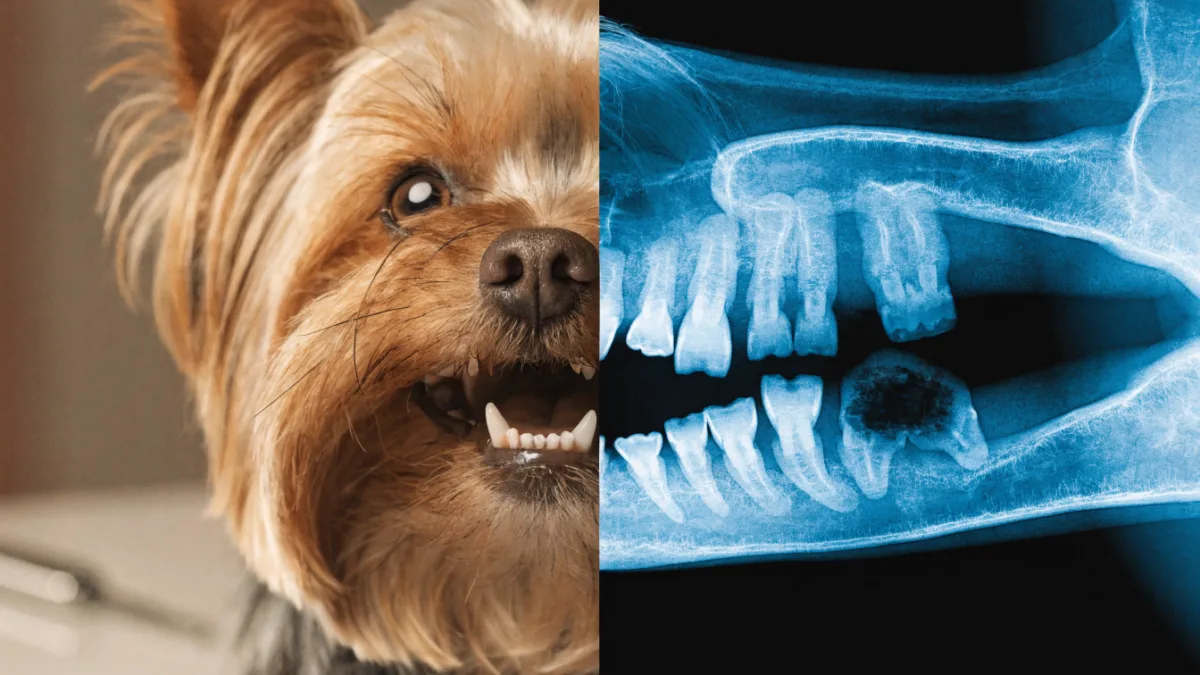
I’ll never forget the day a client named Karen brought her eight-year-old Golden Doodle, Cooper, into my clinic. She was beaming. “I’ve been getting his teeth cleaned every six months at the groomer,” she told me, proud of the shiny white smile Cooper was sporting. “No anesthesia, no risk, and look how great they look!” She wasn’t wrong — his canines gleamed. But when I slid a dental probe below his gumline, the story changed dramatically. Cooper had three teeth with roots so diseased they were loose, and a pocket of infection deep along his upper left molars that had been eating away at his jawbone for months. He’d been in pain this whole time, and nobody knew. Karen left that day in tears, wondering how she’d missed it. The answer is simple: she’d been sold a cosmetic procedure disguised as medical care.
The Seductive Appeal of Anesthesia-Free Dentals
I completely understand why anesthesia-free dental cleanings, or AFDCs, are popular. When I first started practicing fifteen years ago, I probably would have considered one for my own cat if someone had offered it. The pitch is appealing: your pet stays awake, you avoid the dreaded “A” word, and it costs a fraction of what a veterinary dental procedure runs. For a lot of owners, it feels like the responsible middle ground.
But here’s what I’ve learned — sometimes the hard way, alongside clients I genuinely care about: that middle ground doesn’t actually exist. Anesthesia-free cleanings remove tartar from the visible crown of the tooth, the part you can see when your dog yawns. That’s it. And while that might make for a nicer photo, it does absolutely nothing for the disease process happening where you can’t see it.
I never judge owners who choose these services. They’re usually making the decision out of love and fear, not negligence. But I do think people deserve to understand exactly what they’re paying for — and what they’re not.
The Hidden World Beneath the Gumline
Here’s something that surprises most of my clients: the tooth you see is only about one-third of the actual structure. The other two-thirds — the roots — sit embedded in the jawbone, covered by gum tissue. And that’s precisely where periodontal disease does its worst damage.
When bacteria accumulate along the gumline, they don’t just sit there. They migrate downward, creating pockets between the tooth root and the surrounding bone. The body responds with inflammation, which gradually destroys the periodontal ligament holding the tooth in place and erodes the jawbone itself. This process is silent. Your pet keeps eating, keeps playing, keeps wagging their tail — because animals are extraordinarily skilled at masking oral pain.
The “Clean Teeth” Illusion
This is the part that frustrates me most about AFDCs. They create a dangerous false sense of security. I saw a cat last spring — a sweet twelve-year-old tabby named Mochi — whose owner had been doing anesthesia-free cleanings religiously for three years. Mochi’s teeth looked pristine on the surface. But her dental radiographs told a completely different story: she’d lost nearly forty percent of the bone supporting her lower premolars, and two teeth had actually died, requiring extraction. Her owner was devastated. “But his teeth looked so white,” she kept repeating.
Scaling the visible tartar off a tooth while ignoring disease below the gumline is like wiping mud off the outside of a house while the foundation crumbles underneath. It might look better from the curb, but the structure is still failing.
What a Professional Cleaning Actually Involves
Let me walk you through what happens during a comprehensive professional dental cleaning, because I think understanding the process takes away a lot of the fear. Veterinary professionals call it a COHAT — Comprehensive Oral Health Assessment and Treatment — and it’s genuinely thorough.
Before we even begin, we run blood work to check your pet’s organ function and red and white blood cell counts. This tells us their body can handle the anesthesia safely. Once they’re under, we place an endotracheal tube — essentially a breathing tube that protects their lungs from fluid and bacteria during the procedure. Then comes the part that matters most: full-mouth dental radiographs. These X-rays reveal what’s happening beneath the gumline. I can’t tell you how many times I’ve looked at a tooth that appeared perfectly healthy on the surface, only to find a root abscess or bone loss on the radiograph.
After imaging, we probe every single tooth, measuring for pockets where disease hides. Then we scale — not just the crown, but critically, below the gumline (called subgingival scaling) where the bacteria live. We polish every tooth surface smooth, because microscopic scratches from scaling create perfect footholds for plaque if left rough. Finally, we chart every finding and create a treatment plan for any problem teeth.
None of this — not the X-rays, not the probing, not the subgingival cleaning — can be performed on an awake animal. It’s not about convenience. It’s about physics.
But Isn’t Anesthesia Dangerous?
This is the question I hear more than any other, and it comes from a place of genuine concern. Let me address it directly.
Modern veterinary anesthesia is remarkably safe. For healthy pets undergoing routine procedures, the mortality rate is well under 0.1%. We use the same inhalant gases used in human hospitals. We monitor heart rate, blood oxygen, carbon dioxide levels, blood pressure, and temperature continuously throughout the procedure. Many clinics now use equipment like capnographs — which measure breathing efficiency in real-time — as standard practice. A trained veterinary technician watches your pet’s vital signs every single second.
What About Senior Pets?
I had a client last year, a retired teacher named Margaret, who was terrified to put her fourteen-year-old Beagle, Daisy, under anesthesia. “She’s just too old,” Margaret told me, her voice shaking. And I understood that fear completely. But here’s what I told her: age is not a disease. Daisy’s blood work came back excellent. Her heart was strong. What wasn’t excellent was the fact that she had a fractured tooth with an exposed root nerve — imagine a toothache that never goes away for over a year.
We did the dental. Margaret cried when she picked Daisy up, not from worry, but because Daisy was acting like a puppy again within days. She hadn’t realized how much pain Daisy had been in until the pain was gone. The American Veterinary Medical Association agrees with this approach — they explicitly state that age alone should not prevent a pet from receiving necessary dental care.
That said, every pet deserves an individualized risk assessment. A pet with significant heart disease or kidney failure may need modified protocols or specialist oversight. This is exactly why pre-anesthetic blood work and thorough physical exams matter so much.
The Real Cost Comparison
Let’s talk about money, because I know that’s part of this conversation. Anesthesia-free cleanings typically cost significantly less upfront — sometimes a quarter of what a professional cleaning runs. That price difference is real, and for families on tight budgets, it can feel like the only option.
But I encourage you to think long-term. Let’s say you pay for AFDCs every six months. Over three years, you’ve spent a meaningful amount — but the disease beneath the gumline has been progressing unchecked. Eventually, you end up in my exam room with a pet who needs multiple extractions, antibiotics, pain medication, and a longer surgical procedure. That bill is often three to five times higher than routine cleanings would have been.
I think about a dog named Bruno, a five-year-old French Bulldog whose owner had done anesthesia-free cleanings since he was a puppy. When Bruno finally came to me because he’d stopped eating hard food, I found seven teeth that needed extraction. The total cost? Nearly four times what annual professional cleanings would have run. His owner wished she’d understood the difference earlier.
What You Can Do at Home
Professional cleanings aren’t the whole picture — daily home care matters enormously. Here’s what actually moves the needle:
- Daily brushing with veterinary-approved toothpaste. Human toothpaste contains ingredients like xylitol that are toxic to pets. Even thirty seconds a day makes a measurable difference.
- Veterinary Oral Health Council (VOHC) accepted products. Look for the VOHC seal on dental chews, diets, and water additives. This seal means the product has been scientifically tested and proven to reduce plaque or tartar.
- Dental-specific diets. Some kibble formulations are designed with texture and ingredients that mechanically reduce plaque accumulation as the pet chews.
- Regular oral exams. Your veterinarian should examine your pet’s mouth at every annual visit — and ideally more frequently for senior pets.
I should mention: never start a new supplement, dental product, or home remedy without discussing it with your veterinarian first. Even natural products can interact with medications or underlying conditions.
A Word on Regulation
In many regions, performing dental scaling on an animal — particularly below the gumline — is legally considered veterinary medicine. This means groomers, pet stores, or unlicensed individuals offering “dental cleanings” may be operating outside the law. Veterinary medical boards across North America are increasingly cracking down on these services, not to be punitive, but because they’ve seen the harm that results from delayed proper care.
If someone offers to “clean your pet’s teeth” without anesthesia, I encourage you to ask: Are they a licensed veterinarian? Will they take X-rays? Can they diagnose and treat disease? The answer to all three should be yes.
The Bottom Line
Your pet’s mouth is not separate from the rest of their body. The bacteria that thrive in diseased gums don’t stay there — they enter the bloodstream and travel to the heart, kidneys, and liver. I’ve seen valvular heart disease worsen because of untreated dental infections. I’ve seen kidney values climb in pets with rotting teeth. Oral health is whole-body health.
When I think about Cooper and Karen, or Mochi, or Daisy, or Bruno — I don’t think about their owners making bad choices. I think about an industry that markets cosmetic procedures as medical care, and a profession that hasn’t always done enough to explain the difference. That’s why I’m writing this now.
Your pet deserves a mouth that doesn’t hurt. They deserve X-rays that catch disease before it becomes catastrophic. They deserve a thorough cleaning that addresses the roots, not just the crowns. And they deserve to go through that process safely, monitored by trained professionals, without pain or fear. That’s what professional dental care provides — and there’s simply no anesthesia-free substitute that comes close.